










Health crises are not new in Africa. The continent has grappled with infectious diseases on all levels, from local (such as malaria) to regional (Ebola) to global (Covid-19). The region has often carried a disproportionately high burden of global infectious outbreaks.
How cities are planned is critical for managing infectious diseases. Historically, many urban planning innovations emerged in response to health crises. The global cholera epidemic in the 1800s led to improved urban sanitation systems. Respiratory infections in overcrowded slums in Europe inspired modern housing regulations during the industrial era.
Urban planning in Africa during colonisation followed a similar pattern. In Anglophone Africa, cholera and bubonic plague outbreaks in Nairobi (Kenya) and Lagos (Nigeria) led to new urban planning strategies. These included slum clearance and urban infrastructure upgrades. Urban planning in French colonial Africa similarly focused on health and hygiene issues, but also safety and security.
Unfortunately regional experiences with cholera, malaria and even Ebola in African cities provide little evidence that they have triggered a new urban planning ethic that prioritises infectious outbreaks.
References are often made to historical successes of urban planning in Africa. But colonial use of planning for cultural and structural isolation, as well as for socio-economic and spatial segregation, limited its capacity to respond to health emergencies. With the widespread nature of Covid-19, is it reasonable to argue that it could possibly be the pandemic that inspires a new way of “doing” urban planning in Africa?
Our recent research paper discusses three areas that can transform urban planning in the continent to prepare for future infectious outbreaks, using lessons from Covid-19.

Integrating the informal
The first relates to the integration of the city’s informal sector into the formal planning process. This is reflected in two ways. The first is the non-inclusion of informal settlements (mostly slums) in urban planning practice. The second is the lack of planning focus on the informal economy that results in exclusion. Yet this is a sector that constitutes more than 80% of Africa’s urban economy.
In a time of Covid-19, slums and informality are critical due to the sector’s vulnerability to transmission. It is challenging to deploy testing and contact tracing , as well as adhering to social distancing rules. Many slum residents in African cities lack access to basic essential services such as water, sanitation, housing and healthcare.
And, given that the informal sector is characterised by unregulated economic activities including uncontrolled hawking and unplanned open markets, overcrowding is impeding social and physical distancing rules in African cities.
Change is needed. Perhaps Covid-19 will be the wake-up call to spur the consolidation of existing and formal structures to becoming more responsive to managing health crises in slums and the informal sector.
Geographic and economic imbalances
Second, there are geographical and economic imbalances in urban planning in Africa. Investment patterns and development mostly focus on the major cities with limited focus on its adjoining districts and regions. Yet what happens in cities does not stay in cities.
Infectious diseases often have cascading effects on adjoining districts and regions with functional relationships to major cities. COVID-19 has affected both cities and their adjoining regions. However, adjoining districts continue to receive limited investment in critical infrastructures such as health, housing and other essential social services.
Given the disruptions to the supply chain between major cities and the adjoining districts due to the pandemic, it’s about time that planning practitioners and educators learn to prioritise urban planning to reflect these imbalances. A poorly managed relationship between cities and adjoining regions can create inequality that may lead to unhealthy city-regional inter-dependencies, environmental damage and unmanaged waves of health crises. These can have ripple effects across the urban-rural spectrum.
Planning in Africa should ensure city-regions are more resilient by addressing imbalances to produce a more integrated city-regional planning around health, economies, transport networks and food production.
Open spaces
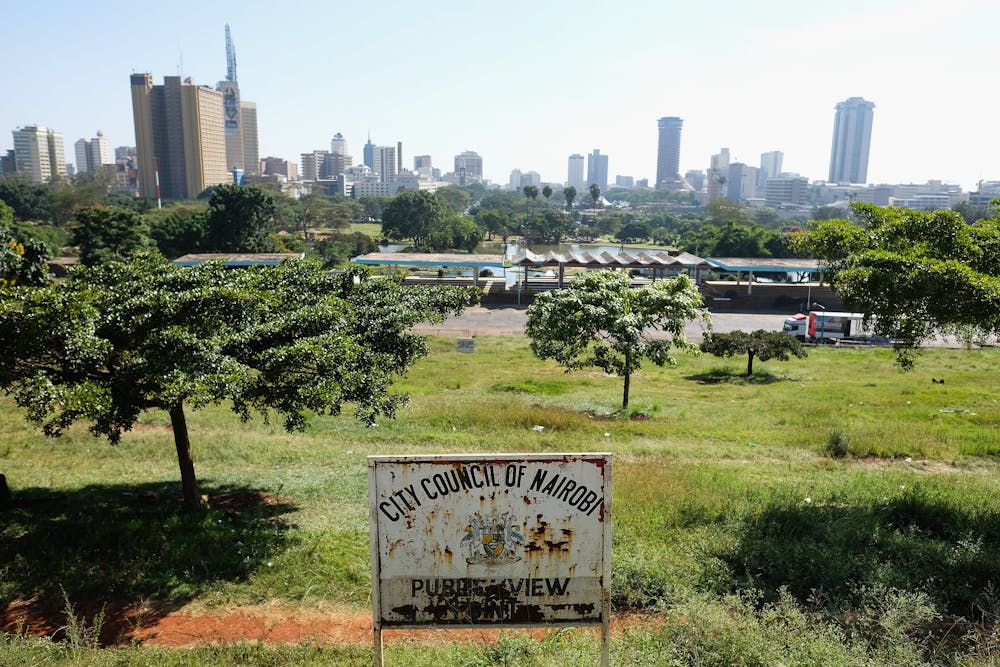
Third, public health matters should be considered in urban planning. Health outcomes traditionally do not drive urban planning practice in Africa. In our study, urban green spaces are used as an example because the Covid-19 pandemic has highlighted their importance in managing emergencies. Literature evidence suggests that African cities are rapidly losing their green spaces. This is due to, among other things, poor urban planning.
A new approach should bring open spaces into the heart of how African cities are planned, and management systems for local green space must improve. Integrating larger open spaces within the urban fabric allows cities to implement emergency services and evacuation protocols during health crises.
What frequently seems to be effective in advancing responses to health crises is an urban planning approach that integrates a range of infrastructure. This includes grey (such as treatment facilities and sewers), green (trees, lawns and parks) and blue (wetlands, rivers and flood plains) systems.
Although Covid-19 has profoundly transformed urban life globally, this article provides cautious optimism of its potential in managing future health crises in Africa. Going forward, urban planning in Africa needs to reflect the aspirations of urban residents and address multiple spatial inequalities, including access to better spaces in times of a pandemic.