







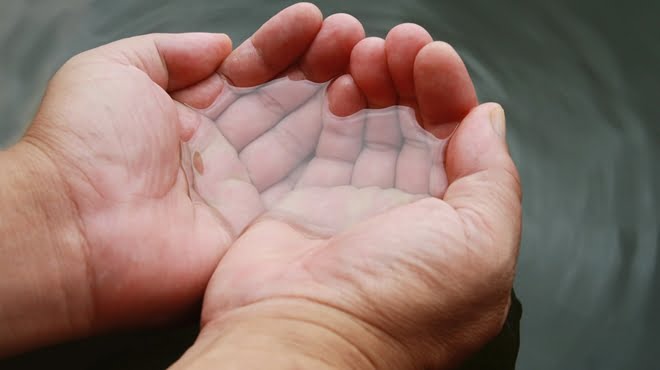
Cape Town is losing 50-billion litres of water every year to thirsty alien trees surrounding the region’s supply dams – equivalent to two months’ water supply effectively going down the drain.
For those who doubt the hydrological models that have come up with this figure, there will soon be hard evidence from flow meters that will be set up before the end of February in the seven most important catchment areas, according to Louise Stafford, director of the South Africa Water Funds Programme of the international conservation organisation, The Nature Conservancy.
“We will be able to see the effects of clearing aliens with these water meters, and I hope those who don’t believe the science so far will do so with this evidence,” Stafford said.
Although the big six dams that supply Cape Town, Stellenbosch and Boland wine and fruit farmers are 60% full, compared with the 20% they fell to during the third year of drought in 2018, Stafford said Cape Town’s water supply problem was far from over.
“We had only 70% of our annual rainfall last winter and the models are not clear on what we can expect this coming winter. Even without the drought it was predicted Cape Town would run out of water by 2021. The City of Cape Town was already looking at water augmentation schemes, but the drought fast-tracked the need for alternative water sources and forced the City’s hand because there was a crisis.”
Added to this was that the climate change models predicted a drier western section of the Western Cape, a trend that appeared already to be occurring.
Stafford said alien clearing in catchments was in effect creating a new water source. But what made good business sense was that it cost just one tenth of other water augmentation schemes.
“We would need R370-million over 30 years to clear the catchments in the Western Cape supply system, because it is not something that can be done as a once-off. There have to be constant follow-ups to root out the seedlings that sprout. The seed bank of Port Jacksons lasts 80 years in the ground.
AMOUNT OF EXTRA WATER COULD GO UP TO 100-BILLION LITRES A YEAR
“In comparison, it will cost the City about R8bn in capital expenditure to bring extra water into the system through augmentation schemes like desalination and groundwater.”
The business plan says that by 2045, after 30 years of clearing and preventing new aliens from growing, the amount of extra water could go up to 100-billion litres a year, equivalent to one third of Cape Town’s current annual supply needs.
The idea of clearing aliens to yield water is not new. The Working for Water programme has been in existence since the 1990s, while other agencies such as CapeNature, SANparks and municipalities have had alien-clearing programmes for decades.
However, Stafford said two reasons why the battle against aliens had not been won were, firstly, because state funding for alien clearing was not a constant, so programmes did not always have the money to carry out the vital follow-up clearing, and aliens grew back.
Secondly, the programmes did not have the backing of scientific data to show which were key areas to focus on to get the highest water returns.
“We will now have this scientific data to show us which are the areas that will get us the cheapest water in the quickest time.”
Stafford said the country had relied too much on the Working for Water programme, which was primarily a job creation initiative.
‘WE NEED TO CONTINUE TO BE CAUTIOUS’
The big advantage of the Greater Cape Town Water Fund, launched last November, is that it draws private sector donations into a fund, so the money stream will not be stop-start. It has R20-million from the private sector so far and government is poised to match that.
The other is that it brings together all relevant government departments, agencies, municipalities, NGOs, scientists and businesses, all of which have representatives on the steering committee, so resources are pooled and strategies are planned in unison for the best outcome.
In this way, the water fund would “bridge some of the governance and funding gaps” that had held back alien eradication and catchment restoration.
Cape Town’s water usage last week was 602-million litres a day, and 604-million litres the previous week.
This is still well below the 650-million litres a day target of the current level three water restrictions.
Nicky Allsopp, of the SA Environmental Observation Network, said stream flow measured this month in the Jonkershoek mountains – part of Cape Town’s catchment area – was below the long-term average.
“We need to continue to be cautious because although the storage level is 60%, which is much better than this time last year, it is not good in the long term. Even in 2015, which did not have good rainfall, the level was 76% at this time,” Allsopp said.