







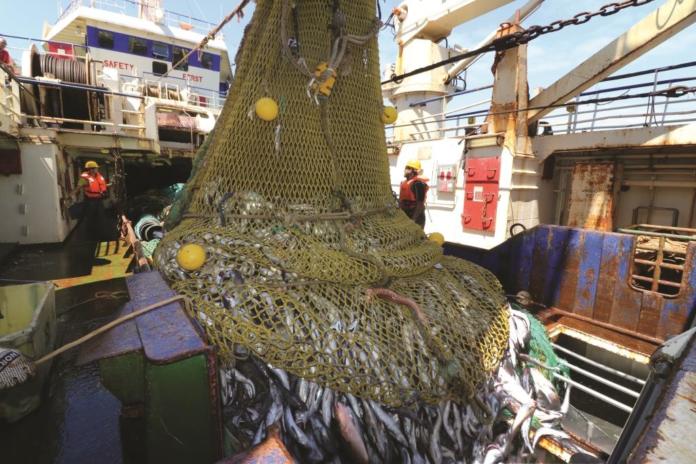
CAPE TOWN’s two biggest hake fishing companies Irvin & Johnson (I&J) and Sea Harvest are still netting strong profits – although the outbreak of the Covid-19 pandemic could see profit lines slacking in the short term.
In the year to end December Sea Harvest – which now also owns aquaculture and Australian seafood interests as well as a big slice of the local cheese market – reported revenue from its South African operations increasing 23% to R2.47 billion on the back of a 10% increase in hake Total Allowable Catch (TAC) and the annualised effect of the Viking Fishing acquisition (made in July 2018).
Gross profit increased 28% to R953 million with the margin fattened to 36% (2018: 35%) thanks to synergies relating to the Viking Fishing acquisition and improved efficiencies in the Saldanha Bay fresh fish processing factory in the second half of the year.
Operating profit increased a whopping 45% to R527 million with the important operating profit margin expanding to 20% (17% in 2018).
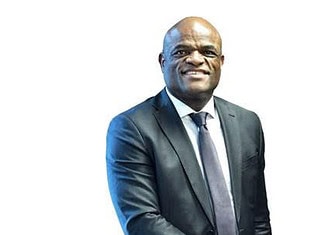
Sea Harvest CEO Felix Rathebe said international demand for MSC-certified, wild caught Cape hake remained firm. He said Europe remained Sea Harvest’s most important export market – noting that strong growth had been experienced in the traditional hake markets of Southern Europe.
Sea Harvest disclosed that export revenue increased 26%, which meant the combined export mix improved marginally to 53% (2018: 52%) of sales revenue with a higher proportion of Viking Fishing product now directed to export markets.
Locally, Sea Harvest’s revenue through the foodservice channel increased 32%, with the foodservice mix increasing to 31% (2018: 29%) of sales revenue. Revenue from the wholesale channel increased 80%, and this channel now makes up 6% of sales revenue.
But Sea Harvest’s revenue from the local retail channel declined 14% with tough economic conditions taking their toll.
I&J, which is part of the AVI consumer brands conglomerate, do not provide as much granular detail as JSE-listed Sea Harvest.
The performance of hake is also somewhat clouded by the group’s aquaculture interests.
Nevertheless, AVI reported I&J’s revenue static at R1.18 billion for the half year to end December with operating profit coming in 11% higher at R169 million.
AVI CEO Simon Crutchley said I&J benefited from improved wet fleet fishing performances and a higher (hake) quota.
I&J’s domestic revenue was up 5% on the back of a 3% volume increase, while export revenue and volume was up 5% and 4.2% respectively. I&J managed a selling price increase of 1.9% in the domestic market, but export pricing crimped by 1.1%.
Crutchley noted selling prices in some of I&J’s export markets were lower due to increased competition.
Looking ahead to the remainder of 2020, Sea Harvest believed that within the South African fishing segment, global demand for high value, wild caught, MSC-certified seafood was expected to continue. Rathebe said this would support firm pricing in the export markets.
He predicted that the local foodservice and wholesale markets would remain stable.
Rathebe reckoned Sea Harvest’s investment in the state-of-the-art Marel fresh fish processing facility in Saldanha Bay would drive production efficiencies with the facility having reached its design capacity in the second half of 2019.
Crutchely said I&J’s prospects remained materially dependent on fishing performance and exchange rates. “We remain of the view that the performance of the hake resource is set to improve over the next few years, while export exchange rate hedges are at levels that support sound profitability, and the more recent Rand weakness provides some upside potential.”
Fish farming not easy
Both Sea Harvest and I&J have made considerable inroads into the aquaculture sector – although these efforts, which are largely export driven, could suffer from the global outbreak of Covid-19.
I&J conceded in their latest financial report that there was “considerable uncertainty” as to how long the Coronavirus and Hong Kong protests will disrupt abalone demand.
“But it is very likely that the contribution from this business will be lower than last year.”
I&J’s abalone contribution decreased last year because of lower export prices and lower unrealised profit in valuation of live abalone stock.
I&J’s Danger Point abalone farm near Hermanus has the capacity to produce more than 300 tons per annum with future projections well in excess of this volume. In addition to the farm (where primarily live abalone is produced), I&J also have a factory which produces secondary products such as canned, dried and frozen abalone.
Sea Harvest is a more recent entrant to the world of aquaculture, having acquired a 51% stake in Viking fishing’s fledgling seafood farming enterprise in mid-2018.
Sea Harvest recently reported that revenue for the period to end December from Viking Aquaculture increased to R69 million – but there was a R30 million operating loss after the segment’s performance was negatively impacted by lower abalone sales after an extended red tide event and the market disruptions in Hong Kong.
Sea Harvest also reported increased competition in the smaller size category from other abalone-producing nations.
But the group was encouraged that both Viking’s abalone farms had reached their design capacity in terms of biomass.
Sea Harvest said the performance from the greenfields trout operation in Saldanha Bay was negatively impacted by higher than expected mortalities, while oyster and mussel sales had seen good growth year on year.
Viking Aquaculture has also commenced work on the expansion of the Diamond Cost Aquaculture abalone facility in the Northern Cape.
Sea Harvest indicated that the Covid-19 virus had a negative impact on abalone sales into China and the region since its outbreak in January 2020. The group believed this would continue to have a negative impact on sales volumes and price through the first half of 2020.