











DECLINING fresh water supplies is one of the most ominous and persistent challenges we are globally facing.
The UN World Water Development Report 2019 states that over 2 billion people live in countries that suffer from high water stress and further refers to estimates that approximately 4 billion people experience severe water scarcity at least one month of the year. Globally more than 80% of all wastewater is discharged to the environment without being treated.
Climate change is predicted to amplify the extremes, rendering wet areas wetter and dry areas dryer, which accelerates the water stress growth rate in the latter. Compared in numbers, insufficient access to clean water and inadequate sanitation are reported to grossly overweight the attributable deaths resulted from droughts, floods, earthquakes, epidemics and conflicts.
Oil & gas, agriculture and fast fashion are examples of heavily polluting industries that contribute to the problem by consumption of extreme amounts of water, but the modern society also introduces special pollutants to the environment from its daily functions. Growing concern and increasing public awareness is earned by microplastics and pharmaceutical residues that accumulate in aquatic environments and pose threats of little-known consequences.
Advanced oxidation processes (AOPs) make an emerging group of technologies for battling many of the problems with water pollution. These processes rely on harnessing the oxidative power of hydroxyl radicals for degradation of organic pollutants like pharmaceuticals.
One seemingly exotic way to generate these supreme oxidants is to bring the treated water in contact with non-thermal plasma. This futuristic approach has been clearing its way from academic research into industrial applications for quite some time now, and it is finally about to be seen in practice.
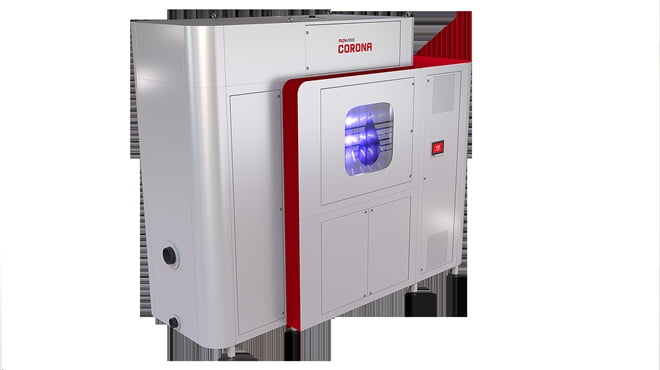
Flowrox Corona has been extensively studied for various applications in water and wastewater treatment to address the above challenges. Dozens of pharmaceuticals have been observed to completely degrade in Flowrox Corona plasma treatment, and textile industry wastewaters have been observed to effectively lose colour and cut down total organic content. Phenolic substances, fuel additives, dissolved oil components and numerous other special pollutants are easy targets. Flowrox Corona is energy efficient and low-maintenance.