







The Covid-19 pandemic has exposed weaknesses in South Africa’s ICT networks and highlighted the challenges experienced by those who have access to technology and the internet, as well as those who don’t.
With the country in lockdown, South Africans have had to deal with isolation, whether they live in mansions in Sandton, apartments in Sea Point or small homes in rural areas.
Weaknesses in the country’s telecommunications infrastructure mean that as more people are forced to turn to the internet, the digital divide is magnified and socio-economic inequalities are reinforced.
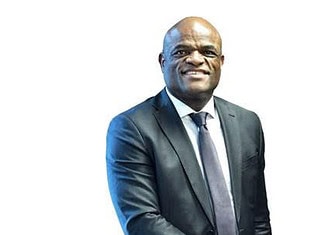
MzansiSat chief operations officer, Victor Stephanopoli, says the lockdown has seen a significant increase in data usage, allowing people to keep in touch with family and friends, do schoolwork online, entertain themselves or keep businesses afloat.
“Let us consider, however, who is not communicating during these challenging times. Many South Africans do not have the means to communicate, especially those living in the rural areas.”
Stephanopoli also looks at the way people – who can communicate – are communicating and consuming media, as well as the type of content that is most popular, and how this impacts the network.
Here, Stephanopoli points to a recent report by GlobalWebIndex, which explores how people have increased their media consumption on various social media platforms since being confined to their homes.
Not surprisingly, media consumption is up since the Covid-19 outbreak and imposition of restriction measures. The most frequently used channels include online videos, broadcast TV and online TV streaming.
Stephanopoli says the research indicates that Generation Z (16 – 23 years) and Millennials (24 – 37 years), in particular, consume more online content – online videos, online TV streaming and online music streaming – than Generation X (38 to 56 years) and Baby Boomers (57 to 65 years).
“These platforms are set to surpass more conventional platforms in years to come, which means connectivity needs to be able to accommodate the heavier load that their increased usage will require.”
The lockdown has highlighted the stark reality that some employees are able to work remotely and may continue to do so after lockdown ends, while others have immense difficulties finding reliable connectivity. The same can be said for school learners, with the privileged using fibre networks to access online schooling while the poor risk being left behind.
This should compel South Africa to take a closer look at its connectivity solutions – who they are serving, how effective they are and how they may be perpetuating the socio-economic inequalities that already exist.
South Africa does not have many server farms to facilitate remotely buffered and stacked content. This means someone accessing Netflix in Johannesburg is probably exchanging information with the United States via undersea cables.
“Video is a highly data intensive protocol. While I don’t have the exact figures, I do know that in excess of 80% of data volume travels in and out of South Africa via upload and download, with key perpetrators being streaming services such as YouTube and Netflix,” adds Stephanopoli.
He notes that streaming services globally have had to decrease their streaming quality to lower the additional strain that has been placed on networks. “What Covid-19 has done is show us what will happen if the 47% of our population that is currently not online is enabled to do so. Network capacity will be compromised, exacerbated by the choke points that undersea cables represent.”
Stephanopoli says over the past 20 to 30 years, no significant strides have been made to build a proper network in the country. “South Africa reached a critical period between 2005 and 2010 when investment in new infrastructure was essential. For various political reasons, this did not happen. Then the country entered the widely reported state capture phase and all investments aimed at healthcare, telecoms or infrastructure and energy projects, amongst other initiatives, were syphoned away.”
He says that Covid-19 has given decision makers the opportunity to reinvent themselves and show the citizens and the public sector that they are commissioning infrastructural projects that address the shortcomings in the country’s network.
Stephanopoli believes South Africa needs a more open dialogue with all players in the industry. “I think we also need to create a culture in the country where we admit we are wrong and then find workable solutions. This requires transparency, disclosure of numbers and the highlighting of challenges that need to be addressed.”
As a player in the industry, MzansiSat attempts to reach out to regulators and the ministry on a weekly basis to discuss viable solutions to various challenges, especially as they relate to improving the reach for rural areas. So far, he says, there has not been much response.
“We are having constructive discussions with a variety of African countries, who understand the importance of our offering, that is, that there is already a satellite in orbit and it can reach areas that are not viable for undersea cables. We need clearer guidance from the South African government on what needs to happen next.
“Surely this is paramount now, especially in light of a pandemic like Covid-19 highlighting the need for better infrastructure throughout the country to safeguard national security and maintain existing services?” says Stephanopoli.