








Steel remains the backbone of South Africa’s national infrastructure, yet its susceptibility to corrosion poses a severe threat to longevity and safety. From rail networks and power pylons to bridges and marine structures, corrosion is a costly challenge in humid, coastal, and industrial environments.

According to Simon Norton, Director of the International Zinc Association (IZA) Africa, zinc is the most effective and reliable solution. “Steel’s vulnerability to corrosion is a significant challenge, especially in environments with high humidity, sea salt, and variable air temperatures. Zinc provides an exceptional and indispensable form of protection, ensuring the durability and safety of infrastructure for decades.”
Zinc’s unique effectiveness lies in its dual protective action. Applied as a coating, it provides a physical barrier between steel and corrosive environments. More importantly, as a more electrochemically active metal, zinc acts as a sacrificial anode, corroding in preference to the steel substrate.
“Even when a zinc coating is scratched or damaged, the exposed steel remains protected by zinc’s sacrificial behaviour,” explains Norton. “This property sets zinc apart from all other corrosion protection methods.”
The most widely used process is hot-dip galvanizing, where steel is immersed in molten zinc. This produces a metallurgical bond that forms multiple alloy layers, harder than the base steel itself. The result is outstanding durability, abrasion resistance, and decades-long performance even under severe conditions.
South Africa’s coastal rail networks are among the most vulnerable assets due to constant exposure to salt-laden air. Chloride ions accelerate rusting of steel tracks, fasteners, signalling equipment, and bridges.

“Failure of these components can result in derailments, service disruptions, and prohibitive maintenance costs,” notes Norton. “Hot-dip galvanized coatings on rail fasteners, signalling poles, overhead line structures, and bridge elements ensure that these critical assets withstand the relentless marine environment.”
Additional protective measures include inorganic zinc-rich paints and zinc thermal spray coatings, depending on design requirements. Power pylons, which form the backbone of the electrical grid, are continuously exposed to harsh weather and industrial pollutants. In coastal and industrial regions, corrosion risk is especially acute.
“Galvanized coatings are the first line of defence for pylons,” says Norton. “The self-sacrificing galvanic protection of zinc ensures that even minor abrasions or surface cuts do not compromise structural integrity. This protection is essential in preventing failures that could trigger widespread power outages.”
Exposed steel in buildings, pedestrian bridges, and transport hubs faces equally serious challenges. Without adequate protection, corrosion reduces load-bearing capacity and compromises entire structures.

“Hot-dip galvanizing of beams, columns, and fasteners provides exceptional durability in all environments, from the fog-bound West Coast of South Africa to humid coastal cities like Durban,” says Norton. “It minimises the need for repainting or maintenance and provides substantial whole-life cost savings.”
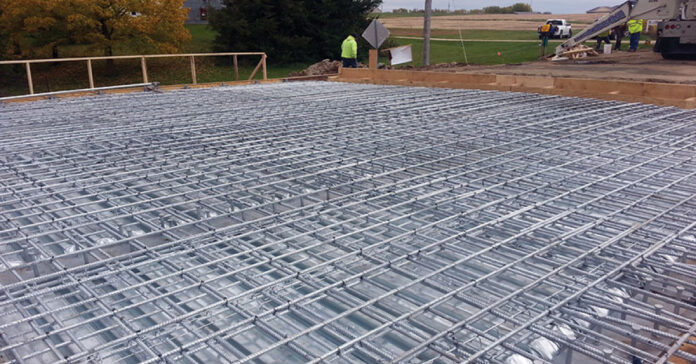
Concrete is often assumed to protect embedded steel, yet chloride penetration from sea spray and carbonation of the concrete matrix can initiate corrosion. Once corrosion begins, expansion of the rebar causes cracking and spalling of the concrete.
“Galvanized rebar is critical for infrastructure in marine and chloride-rich environments,” stresses Norton. “The zinc coating delays the onset of corrosion, and once initiated, zinc sacrifices itself to protect the steel. This dramatically extends the service life of bridges, parking garages, and marine structures.”
Zinc coatings are not optional extras but fundamental to resilient and sustainable infrastructure. “By extending the service life of steel, zinc reduces maintenance, improves safety, and ensures reliability across critical infrastructure systems. For South Africa’s coastal cities and towns, the adoption of hot-dip galvanized steel and galvanized rebar is essential to building infrastructure that endures for generations,” concludes Norton.