











South Africa Sugar Industry faces import crisis
By Adrian Ephraim
South Africa’s sugar industry is fighting for its life. A flood of cheap imports is threatening to gut a sector that supports over a million people in rural KwaZulu-Natal and Mpumalanga, and the future of entire communities is on the line.
The whole fight boils down to a complicated-sounding tariff called the Dollar-Based Reference Price (DBRP). It’s basically a price floor, designed to shield local farmers from global competitors who are propped up by heavy government subsidies. But with different industry groups now battling over whether to raise or lower this price, the future for 27,000 farmers and 65,000 farmworkers hangs in the balance.
How did we get here?
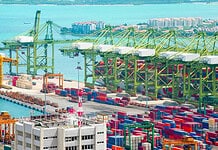
Things took a sharp turn for the worse in 2024. According to Dr Thomas Funke, CEO of SA Canegrowers, the amount of sugar being imported exploded. Between January and November 2024, it jumped from around 60,000 tonnes to more than 140,000 tonnes in the same period of 2025 – a massive 136% increase in just one year.
“For every tonne of sugar that’s imported, the South African industry has to export one tonne,” Funke explains. “That means we’re losing around R7,300 per tonne when we’re forced to sell on the world market instead of locally.”
The math is brutal. By November 2025, those forced exports had already cost the industry over R733 million. The wider industry body, SASA, estimates the total economic damage is already over R1 billion for less than one full season.
What is the dollar-based reference price?
Think of the DBRP as a way to level the playing field. It’s currently set at $680 per tonne. It’s meant to protect South African producers from a world market so distorted that only Brazil can really turn a profit selling at global prices.
When imported sugar comes in cheaper than the reference price – say, at the current world price of about $420 a tonne – customs slaps a duty on it to make up the difference. This brings the final cost up to $680, which should, in theory, let local producers compete on things like service and reliability, not just on a price they can’t match.
“The world sugar price is not a fair reflection of the cost of production in any country except Brazil,” Funke points out. “Brazil and India’s ethanol programmes subsidise it. Almost every other country has some form of protection to make sure they have a local sugar supply.”
The problem? The DBRP hasn’t been updated since 2018. In that time, South African production costs – for everything from fuel to electricity – have shot up, sometimes at three times the rate of inflation. Yet, the reference price has stayed stuck at $680.
The battle lines
In October 2024, SA Canegrowers and SASA formally asked that the DBRP be increased to $905 per tonne, arguing it’s the only way to reflect the true cost of growing and milling sugarcane today.
But in July 2025, the Beverage Association of South Africa (BevSA) hit back with its own proposal: to slash the DBRP to somewhere between $552 and $650. They argue that cheaper sugar would be better for consumers and drink manufacturers.
Funke doesn’t mince words about what would happen if BevSA gets its way. The impact would be “absolutely catastrophic,” he warns. “The industry would lose thousands of jobs overnight. Many farmers wouldn’t even be able to cover their costs.”
What’s at stake?
Now, the International Trade Administration Commission (ITAC) has stepped in, launching its own investigation to figure out what level of protection is fair, and it’s asking everyone involved to make their case.
For Funke and the communities he represents, this is about people, not just policy. “When sugar mills close and farmers go out of business, there is no other opportunity in these rural areas,” he stresses. “People lose their jobs, their livelihoods, and will have to migrate to cities to try and find work.”
The industry is the backbone of a vast rural area, stretching from Malelane in the north to Port Shepstone in the south. These are places with few other jobs. Each of the 12 sugar mills is a huge, complex 24/7 operation, with 11 trucks an hour needed just to keep one mill running.
A question of fairness
Funke’s message to the commissioners is simple: “The level of protection has to be fair. It has to protect the industry, protect those jobs, and ensure this playing field between a very distorted world market and the local market allows businesses to thrive.”
As ITAC weighs the arguments, the outcome will decide whether South Africa keeps its ability to produce its own sugar or becomes dependent on imports from subsidised global giants. For a million people in the countryside, the decision will change everything.
*Want to help? When you buy sugar, check the packet. Look for “Produced in South Africa,” not just “Packed in South Africa.” It’s a small detail that tells you whether you’re supporting local farmers or just buying repackaged imports.*