










GROWING awareness of the benefits of full crane automation is currently the most noticeable trend in Africa’s overhead crane industry.
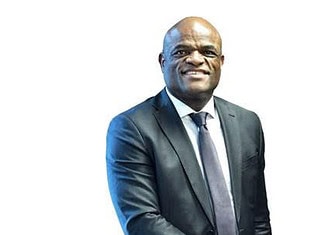
This is according to Marc Kleiner, managing director of local crane manufacturer Condra, where records show a significant increase in the number of tender documents specifying provision for crane automation post-installation.
He was commenting on market characteristics emerging during the year just ended.
Kleiner said that although Condra received no orders for fully automated cranes during 2022, the number of enquiries for such machines was well up year-on-year.
“Repetitive crane operations such as those in refinery operations offer clear potential for increased productivity through automation,” said Kleiner. “South Africa has the technology and local manufacturing capability to deliver it, and now the market is becoming increasingly aware. I don’t think we will have to wait long before automation gains a foothold.”
Full automation implies zero involvement by machine operators. It is the ultimate step beyond an overhead crane in which the machine executes a limited number of pre-programmed, automated operations, but still needs an operator to control the crane during randomised, non-repetitive lifting functions (semi-automation).
Kleiner stressed that Condra has offered full automation across its product range since 2020, the culmination of continuous development since the company’s first semi-automated crane installation at a Durban spice company in 2003. That machine comprised a grabbing crane installed to pick spices and transport them to specific points for release over hoppers servicing blending and packing operations.
Pointing to the motor industry for indicators of anticipated advances in overhead crane technology, Kleiner said that motor vehicles often led technological development in crane manufacture by several years, but that in the case of automation these roles had been reversed, with overhead cranes currently leading the way forward.
“Vehicle manufacturers were first to use computers to monitor certain mechanical functions,” Kleiner explained. “Crane manufacturers lagged this development, and it was a similar case with the control and smoothing out of lifting and lateral movement. It took time for crane manufacturers to introduce variable speed drives, whereas comparable control technologies had been present in motor vehicles for decades.
“This is not the case with automation, however. With automation, the crane companies are in the lead,” Kleiner said. “The autonomous crane exists and is already performing useful work, whereas the autonomous motor car is still in the experimental phase.”
Kleiner noted that about one in five enquiries received by Condra now includes specified provision for future automation, a requirement met by incorporating wheels and rails with tighter tolerances, and provision of fitment and wiring points for the future attachment of cameras with cognitive movement control ability, the main requirements for automation.
Asked about other trends in the overhead crane industry emerging during 2022, Kleiner pointed to the fragmentation of the market into two main types of supplier: those delivering specification-driven overhead cranes of the highest possible quality designed and manufactured to fulfil a specific customer function, and other companies importing lower quality machines for shoehorning into the application.
“There are still companies out there hoping to make a quick fortune,” said Kleiner. “They don’t manufacture locally, so they buy the closest suitable standard machine abroad with an eye getting the job done in the short term. They are not looking to the long term, and these types of cranes generally fail early on under the stress of the application.”
Kleiner noted that this trend has been exacerbated by the formation of small, splinter companies resulting from the downsizing of some of South Africa’s key multinational crane manufacturers.
“Retrenched staff frequently form small start-ups allied to an external manufacturer in Europe or China. They supply a standard machine, the engineering of which often fails because the design is not suitable, forcing the supplier to redesign and rectify after commissioning with a consequent halt to the customer’s production,” he said.
Visit Condra’s website: www.condra.co.za