










By Sue Segar
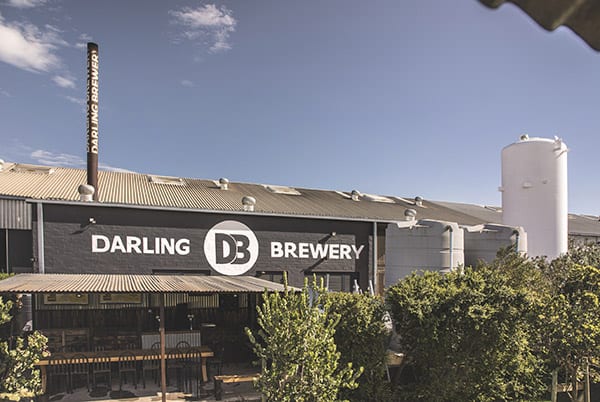
CRAFT beer brand, Darling Brew- Africa’s first carbon neutral brewery and recent winner of the title of Best Local Craft Beer in KFM’s Best of the Cape Awards – is making inroads into sustainability by working to upcycle their byproducts into usable products.
“We are working on a number of initiatives to reduce our carbon footprint, with some very promising results,” said Tewie Roos, managing director of the brewery which was established in 2010 in the small town of Darling on the West Coast. Of the Big 5 Craft Breweries, Darling Brew is the only independent brewer in the country, and, said Roos, is consistently growing volumes, despite challenges like loadshedding. It has, as a key goal, to “tread lightly on the earth”.
One area of success has been the Darling Brew Beer Grain crisps – which Roos described as a “uniquely South African creation”.
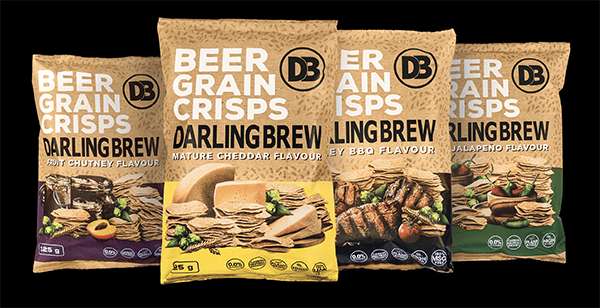
In 2018, the brewery started using the spent grains from the beer-making process to produce crisps, which, Roos said, are not only contributing to the company’s sustainability drive but are “a significantly healthier alternative to regular chips”.
Roos added that the brewery is experimenting with other byproducts to ascertain whether they can be upcycled.
“One of our byproducts is yeast. Most breweries dry their yeast and sell it off to processes to create products like Marmite etc. We are working towards autolysing, or deactivating the yeast cells, so that the yeast can be used in animal feed. If we can combine that with the remainder of spent grain that is not converted into crisps, it will be able to provide a much higher protein value for use as animal feed,” he said.
Expanding on how the crisps are made, Roos said: “When brewing beer, malt and barley is mixed with hot water in the mash tun, once the grains are mashed, the liquid is separated from the grains. This remaining grain is called spent grain which we turn into the crisps.
“There is still a considerable amount of moisture in these spent grains, and thus unlike regular chips where as much as 1500 litres of water is used with 1000kgs of maize, our crisps require no additional water. By utilising the spent grains, we are minimizing food wastage and contributing to the conservation of our water supplies.
“These spent grains are then converted into a dough which is cut to our unique hexagonal shape which like our Slow Lager is inspired by the Geometric tortoise and the shape found on its shell. The hexagonal crisps are then baked, and flash fried so as to create their crispness.”
Roos said the Darling Brew Beer Crisps are 50% lower in fat than regular chips and high in fibre.
The crisps were relaunched about 18 months ago, during which they introduced new packaging in four flavours – Mature Cheddar, Sticky Barbeque, Fruit Chutney, and Jalapeno.
In an interview with Cape Business News, Roos said the crisps team had continuously refined the recipe to improve the product. “It is, today, and particularly since our relaunch, one of the best, growing products in our company. In fact, the only product growing faster than the crisps is our Tjaila (beer shandy) range.
“In terms of volumes, we are small compared to the big players on the market, like Simba and Willards, but in terms of getting product into the market – and doing it in a sustainable fashion – we are doing well.
“We are very proud to be the first brewery in the country to take spent grains and do this type of value add to the product. We are also excited about the revived interest in the crisps. The good news is we make a lot of beer so we have plenty of spent grains.”
In a further move towards sustainability, the brewery has converted the majority of its packs into carton sleeves, away from plastics. “We are trying to avoid plastics in our process, as much as possible.”
Darling Brew’s most recent award was the KFM award for best craft brewery in the Cape, earlier this year.
This was the second time the brewery has received this award.