









COMMENTS recently closed on the Western Cape Government’s (WCG) draft Inclusionary Housing Policy Framework.
One of the organisations that have delivered comment on the WCG’s inclusionary housing policy is the Western Cape Property Development Forum (WCPDF), an organisation that has been actively engaging with various public and private roleplayers on the topic since 2018. Yet the organisation’s members – drawn from the full spectrum of y professionals involved in the production of property – are concerned that, to date, all inputs and practical considerations raised by the industry have either been misunderstood or fallen on deaf ears.
Government’s own failures to address spatial injustice
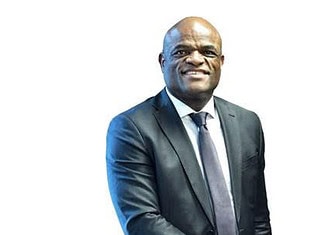
According to WCPDF chairperson, Deon van Zyl, three critical issues exist for the WCPDF “Top of the list is government’s ongoing failure to release well-located urban land that could be used for affordable or inclusionary housing in the first place.
“Then there is the failure to facilitate the development of new economic nodes in previously disadvantaged areas and, finally, a fundamental failure to develop viable, affordable public transportation systems that would link people from where they currently live to economic opportunities.”
Van Zyl refers to these as the “elephants in the room” which government refuses to acknowledge, and which will only result in a policy framework that cannot be taken seriously: “The fact that a topic of this magnitude is addressed in isolation and not in an integrated, holistic economic growth strategy confirms the intent of government to shift its social and constitutional obligations onto the private sector.”
Among the WCPDF’s concerns around the policies being formulated (including the City of Cape Town’s, yet to be released although already more than four years in the making), is that they’re reactive rather than proactive, and were it not for the efforts of activist groups would never have seen the light of day.
Yet another tax on an already over-taxed industry
Van Zyl explains: “The point of departure on the inclusionary housing policy framework is the concept of land value capture (LVC), whereby government is the owner of the development rights on a particular piece of land on behalf of society. The release of such rights to the private sector will come in the form of a levy to be paid by the developer and the cost passed onto the end user and market in general.”
In the policy framework, payment of cash taxes is replaced with “payment in-kind”.
Adds Van Zyl: “If not a tax, then the granting of rights in lieu of payment would equate to the selling of development rights, which is not allowed in legislation however, the only alternative description for the concept of LVC can therefore be that it is a taxation on property development, which ultimately increases costs to the open market’s tenants or purchasers of residential property.”
Paying for efficiencies which government should already be delivering
“As if these weren’t enough,” says Van Zyl, “our sector is encumbered by extreme inefficiencies in government which, on the one hand, is incapable of proactively creating infrastructure capacities while on the other suffers from an inability to process the plethora of statutory applications preceding any fixed capital investment.”
“Government should seek to co-opt these private sector skills and resources to fill the gap left by government’s own nature and characteristics,” says Van Zyl. “Only when government understands the contribution and qualities of the private sector can it start to consider the roles and responsibilities of a partnership relationship.
The proposed solution
“The only way forward,” says Van Zyl, “is to go back to the drawing board with a four-phase approach that should be the guiding principle in any policy framework document of this kind.”
The approach recommended by the organisation is as follows:
- Lead by example:
- Explore relationships between employers and employees:
- Incentivise rather than tax the private sector:
- And only then, when all else fails and as a last resort: tax the private sector.