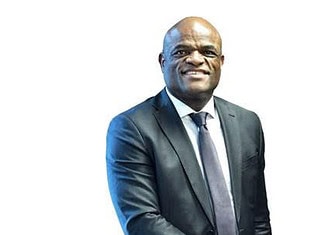









The votes have been cast and counted, and the talk has turned to coalitions. However, a coalition is not a necessity or a requirement for the formation of a government. This is according to political analyst, author and entrepreneur, Moeletsi Mbeki who shared his views on the aftermath of the 2024 elections at the latest PSG Think Big webinar. The series is aimed at promoting open dialogue and stimulating critical engagement on some of the country’s most pressing issues led by award-winning journalist, Alishia Seckam.
Much of the public discourse is focused on coalitions as the next step after the election. But Mbeki was quick to challenge this line of thinking. “People are getting carried away by coalition thinking, but nowhere in the Constitution does it say that this is a necessity. We’ve seen that parties looking to govern by forging unity out of diversity tend to fragment when they’re confronted by a fundamental political or economic crisis”.
He said the African National Congress (ANC) support falling well below 50% was not a surprise. “Since the 2016 local government elections, the ANC has been losing support, primarily from black working-class voters in the metros,” he said. He attributes this to the policies of the ANC which he says do not resonate with the working class and the poor. “Hopefully the ANC gets the message voters sent and learns something.” However, losing an outright majority does signal a change in how government could work going forward.
Policy reform and addressing the mismanagement of funds
Mbeki said that if he was advising the next government on how to stimulate the economy, he advocates for the scrapping of Black Economic Empowerment (BEE) policies. He says BEE has been the main driver of corruption and inefficiency in our economy and negatively impacted entrepreneurship. “Interestingly, the uMkhonto weSizwe Party (MK) and the Democratic Alliance (DA) say it doesn’t agree with this policy, either,” he added.
Analysing the current state of South Africa, Mbeki says, “South Africa is not off track. The ANC government has not brought about a crisis in our society. It has mismanaged the railway system, the electricity supply system, and discouraged entrepreneurship by BEE policies. However, that doesn’t mean the country is in a crisis.”
Citing public sector spending as a critical problem, Mbeki added, “We have one of the most unequal societies in the world coupled with one of the highest unemployment rates, yet the public service in South Africa is the highest paid in the world as a percentage of Gross Domestic Product (GDP).” He said that the Organization for Economic Cooperation and Development (OECD) did a study in this regard and found that salaries were more than 14% of GDP, while the public sector cost for other countries at similar stages of development, such as Indonesia and Chile, is 5% of GDP.
Looking forward Mbeki concluded, “We have yet to form new parties in South Africa that represent all the social and economic groups. We are at the beginning of our democratic journey. In the years to come, new parties will emerge. We should refrain from despairing and thinking that there are instant solutions for a perfect government.”