










Rethinking Readiness: How Organisations Can Thrive on Uncertainty in 2026
The mindsets that turn uncertainty into opportunity
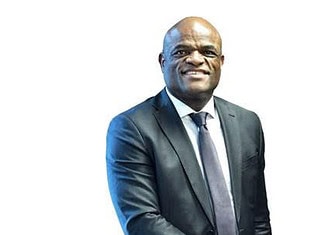
By Richard Perez, Founding Director of the Hasso Plattner d-school Afrika at the University of Cape Town
In the days following the recent World Economic Forum Annual Meeting, the distance between global decisions and local consequences feels uncomfortably short. Tariff negotiations, technology regulations, and trade policy shifts made in Davos are already surfacing in South Africa as delivery delays, price volatility, and financing challenges.
For many organisations, planning for 2026 already feels outdated. Policy shifts land with little warning. The old promise of “stability through strategy” is breaking down. Annual planning cycles are struggling to keep pace with a world where market conditions can change between board meetings.
Yet as South African leaders finalise their strategies for the year ahead, there is an opportunity to rethink what readiness really means. The most resilient organisations are proving something important: uncertainty is no longer just a risk to be managed. It is a strategic environment to be designed for.
Research shows that agile organisations outperform their peers by significant margins, not because they predict the future better, but because they adapt faster when it arrives. In 2026, advantage will not belong to those with the most detailed forecasts but to those who can learn in motion.
Seeing Problems Differently
The organisations gaining ground in 2026 share a common trait: they treat disruption as information, not failure. When consumer behaviour shifts or regulations change, they do not interpret it as a breakdown in planning. They treat it as a signal to ask better questions. This requires comfort with ambiguity as progress is not linear, and solutions are provisional. Leaders who navigate complexity well accept that they are working with incomplete data and that clarity often emerges through action rather than analysis.
In volatile environments, waiting for certainty becomes the highest-risk strategy of all.
Listening Creates Better Strategy
Strong strategy now begins with proximity. Organisations that engage directly with customers, employees, and communities move from abstract planning to grounded decision-making. They replace assumptions with evidence.
A financial services provider can spend months refining a new offering in a boardroom or it can test it with 100 customers over six weeks, learning what resonates and adapting it in real time. The second approach reduces risk, accelerates insight and builds trust by showing responsiveness.
In South Africa, where markets are diverse and conditions uneven, widening who is in the room is not simply inclusive practice; it is competitive advantage. The broader the perspective, the more resilient the strategy.
Action Frees Ideas
The gap between organisations that stagnate and those that progress is often measured in speed. In 2026, ideas cannot be trapped inside slide decks and steering committees.
Making ideas tangible – through pilots, prototypes, or small experiments – turns possibility into momentum. Iteration manages risk by allowing organisations to learn faster than their competitors.
A logistics company facing port congestion and rail disruption can treat volatility as operational failure, or it can use it as a catalyst to redesign customer experience: testing real-time tracking, two-hour delivery windows, and proactive rescheduling. What competitors frame as apology becomes differentiation, turning constraint into creative fuel.
Leadership Sets the Pace
This, however, does not scale without leadership behaviour changing first. When executives interrogate their own assumptions, stay curious about what they do not know, and pivot visibly in response to new information, adaptability becomes cultural rather than performative.
Leaders who treat learning as part of their role signal that changing direction is not weakness. It is competence. That signal gives their teams permission to experiment, reflect, and move.
The Opportunity Ahead
South Africa’s economic context in 2026 will remain unpredictable. Organisations that continue to plan for stability will find themselves perpetually behind reality. Those who design for complexity will discover opportunities that rigid models cannot see.
The question is no longer whether leaders can predict what is coming. It is whether they are building organisations capable of learning, adapting, and responding regardless of what unfolds.
Curiosity, reflection, collaboration, and a bias toward action are not new ideas. But in a year defined by disruption, they will separate organisations that merely endure from those that outperform.
About the Hasso Plattner d-school Afrika at the University of Cape Town (UCT)
The Hasso Plattner d-school Afrika at the University of Cape Town (UCT) is the only dedicated academic institution on the continent offering academic training and capacitation in Design Thinking to university scholars and professionals in the public and private sectors. The d-school Afrika aims to empower people from all over the African continent to embrace a design-led mindset to create human-centred solutions that meet the demands of an ever-changing planet. By offering experiential training, guiding the practical application of Design Thinking within organisational structures, and making programmes relevant to modern-day challenges, the d-school Afrika is producing a calibre of African thought leaders whose contributions can change the continent – and the world. For more information, go to https://dschoolafrika.org