










Several economic analysts and financial sector experts have identified Africa as the next frontier for growth and development. Currently, the continent has the youngest population in the world, with a median age of 18.8 years as of 2022. This, coupled with the fact that several of its markets are nearing maturity, signifies a golden opportunity for businesses to take the lead in stimulating economic growth. Powered by this momentum, African small businesses are the key to provide solutions to address some of the continent’s most pressing challenges.
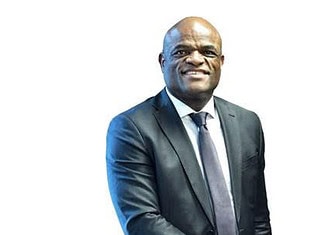
This is the opinion of Matthew Cumming, Regional Investment Manager: East Africa at small and medium-sized enterprises (SME) financier firm, Business Partners Limited who believes that Africa’s SME sector is one of the vital cogs that have the potential to drive the engine of economic growth and bring about innovation on the continent. Furthermore, as he says: “SMEs represent immense value in terms of their ability to bring about much-needed socioeconomic transformation and help set Africa up as a serious contender on the global playing field.”
Jobs for a growing population
Unpacking some of the key reasons why the development of the SME sector is vital to the future of the continent, Cumming references the sector’s job creation capability as one of its most valuable contributions. “Small businesses represent far more than a healthy GDP – they represent the promise of a viable livelihood. And in African countries, where families are typically larger than other regions, a single job could sustain multiple people.”
According to the most recent estimates, African small businesses are responsible for up to 80% of jobs across the continent. Considering that Africa’s population is set to double by 2050, to an estimated 2.4 billion, the demand for jobs is imminent. For many Africans, employment at a small business represents a path out of poverty. For others, who make up the one of the highest constituents of aspiring entrepreneurs, Africa is a chance to make their mark on a growing sector.
Unique solutions to unique problems
Within Africa’s SME sector lies countless opportunities to solve a number of unique problems. Small businesses have become associated with a drive towards innovation, with many becoming thriving hubs for new, creative solutions that can speak directly to the needs of the African populace.
In Cairo, the automotive market is dominated by independent dealers who rely heavily on traditional classifieds. Recently launched startup, Sylndr has succeeded in simultaneously addressing the demand for second-hand vehicles due to price-sensitivity, as well as the need for a tech-enabled e-commerce car marketplace. Sylndr is a key example of a startup whose impact would simply not be as effective or useful in more developed economic environments.
Another example is Tala – a digital financial services startup based in Kenya. The startup provides a way for the country’s large, under-served population of unbanked individuals to borrow, save and grow their money. In Africa, where greater financial inclusion is a relatively unmet need, businesses like Tala offer an innovation solution to a real problem.
Innovation as a mark of global competitiveness
Examples like these are also demonstrations of the potential that African entrepreneurs have to push innovation on the continent, for the continent. This, as Cumming explains could play a pivotal role in setting Africa up in the global arena as one of the world’s fastest growing hubs for innovation and creativity.
Innovation as a driving force of economic growth is particularly important given Africa’s inherent abundance in agricultural and mineral resources. In order for the continent to harness its full potential, these natural resources need to be translated into shared wealth.
An estimate of the domestic gas market’s growth potential by independent research firm, Brookings, forecasts that by capitalising on several unexplored, high-potential regions, the market could grow by 9% year-on-year over the next two years. By 2025, due to the large, unfulfilled demand for energy, African could use almost 70% of its own gas.
Rooted in the success of its small business sector, a boost for local production could therefore materialise in sustained economic development, which is arguably the continent’s most important goal.
As Cumming concludes: “There has never been a better time for small businesses to rise to the challenge of driving social and economic transformation in Africa. As we stand on the cusp of what will undoubtedly become a history-making era for the continent, we need to do everything we can to encourage foreign and local investment into small businesses as major players in the next step for Africa.”