













South Africa’s digital boom: Phoenix Contact balances power reliability and sustainability
By Jullian Rocha, Phoenix Contact Product Manager: Power Reliability
SOUTH Africa has firmly established itself as Africa’s primary digital hub, boasting over 60 active facilities representing roughly 500 MW of power capacity. Driven by hyperscale expansions from global tech giants and an accelerating demand for cloud computing and local artificial intelligence (AI) readiness, the country’s digital infrastructure pipeline is growing.
However, this rapid growth faces severe localised infrastructure constraints. Despite recent stability in the national grid, legacy municipal transmission vulnerabilities, grid connections, and rising water scarcity have forced operators to rethink resource management.
As developers expand multi-megawatt campuses, achieving consistent uptime requires a deep shift toward energy resilience and smart automation. By optimising interfaces across power distribution, energy protection, and building control, Phoenix Contact is supporting local operators as they build towards a sustainable All Electric Society.
Securing a Tier III or Tier IV (Hyper Scale) data centre means protecting the facility from unstable grids, downtime and localised surges. Unpredictable lightning strikes and current peaks present serious financial risks, with the potential to trigger hardware fires, critical system downtime, or catastrophic data loss.
To effectively mitigate these risks, Phoenix Contact introduces comprehensive energy resilience strategies early in the facility design phase. By combining advanced surge protection devices, lightning protection, and redundant industrial power supply systems directly into critical uninterruptible power supply loops, operators can safeguard essential equipment. This protective blueprint reduces unplanned failures, ensuring multi-tenant facilities meet strict service level agreements.
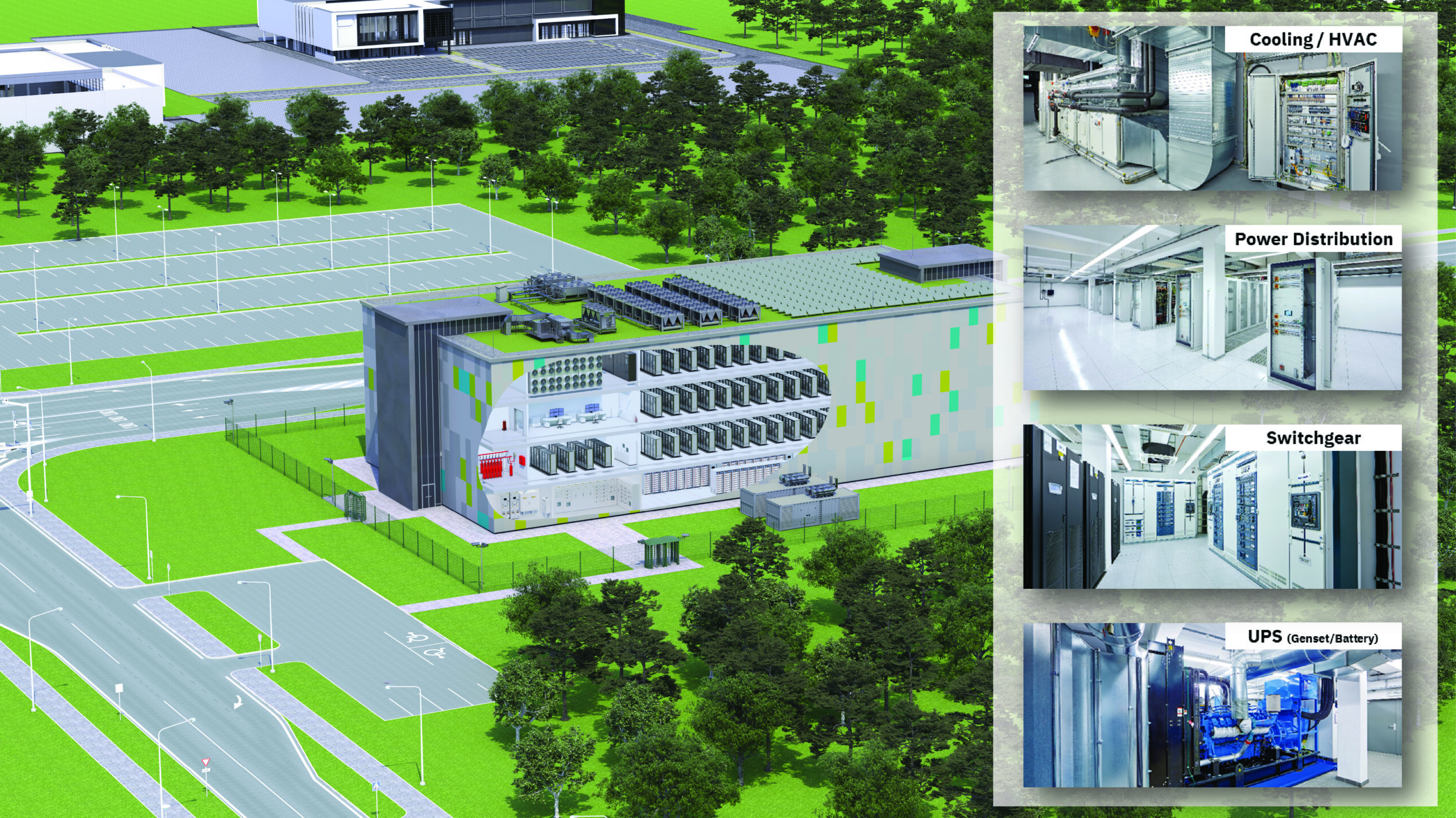
Distributing power smoothly throughout a high-density server hall requires minimised thermal loss and secure connections. Local data centre developments must manage substantial grid allocations effectively, making optimisation within Power Distribution Units a primary engineering objective. Phoenix Contact addresses this challenge through tailored control cabinet components and high-performance connection portfolios.
The company’s building automation and energy monitoring tools deliver detailed oversight for large-scale operations. By integrating local renewable energy arrays, microgrids and battery storage directly into a unified automation platform, facilities can actively match their consumption profiles to available capacity. Furthermore, these smart monitoring systems orchestrate cooling infrastructure autonomously, allowing operators to run liquid or water-conscious cooling loops with high precision, lowering overall Power Usage Effectiveness ratings.
Phoenix Contact remains a vital partner by combining proven local technical knowledge with world-class automation and electrification solutions, ensuring local data centres achieve continuous, reliable operations while supporting a sustainable and energy-efficient future.