










FIRE protection remains one of the most critical challenges in petrochemical production. Facilities handle highly flammable substances under varying operating conditions, creating constant fire and explosion risks. In many older plants, fire protection systems were installed at different times, resulting in a mix of technologies that can complicate safety management.
Despite these complexities, foam-based extinguishing systems remain the preferred solution. Foam can rapidly suppress flammable liquid fires and prevent them from escalating, making it an essential component of modern petrochemical fire protection.
Effective strategies focus on three key high-risk areas: production zones, tank farms and storage facilities.
In production areas, deluge systems and permanently installed monitors are commonly used. These systems are typically supplied by stationary foam proportioners, allowing rapid response to fires involving volatile chemicals.
Tank farms present another major risk. Flammable liquids are stored in tanks with floating or fixed roofs, where fires can spread quickly if not controlled. Foam is discharged through foam pourers connected to stationary proportioners, while mobile firefighting equipment provides additional support during complex incidents.
Warehousing and storage facilities, including bulk storage and high-rack warehouses, rely on sprinkler or deluge systems combined with foam proportioners. These systems can distribute foam across large areas to contain fires quickly and prevent further damage.
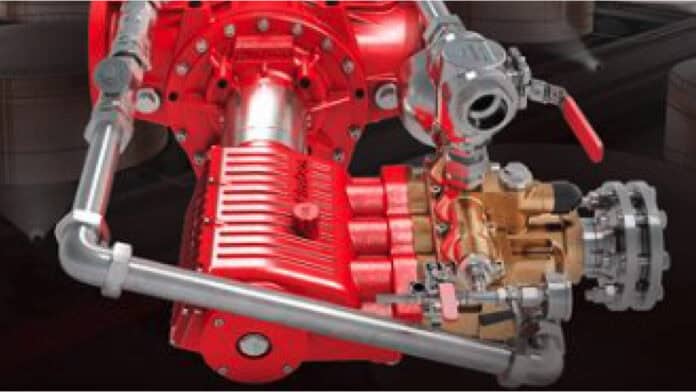
Stationary proportioners play a key role in efficient foam delivery. Often located in pump rooms near water storage tanks, these systems operate mechanically using the flow of extinguishing water. This allows them to be installed at a safe distance from hazardous areas while maintaining reliable performance. They also provide precise foam dosing and can handle high-viscosity foam agents, ensuring effective suppression.
Fixed monitors are another important element of petrochemical fire protection. Compared with extensive pipe networks, monitors can reduce infrastructure costs while maintaining strong firefighting capability. Modern designs minimise pressure loss and allow foam to be projected over long distances with high accuracy. Many monitors are built from corrosion-resistant materials for use in harsh environments and can be integrated into automated systems for remote operation.
Mobile firefighting units provide an additional layer of flexibility. Fire trailers equipped with proportioners and monitors can be quickly deployed to incidents beyond the reach of fixed infrastructure, reducing the need for personnel to enter hazardous areas.
By combining reliable foam systems with both fixed and mobile firefighting equipment, petrochemical plants can strengthen their fire protection strategies, reduce operational risk and better safeguard both personnel and critical assets.