












Western Cape R22m fodder relief package raises pressure on meat and dairy processors
By Kris Van Der Bijl
The Western Cape Department of Agriculture has approved R22 million in risk reduction relief to provide fodder support to livestock farmers across the province.
The announcement, made on 8 April, was framed as a means by the provincial government to aid farmers.
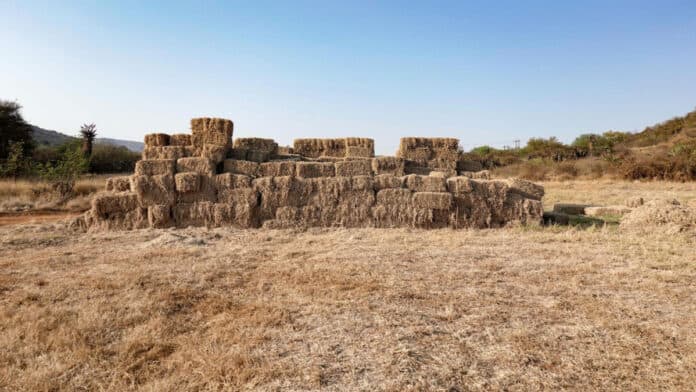
But the current dry conditions are not a new problem. The Western Cape endured a prolonged drought between 2015 and 2022 and the veld never fully recovered.
As Meyer’s office told Cape Business News: “The natural veld remained in poor condition and would require at least three consecutive years of above-average rainfall to recover.”
Those years have not arrived. “Average and below-average rainfall has resulted in many areas of the province not having recovered, leaving the natural veld in poor condition.”
This season’s stress is landing on a system that was already depleted before it began.
A bridge, not a solution
The Department is candid about the limits of the package.
“The R22 million allocation will provide emergency relief to many farmers for approximately one month,” Meyer’s office confirmed.
A request for an additional five months of funding has already been submitted to the national Department of Agriculture.
Relief is delivered through a voucher system, redeemable only at registered co-operatives and restricted to fodder purchases.
Qualifying areas are determined by veld condition classifications from Department plant scientists, and the timing gap is where the real risk lies.
The Department does not sidestep it. “As with any hazard affecting the agricultural sector, there is an inherent risk that not all farmers may be reached timeously,” Meyer’s office said.
The downstream consequences
For meat and dairy processors, the consequences of significant herd contraction are blatant to even those outside this field.
The Department sets them out directly. “Abattoirs and dairy plants are capital-intensive and rely on consistent volumes to stay efficient. If there is a shortage of raw material, processors may run below capacity, which pushes up per-unit processing costs and erodes margins.”
Supply competition adds further pressure.
“With fewer animals or lower milk output, processors compete more aggressively for raw supply. That can drive up farmgate prices, which is positive for producers in the short term but squeezes processors, especially those locked into fixed-price retail or export contracts.”
The Department is transparent about where costs will ultimately land. “The downside of all this is the costs that are ultimately borne by a consumer already squeezed from multiple angles. In the longer term, this can lead to factory and plant closures, which would further lead to more complex problems beyond unemployment.”
In coordination with the processing sector, the Department says engagement with industry bodies and commodity organisations is standard practice when herd contraction signals emerge.
Whether that engagement is currently active at the scale the conditions warrant was not confirmed.
One month of cover, five months needed
The arithmetic is straightforward. R22 million buys approximately one month. The Department has asked Pretoria for five more.
Until that request is resolved, the Western Cape’s livestock producers and the processors who depend on them are operating without the cover the season requires.