










Tariff whiplash: how Western Cape agri-processors are engineering a way out
By Adrian Ephraim
For an industry that feeds much of the world counter-seasonally, the past 18 months have been an exercise in planning around chaos.
The Western Cape produces almost half of South Africa’s agribusiness exports and roughly 70% of its beverage exports, and no sector has felt the turbulence of shifting United States trade policy more sharply than the province’s agri-processors, packers and cold chain operators.
The story keeps changing. The 30% “reciprocal” tariffs that US President Donald Trump imposed in August 2025 fell away after a February 2026 US Supreme Court ruling found they exceeded emergency powers. A temporary 10% framework replaced them. Then, on 24 July 2026, the Trump administration imposed fresh Section 301 tariffs tied to forced-labour trade rules, setting South Africa’s rate at 12.5%.
Crucially for the Cape, the impact is split by product. Oranges won a tariff exemption in November 2025 and continue to enter the US duty-free. Mandarins, wine and table grapes did not.
Commenting on the July measures, Dr Boitshoko Ntshabele, CEO of the Citrus Growers’ Association of Southern Africa, said, “My take is that these tariffs are now final, and unlike ‘Liberation Day tariffs’ which were ruled to have been noncompliant with statutes in February.” The finality matters. Growers and processors can plan around a known cost. They cannot plan around a moving one.
The stakes for the Cape
The numbers explain the anxiety. Citrus alone, exported mainly from the Western Cape and Limpopo, generates roughly R1.8 billion a year from the US market, and analysts estimate 35,000 citrus jobs could be at risk, with up to 100,000 jobs across agriculture and automotive threatened overall. In rural districts, those jobs have nowhere else to go.
Donald MacKay, CEO of XA Global Trade Advisors, put the geographic risk plainly: “In rural areas in the Western and Northern Cape, where citrus and table grapes are major exports, there’s very limited capacity to absorb labour.”
The AGOA safety net, meanwhile, has frayed to a thread. The African Growth and Opportunity Act was extended in February 2026, but only to 31 December 2026, and the reciprocal tariffs override its benefits regardless.
Diversify, add value, hold the line
The response taking shape across the province is focused on three areas: new markets, deeper value-add, and better logistics.
China has emerged as the standout opportunity. In April 2026 an amended cold-treatment protocol for citrus took effect, and a zero-tariff programme opened the door wider. Ntshabele has urged the sector to move fast, noting the China benefit is a two-year window that South Africa should accelerate negotiations to lock in before it expires. His broader message to the industry captures the mood: “Our work is cut out for us, and we should all commit to boosting our exports to the benefit of South Africa.”
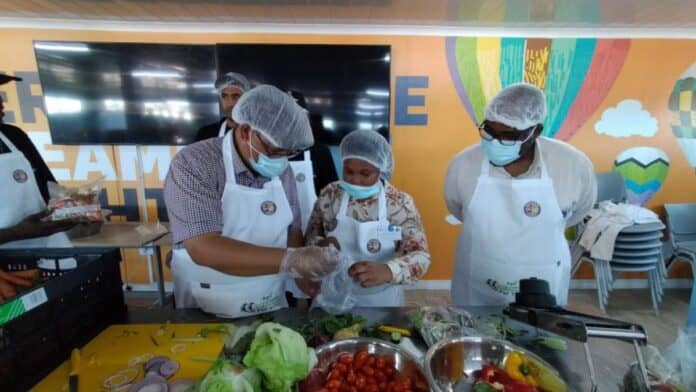
For processors specifically, the diversification play is as much about form as destination. Juicing, canning, drying and premium packaging convert tariff-exposed fresh fruit into higher-margin goods with longer shelf lives and broader market access, reducing the impact of any single market closing. That in turn drives demand for processing equipment, automation, cold storage and packaging technology, the suppliers who quietly underpin every export carton.
Logistics is the third front. Cape processors depend on the Port of Cape Town, and the fruit sector has been most affected by its congestion during peak export windows. Recent gains in ship turnaround and reefer handling matter directly to whether Cape fruit reaches Shanghai or Rotterdam in condition to sell.
The window ahead
There is one piece of near-term relief. Because the 2025 tariffs landed late in the season, and following the Supreme Court reversal, exporters may reclaim duties paid during the lapse, a liquidity injection ahead of the 2026 harvest that begins in April. Growers have also welcomed the appointment of former agriculture minister John Steenhuisen as deputy trade minister, hoping his agri-diplomacy experience helps land a bilateral deal.
The lesson of the last two years for the Western Cape’s agri-processors is evident in every forward contract: build the business so that no one tariff, in one capital, can decide the season.