







By Larry Claasen
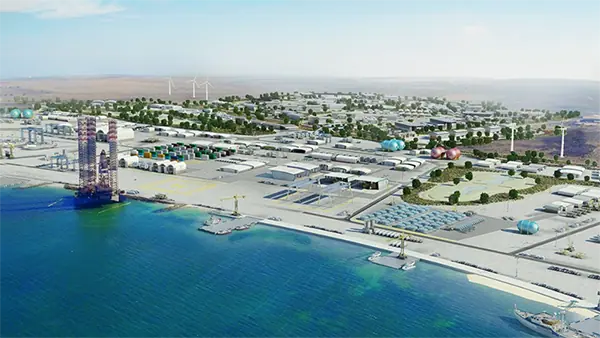
THERE is an opportunity for Freeport Saldanha to set itself up as a marine manufacturing and services hub.
This is according to the 2024/25 corporate plan for the Special Economic Zone (SEZ) based at Saldanha Bay.
Freeport Saldanha has long positioned itself as a base for the emerging green hydrogen sector, but according to its latest corporate plan, it also sees opportunities in the maritime sector.
“Marine manufacturing and services sectors include ship and boat building, marine fabrication and component supply, ship and oil rig repairs and maintenance, ship recycling and ‘green’ recycling, ship upgrades and refurbishment and the value chain of supporting services for the sector (including abnormal, project and bulk logistics),” it said in the plan.
When it came to ship and boat building, Freeport Saldanha said it could service demand for the public and private, commercial boat fabrication market.
It could also offer vessel/rig repair and “green” scrapping services. These types of services could generate R570-million in revenue.
Providing IMO Certification/Registration, ship fuel upgrades & ‘carbon’ fitment could also be one of its offerings.
South Africa already has a well established leisure yacht manufacturing sector. The plan says having Freeport Saldanha be a base for this sector and provided components could support a market that could grow to R4,2-billion.
The SEZ also sees the potential in it servicing large commercial vessels like tankers and transport vessels.
Though the plan looks at opportunities available in the maritime sector for Freeport Saldanha, it cautions that there are factors that can limit its ability to take its opportunities.
The market assessment investigated global and local trends, market drivers, size and locations of markets, growth rates and various segments, the impact of COVID-19 and the emerging drivers of future trends, including new maritime fuels and carbon abatement.
It adds: “This analysis drew the information to a South African and then Western Cape and Saldanha Bay level, and identified maritime opportunities and their applications, together with indications of the market demand potential, where available.”
Tellingly, it noted that South Africa’s inability to offer policy certainty hung over its ability to fulfill its potential in the sector.
“This market demand assessment was undertaken in the context of the current South African socio-economic policy and political framework which necessitated an evaluation of the potential competition, strengths, weaknesses, opportunities and threats within the traditional PESTEL and SWOT analysis frameworks, including deliverables to date.
“Policy uncertainty and a lack of critical service delivery, particularly in electricity and state capacity, are highlighted as significant risks that could undermine the efforts of Freeport to attract the international market participants and partners that may be required to approach the potential markets highlighted here.”
Aside from the national government playing its role, the SEZ’s also depends on the Western Cape government’s ability to implement its Growth for Jobs (G4J) strategy.
“In terms of the G4J Strategy, the maritime activities and initiatives are highly dependent on securing iron-clad agreements with the Port Authority on the port and Freeport’s development and planning.”