










Iran conflict impact on South African ports driving Cape route delays
By Adrian Ephraim
THE Iran conflict that erupted on 28 February 2026 is no longer a distant geopolitical event. For South African businesses, farmers and consumers, it is arriving at the port gate, in the form of congestion, surcharges, unpacked containers and the looming spectre of higher prices.
Major shipping lines, including Maersk and Hapag-Lloyd, have begun rerouting vessels around the Cape of Good Hope, circumventing the now-closed Strait of Hormuz. The consequence for Cape Town has been dramatic. The Cape Chamber of Commerce and Industry confirmed a 112% surge in Cape diversions as of early March 2026, adding roughly 10-14 days to transit times and significantly increasing fuel and insurance costs for global trade.
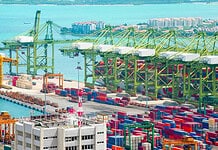
But the surge in vessel traffic is not the windfall it might appear. The Cape Chamber confirmed ongoing cargo disruptions at Cape Town Port, with some shipments to or transiting the Middle East placed on hold until further notice. A major international shipping line issued instructions to Cape Town shipping agents to remove and unpack containers already packed for export at the Cape Town Container Terminal.
Iran conflict impact on South African ports drives surge in cape shipping traffic
For Western Cape exporters, the timing is painful. Exporters Western Cape chairperson Terry Gale said: “The immediate challenge now facing exporters is what happens to containers that are already on the water or in transit to these affected markets.” Agricultural producers face a compounding problem: soaring costs of diesel and fertiliser – essential components for a viable yield – are adding another layer of pressure on an already strained system, according to Agri Western Cape.
Iran conflict impact on South African ports increases costs across supply chains
The cost pressure is moving fast up the supply chain. MSC announced an emergency fuel surcharge on select routes from 16 March, with companies on the Europe–Southern Africa route paying $60 per standard TEU and $90 for refrigerated containers.
Supply chain industry body SAPICS has warned that the effects will be far-reaching. “Supply chains are highly interconnected global systems,” says SAPICS president Thato Moloi. “When geopolitical tensions affect major energy corridors or shipping routes, the consequences travel quickly through logistics networks and ultimately reach businesses and consumers everywhere.”
Moloi points to diesel as the most immediate transmission mechanism. “Higher fuel prices increase the cost of every kilometre travelled by a transporter. That cost moves through the entire supply chain and eventually shows up on store shelves.” He notes that expected interest rate cuts in South Africa are likely to be delayed as a result of inflationary pressures triggered by the oil price spike.
South Africa’s largest retailer is already feeling the impact. Shoprite flagged that 162 containers carrying goods to stock its shelves were stuck as a result of the mounting crisis.
With oil reaching $78 a barrel, up from roughly $64 a week prior, and $100 a barrel viewed as a real possibility, any prospect of another interest rate cut has effectively evaporated, with some analysts warning the Reserve Bank could be forced to reverse course entirely.
Against this backdrop, Iran’s ambassador to South Africa, Mansour Shakib Mehr, has indicated that the same “special arrangement” extended to China and India – allowing their bound cargo to continue through the Strait of Hormuz — could potentially be offered to South Africa, given the two countries’ diplomatic ties. South Africa sources approximately 24% of its crude oil from Saudi Arabia, with Nigeria and Angola supplying the bulk of the country’s needs – meaning the Strait’s closure is more disruptive to container trade routing than to direct oil supply.
On the insurance front, marine hull rates in the Gulf have reportedly surged by up to 50%, with insurers issuing cancellation notices within 48 to 72 hours as they rapidly reassess risk exposure. “These changes can significantly increase operating costs for shipping companies,” says Moloi. “And as with fuel and freight costs, those increases ultimately move through supply chains and into the price of goods.”
The Chartered Institute of Procurement & Supply (CIPS) has urged procurement leaders across Southern Africa to stress-test their supply chains immediately, modelling scenarios including a 100% container-rate increase sustained over 60 days and a 14-day lead-time extension on all European and Middle East routes.
Iran conflict impact on South African ports forces businesses to rethink supply chains
For SAPICS, the deeper lesson runs beyond the immediate crisis. “The war in Iran highlights a growing reality for supply chain professionals: disruption is no longer the exception; it is the norm,” Moloi says. “The organisations that have responded by redesigning their supply chains to absorb disruption, and that have invested in skilled, suitably qualified supply chain professionals, will be best placed to weather the impacts.”
For now, with containers being unpacked at the Cape Town Container Terminal and farmers watching the diesel price, the geopolitics of the Persian Gulf have a very local address.