











By Mireille Wenger, Provincial Minister of Finance and Economic Opportunities
In response to the call for comment on the recently released “pre-draft” ‘South African Shipping Bill’, published under Government Notice 1376 in Government Gazette, I have indicated to the National Government that the Western Cape does not support the establishment of a new state-owned enterprise (SOE), in the form of a national shipping company.
This Bill is oblivious to the reality that South Africa has no shortage of failing SOEs, continuing to extract money needed for lifesaving and life-changing services. It also seems blind to the hard fact that we face a budget-crunch in South Africa, with a lot less money to deliver critical services to our people.
In fact, in the National Government’s Medium-Term Budget Policy Statement, we heard how R30 billion would be redirected to struggling SOEs this year alone. We also know that between 2017/18 and 2020/21, SOEs under schedule 2 to the Public Finance Management Act have made losses amounting to an astounding R119.8 billion, based on the national consolidated financial statements.
Establishing yet another SOE is not the answer.
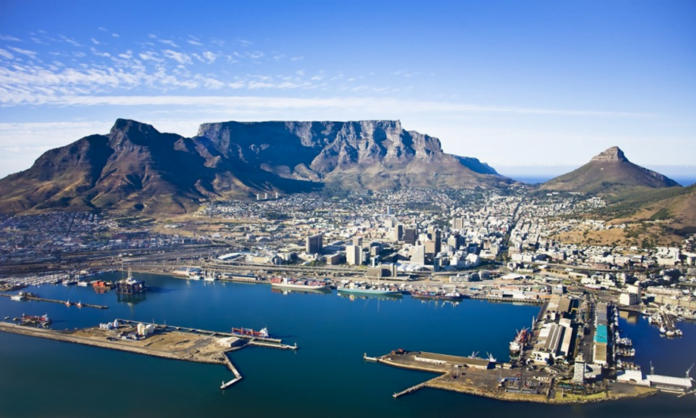
If we want to boost trade, with more shipping lines calling, we need to ensure that our Ports are efficient and that they have the infrastructure they need to function optimally. To do this, we need greater levels of private sector participation. While we welcome that this is being pursued at the Ports of Durban and Ngqura, we are concerned that the Port of Cape Town, which is an excellent candidate, has been excluded.
According to a recent research report presented at a workshop hosted by the Western Cape’s Department of Economic Development and Tourism in September, the Port of Cape Town processed R210 billion worth of exports and imports in 2021. In addition to this and based on a high-growth scenario report, the Port of Cape Town has the potential to contribute an additional R6bn in exports, roughly 20 000 direct and indirect jobs, and over R1.6 bn in additional taxes by 2026, if there is sufficient capacity and investment in key infrastructure in the port.
The answer to the challenges we face in South Africa are clear. We need to unlock much higher levels of growth through enabling the private sector to succeed. This will create opportunity, job creation, and hope for our citizens. This bill, sadly, is going in the completely wrong direction and should not be pursued at all.