










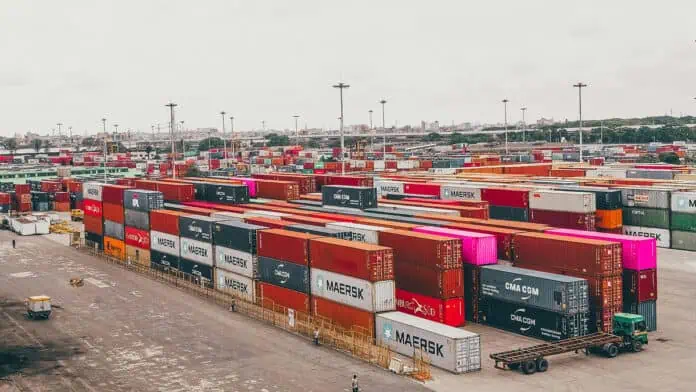
SA ports handle 4.5m containers in 2025 as logistics reforms gain traction
SOUTH Africa’s ports handled 4.473 million twenty-foot equivalent units (TEUs) in 2025, up 3.2% year-on-year, as sustained logistics reforms and increased private sector collaboration begin yielding measurable improvements across the country’s trade corridors.
The annual performance marks a significant milestone in the recovery of South Africa’s freight system, according to the latest Cargo Movement Update from the Southern African Association of Freight Forwarders (SAAFF) and Business Unity South Africa (BUSA).
Bulk cargo volumes reached 221 million tonnes, up 4.4%, while vehicle throughput surged 15% to 899,094 units, underscoring responsive trade lanes where operational conditions and demand have aligned favourably. The Durban Auto Terminal announced it had reached budgeted volumes well before the financial year-end and continues to outperform targeted volumes.
The positive trajectory comes as the landmark 25-year Transnet-ICTSI joint venture to operate Durban Container Terminal Pier 2 commenced operations at the turn of the year. The partnership is expected to raise DCT2’s container handling capacity from 2.0 to 2.8 million TEUs through new equipment and advanced technology, while materially improving operational performance, including crane productivity and ship working hours.
However, the recovery remains incomplete. Despite year-on-year gains, total port volumes remain 6.6% below 2019 levels, while full container throughput grew only 0.4% year-on-year – reflecting broader economic headwinds rather than operational constraints. Industry analysts note this indicates a lacklustre domestic economy rather than containerised operational issues.
The first weeks of 2026 illustrated both progress and persistent challenges. Weather disruptions across the Eastern and Western Cape resulted in significant delays, with Cape Town Container Terminal reporting 84 hours of non-operational time in just 11 days. The delays particularly impacted fresh produce exports, which require faster processing to reach international markets within strict timeframes.
Durban’s Pier 1 suffered knock-on effects from congestion at Western and Eastern Cape terminals, with scheduled vessels delayed at other ports. The terminal used the downtime for maintenance, aiming to increase operational cranes from four to five out of seven available. Equipment availability across most terminals remained steady throughout the period, with one or two non-operational cranes at some facilities.
Cross-border logistics showed notable improvement. Median border crossing times at South African-controlled borders decreased by more than four hours to average 8.4 hours, down 33% week-on-week. In contrast, the greater SADC region excluding South African-controlled borders remained essentially unchanged at 5.2 hours.
The Lebombo border post, a critical corridor to Mozambique, processed approximately 1,300 heavy goods vehicles daily with stable queue times averaging 2.8 hours and processing times of 2.5 hours per crossing – a substantial recovery from the festive season slowdown.
Yet challenges persist at key regional bottlenecks. Three SADC borders took around a day to cross: Beitbridge averaged 29-hour crossing times, while Kasumbalesa – the worst affected – took around three days from the Zambian side. Katima Mulilo also experienced day-long delays. Cross-border queue times across the region averaged 5.2 hours, indirectly costing the transport industry an estimated $23.8 million (R392 million) in the first week of January alone.
Regional infrastructure developments include Zambia’s announcement of higher toll fees for medium, heavy and abnormal goods vehicles – rising from $60 to $90 – alongside plans for a new toll gate near Mazabuka. Meanwhile, the Botswana Motorists’ Association is planning to relocate the Groblersbrug border post and develop a freight-dedicated bridge in response to rising corridor traffic.
Air cargo showed mixed results. International air freight to and from OR Tambo totalled 350 million kilograms in 2025, up 0.7% year-on-year, though weekly volumes in early January dropped 28% amid typical post-holiday seasonality, with daily averages of 294,381 kg inbound and 230,406 kg outbound.
Global shipping dynamics present both opportunities and risks. Sub-Saharan African imports surged 25% year-on-year through November 2025, remaining a relative bright spot in otherwise subdued global trade. However, structural overcapacity in global container shipping continues to constrain pricing power, while global GDP growth is projected at just 2.6-2.7% in 2026 – below pre-pandemic trends.
Industry analysts forecast South African container throughput of 4.57 to 4.75 million TEUs for 2026, contingent on sustained institutional reform and system-wide coordination.