









South Africa launches first harbour-based net recycling facility at the V&A Waterfront
SOUTH Africa has taken a major step in tackling marine plastic pollution with the launch of its first harbour-based net recycling facility at the V&A Waterfront in Cape Town.
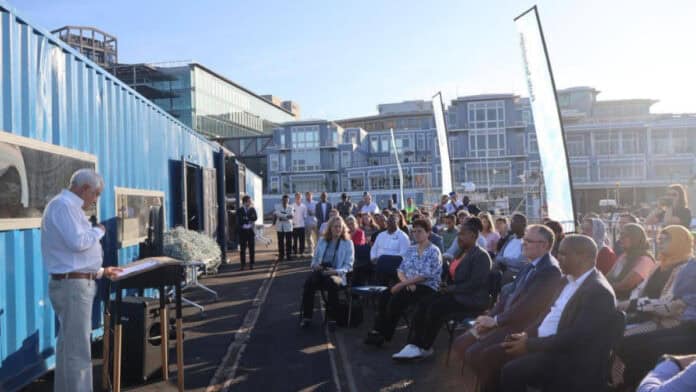
On 10 October 2025, the Minister of Forestry, Fisheries and the Environment, Dr Dion George, officially opened the containerised “micro-recycling pod” at Collier Jetty. The facility processes end-of-life fishing nets into reusable raw materials for the plastics manufacturing industry — a breakthrough for the country’s blue economy.
“The recycling and repurposing of end-of-life fishing gear provides a glimpse of what a sustainable future can look like,” said Minister George. “This is how we build resilience in our blue economy — ensuring that economic activity supports environmental protection.”
Developed by OCEAN Action Network (OCEAN) and Ocean Plastic Technologies (OPT), the recycling pod is housed in a converted shipping container and can shred, wash, dry and densify up to 100 kilograms of used nets per hour. By transforming discarded gear into clean plastic flakes, it prevents waste from reaching landfills or the ocean and creates new economic opportunities in recycling and manufacturing.
The South African Deep-Sea Trawling Industry Association (SADSTIA) secured funding for the pilot through the Marine Stewardship Council’s Ocean Stewardship Fund, while the V&A Waterfront donated space to host and operate the facility.
Minister George said the project supports South Africa’s commitments under the National Environmental Management: Waste Act, advances Sustainable Development Goal 14: Life Below Water, and aligns with the ambitions of the Global Plastic Treaty.
“This is more than just a recycling project,” said Estelle van der Merwe, Managing Director of OCEAN Action Network. “It’s about protecting marine ecosystems, supporting fishing communities, and creating a model that can be replicated across the continent.”
SADSTIA Executive Secretary Johann Augustyn added: “Mitigating the impacts of ghost gear is essential for healthy oceans. We hope this pilot inspires wider adoption of technology-based recycling solutions.”
OPT plans to replicate the model in other coastal regions. “By cleaning and densifying plastic on-site, we’re turning waste into a resource — and building a foundation for sustainable job creation and growth,” said OPT’s Oliver Nudds.
Minister George concluded: “Our oceans are the lifeblood of South Africa’s future. When government, business and civil society work together, we turn waste into opportunity — and stewardship into action.”