












Trafo Power Solutions positions early-stage design as mining growth lever
AS South Africa’s mining sector faces mounting pressure to improve efficiency, scale production and manage capital expenditure, electrical infrastructure design is emerging as a critical factor in long-term project viability.
Stellenbosch-based Trafo Power Solutions says early-stage involvement in mining projects is enabling operators to avoid costly redesigns and operational disruptions later in a mine’s lifecycle.
According to managing director David Claassen, mining’s inherently dynamic nature – where equipment layouts shift and load requirements evolve – demands a more forward-looking approach to electrical infrastructure.

“Mining operations rarely remain static,” Claassen says. “Equipment moves, expansion phases accelerate, and power demands increase. If the original electrical design doesn’t anticipate that, operators end up paying significantly more to retrofit or upgrade.”
Planning beyond the feasibility study
The company increasingly becomes involved at the concept or pre-feasibility stage, sometimes even before formal feasibility studies begin. At this point, mining houses typically require high-level cost estimates to shape early investment decisions.
By leveraging data from its installed base, Trafo can provide indicative costing quickly, helping developers model different infrastructure scenarios before major capital allocations are locked in.
Early engagement allows the company to influence foundational decisions such as transformer sizing, substation placement and modular configurations. Instead of specifying equipment purely for immediate load requirements, designs are aligned with life-of-mine plans.
In practical terms, that could mean recommending a higher-capacity transformer that fits within the same footprint as a smaller unit, reducing the need for disruptive and expensive upgrades later.
Modular shift gains momentum
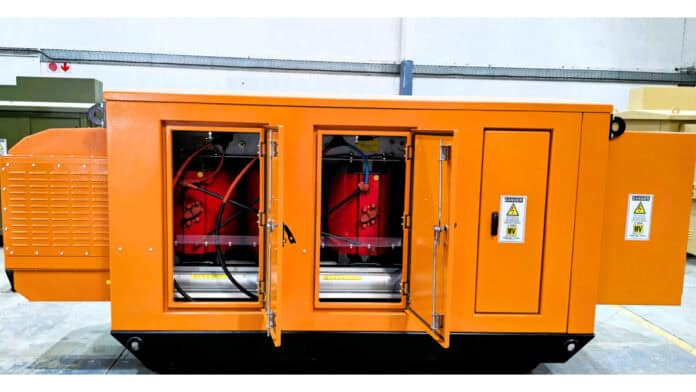
A key trend shaping infrastructure decisions is the growing preference for containerised modular substations. Unlike traditional brick-and-mortar builds, modular substations can be relocated as mining operations expand or shift. This flexibility is particularly relevant for open-pit mines that progressively move across an ore body, as well as underground operations where layouts evolve over time.
Skid-mounted and mobile substations reduce civil works requirements and allow phased expansions, helping mines better manage upfront capital costs while retaining scalability.
Industry analysts note that as commodity cycles become more volatile, flexibility in capital-intensive infrastructure is increasingly viewed as a strategic advantage rather than a technical detail.
Infrastructure as competitive advantage
South Africa’s mining industry remains a significant contributor to GDP and export earnings, but operators are under sustained pressure from energy instability, regulatory uncertainty and cost inflation. In this context, infrastructure decisions that minimise future redesigns can materially affect project economics.
By focusing on lifecycle-aligned electrical design, Trafo Power Solutions is positioning infrastructure not merely as a compliance requirement, but as a lever for operational resilience and growth.
“Our responsibility is to make sure the infrastructure we supply continues supporting clients long into the future,” Claassen says. “If production increases, if layouts change, the power system should not be the constraint.”
As mining companies pursue new projects and brownfield expansions across Southern Africa, early-stage infrastructure planning may prove to be one of the quieter – but more decisive – drivers of long-term competitiveness.