






Sasol, South Africa’s monopoly supplier of large-scale natural gas, announced in August 2023 that the supply of gas to industrial users will be suspended by June 2026. This unilateral decision to cut off the gas supply poses an existential threat to South Africa’s manufacturing base.
Several key manufacturers, supporting tens of thousands of jobs, are deeply reliant on gas energy for their continued operations. They span multiple economic sectors, including chemicals, steel, glass, food and beverages, in Gauteng, Free State, KwaZulu-Natal and Mpumalanga.
South African industrial gas users directly employ 70 000 people and contribute between R300 billion and R500 billion per annum to the South African economy. A cessation in the supply of gas will result in multiple plant closures and a significant reduction in manufacturing output across KwaZulu-Natal, Gauteng and Mpumalanga.
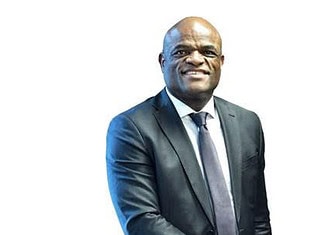
Jaco Human, CEO of the Industrial Gas Users Association of Southern Africa (IGUA-SA), said, “Gas-energy security is a critical enabler of South African economic development. The unilateral decision by Sasol to cut off gas supply poses an existential risk to large industrial users of gas and is likely to lead to the deindustrialisation of the South African economy. Many industries have already been forced to halt investment and growth plans due to the risk of a gas-energy shortage.”
There are no confirmed supply solutions that will come on stream early enough to act as a sufficient source of independent supply, raising the prospect of devastating consequences for the economy and jobs. As it stands, there is a 12- to 18-month gap between day zero, when Sasol supply is suspended, and the finalisation of any feasible replacement supply. Accordingly, there is a critical period during which energy supply will be unable to support South African manufacturing activity.
Urgent collaborative government intervention needed
Since it is not feasible for industry to singlehandedly invest in and develop national-scale private natural-gas infrastructure (including bulk pipelines, LNG port terminals and regasification terminals), urgent action is required on the part of the South African government to adequately address this crisis.
That said, industry has actively but unsuccessfully engaged government on possible solutions. There have been two separate applications to import LNG and install the required infrastructure (including pipeline networks) since 2010, and both applications were opposed by Sasol and Nersa, thus protecting Sasol’s entrenched position.
Human explains, “The gas energy security risk for the South African economy can be mitigated through the following interventions, with urgent and focused coordination between business and government:
- The South African Government, in line with its existing policies, to urgently establish sufficient gas-to-power capacity on the Rompco pipeline to increase the demand for gas energy by 40-60PJ/a which will render gas-receiving infrastructure investment in Matola, Mozambique economically feasible;
- Eskom, as part of its short-term power-purchase programme, to increase power availability, to procure additional electricity from planned gas-to-power developments in Mozambique, and also to render gas-receiving infrastructure investment in Matola, Mozambique economically feasible through increased gas volume throughputs;
- The South African Government to ensure that the Rompco and Lily pipelines are linked before 2026 to provide gas energy security for KwaZulu-Natal;
- The South African Government to provide the financial guarantees to underwrite the investment in gas-receiving infrastructure in Matola to ensure the economic sustainability of the South African manufacturing sector;
- Sasol to embark on a reasonable, phased reduction of supply, which could be gradually offset by increased reliance on other sources, instead of a unilaterally imposed hard cut-off.
The impact of a widespread natural gas shortage
Besides the significant risk to the country’s manufacturing capacity, some 400 smaller to medium-sized businesses, several hospitals and approximately 8 000 households will also be directly impacted by a suspension in gas supply.
Where possible, businesses will be forced to switch to fuels which are more expensive and more environmentally damaging, with repercussions for consumer pricing and carbon emissions. In many cases, however, fuel-source substitution will not be economically or practically feasible.
The knock-on impact will be acutely felt by all South African consumers through supply shortages and price increases across the steel, aluminium, mining, agricultural, paper, glass and ceramics, construction, automotive, and food and beverage sectors. This will also extend across all indirectly related industries that are supplying these manufacturers i.e. logistics, goods, services etc.
The gas cliff will also pose a threat to South Africa’s regional competitiveness and South Africa’s balance of payments.
Human concludes, “The next four months are crucial to develop the required gas infrastructure to substitute the shortfall in supply from 2026 onwards and avoid substantial manufacturing and job casualties, and we are calling on government to urgently engage with key stakeholders in industry to find a solution to this potentially devastating crisis.”
“We hope that government can contribute, together with industry, to proactively and efficiently unlock the required infrastructure developments to facilitate future gas flows and transactions, and would like to emphasise the critical importance of focus and close collaboration among key stakeholders to come to a timeous solution to the country’s benefit.”