









Common battery tester errors and what they mean
BATTERY testers are essential tools in any automotive workshop—whether at a dealership, independent repair centre, or fleet maintenance facility.
They provide fast insights into battery health, help diagnose electrical issues, and guide decisions on charging or replacement. But when testers display error messages, the results can be confusing.
Misinterpreting these errors can lead to incorrect diagnoses, unnecessary battery replacements, or repeat customer complaints because the root cause wasn’t addressed. Understanding what these messages mean ensures technicians make the correct call the first time, improving workshop efficiency and customer satisfaction.
This guide breaks down the most common battery tester errors, what causes them, and how to troubleshoot them effectively.
1. Battery voltage too low
A “Low Voltage” error means the battery’s voltage is below the threshold required for an accurate test—typically under 9.6 volts. In this condition, the tester cannot complete the procedure.
Common causes include deep discharge due to a vehicle standing unused, an interior light left on, excessive parasitic drain, or sulfation (lead sulphate build-up on the plates).
What to do:
- Check for corrosion or loose terminal connections.
- Recharge the battery and retest.
- If it won’t take or hold a charge, the battery is likely beyond recovery.
2. Surface charge detected
A “Surface Charge” error appears when the battery still holds residual voltage from recent driving or charging. This can create a falsely elevated reading that prevents an accurate diagnosis.
Fix:
- Remove the surface charge by switching on the headlights for ~60 seconds.
- Switch them off and retest to get a true state-of-charge reading.
3. Battery not detected / connection error
If the tester shows “Battery Not Detected” or “Connection Error,” it means it cannot establish proper contact with the battery.
Common causes include corroded terminals, loose clamps, or damaged battery cables.
Troubleshooting:
- Inspect and clean the battery terminals and tester clamps.
- Ensure solid, stable contact.
- If the error persists, the battery may have an internal failure—confirm with a multimeter or another tester.
4. Internal resistance too high
This error signals that the battery’s internal resistance has increased, compromising its ability to deliver sufficient current for engine starting. Symptoms may include slow cranking and dim lighting.
The primary cause is sulfation, often due to frequent deep discharges or exposure to extreme heat or cold.
Next steps:
- Attempt a slow, controlled charge to break down sulphate crystals.
- If internal resistance remains high after charging, replacement is recommended.
5. Test interrupted / unstable voltage
A “Test Interrupted” or “Unstable Voltage” error occurs when voltage fluctuates during testing. Causes include poor connections, electrical noise from vehicle accessories, or charging system issues.
To resolve:
- Ensure clamps are secure and making full contact.
- Turn off all vehicle accessories before testing.
- If the issue continues, check the alternator and charging system.
6. Charge & retest
This instruction means the battery’s voltage is too low for a conclusive reading, but the tester cannot yet confirm that the battery is bad.
Deep discharge may occur when a vehicle has stood unused or when lights or accessories were left on.
What to do:
- Fully charge the battery.
- Allow it to rest for a few minutes.
- Conduct a second test.
If the battery still tests weak, it likely cannot hold charge and should be replaced.
7. Replace battery
When a tester recommends “Replace Battery,” it has determined—based on voltage, cold cranking amps (CCA), and internal resistance—that the battery can no longer perform reliably.
Before replacing:
- Double-check connections.
- Retest to confirm.
- Inspect the charging system to ensure the alternator isn’t causing repeat failures.
Reliable testing with midtronics
Understanding battery tester errors helps technicians avoid misdiagnosis and deliver better service. But accurate diagnostics also depend on using high-quality equipment. Midtronics, a global leader in battery testing and diagnostics, offers advanced tools trusted by professional technicians.
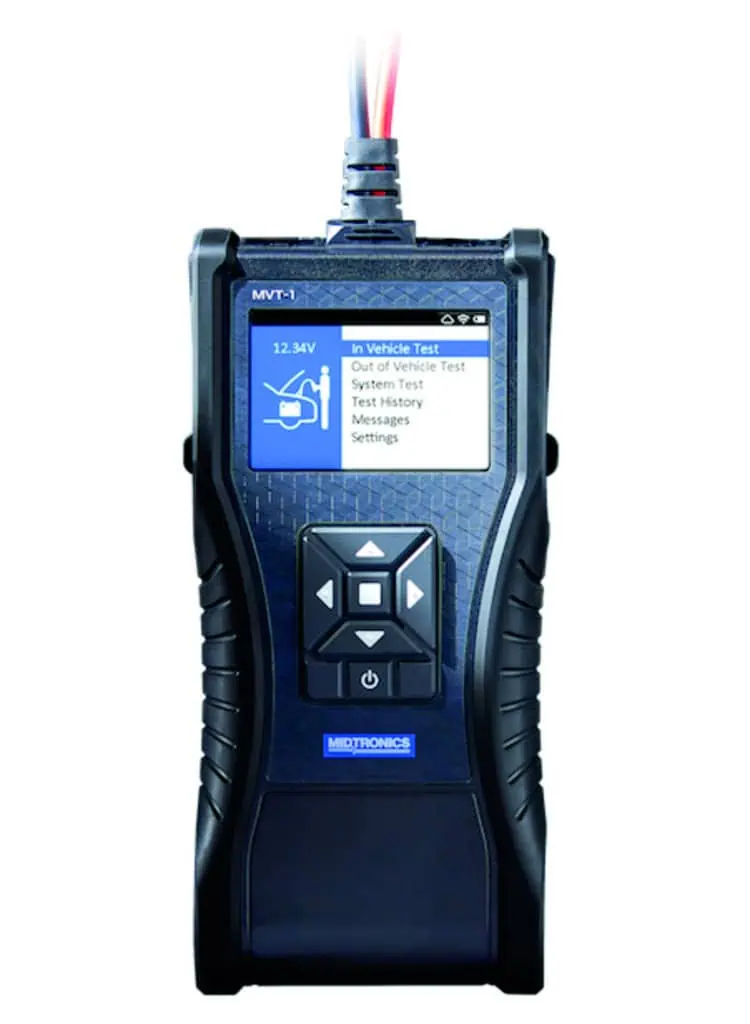
The new MVT Battery & Electrical System Tester, powered by MDX-AI, dramatically reduces inaccurate “Charge & Retest” results and delivers fast, precise diagnostics.
For more information on Midtronics testers, contact COMTEST at 010 595 1821, sales@comtest.co.za, or visit www.comtest.co.za