






In the next 12 to 18 months, government will work aggressively to eliminate load reduction by rolling out smart meters, dealing with illegal electricity connections and upgrading infrastructure.
Load reduction refers to the intentional interruption of electricity in specific areas where the local network becomes overloaded, especially during peak demand periods.
This measure is essential to safeguard critical infrastructure, particularly in areas affected by high energy losses or illegal connections that place excessive strain on the isolated networks.
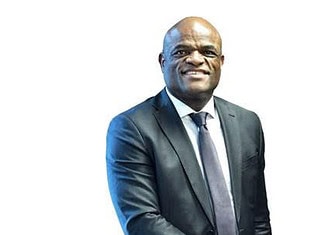
According to the Minister of Electricity and Energy, Dr Kgosientsho Ramokgopa, 1.69 million customers are affected by load reduction in the country.
This translates into about 8.5million people when considering the number of people in those households. The centre of this load reduction is in Gauteng, Limpopo, Mpumalanga and KwaZulu-Natal.
“We are going to make sure that we address the multiple manifestations of the electricity deficit in the country. Today, I am announcing that we are ending load reduction in the country. This can be achieved anywhere between 12 to 18 months,” the Minister said at a briefing in Pretoria on Thursday.
With government having largely addressed load shedding, the Minister addressed the media on the interventions that will be implemented to tackle load reduction.
“One of the first things that we will be doing is to rollout of smart meters. The smart meters will enable us to isolate customers that are able to pay for electricity but are not doing so, and not make the rest of the customers who are connected to the same transformer collateral damage. It gives us technical agility for us to isolate those who choose not to pay for electricity,” the Minister said.
There are about 2.1 million customers on the Eskom side that qualify for free basic electricity but only 485 000 customers are getting the free basic electricity.
“And yet, National Treasury is allocating funds to municipalities to ensure that the poor get free basic electricity. Once we have rolled out smart meters, we will be able to frontload the allocation for free basic electricity for a household that qualifies to get free basic electricity.
“For that to succeed, we need municipalities to work with us to create and generate a robust indigent register. As a result of this rollout, we will be able to achieve universal access so that when we say load shedding is behind us, we mean that there should be no load reduction and we are not going to discriminate against anyone,” he said.
To ensure that those who qualify for free basic electricity are susbisidised correctly, the Department of Electricity and Energy will review the Free Basic Electricity Framework (FBE).
The policy provides for indigent households with a monthly quota of electricity (typically 50 kWh) to cover essential needs like basic lighting and mobile phone charging.
“We know that an average low-income household consumes about 200 kilowatt hours of electricity per month. If we talk about 100% subsidisation of the poor, it means that the 50kWh per month of free basic electricity should be shifted to 200 kilowatt hours per month.
“We are going to change the framework without relying on the fiscal envelope, so we don’t have to approach the Minister of Finance for more funds,” the Minister said.
While the interventions are good news for consumers, the Minister said government expects resistance from some communities that have been connected illegally to the grid.
“We know that there are those who are profiting from the illegal electricity connections. Some of them are delinquent employees of Eskom and municipalities that are connecting people illegally.
“We expect them to agitate those communities to resist our presence because we are taking an illegally earned income that they have accumulated over time at the detriment of consumers in the area,” the Minister said.
There is a total of 771 transformer failures, with a large part of them being attributed to illegal connections.
“As part of this effort [to deal with illegal connections], we are going to regularise people. We are going to go to an area, typically an informal area, assuming that the municipality has formalised the area and rollout infrastructure so that everyone has access to electricity that is legally procured,” he said.
To accelerate the rollout of smart meters, government will work with businesses who manufacture them to ensure the product meets Eskom standards.
Government will also refurbish and maintain the distribution and reticulation infrastructure.
“We will also be rolling out distribution infrastructure reticulated by installing solar and battery storage. We are electrifying communities, this has already been done in two villages in Musina, Limpopo,” the Minister said. – SAnews.gov.za