









Public-Private Partnerships and Global Retail Giants Drive Commercial Property Renewal
Two high-profile developments in the South African commercial real estate (CRE) sector are pointing to renewed momentum in the market: the City of Cape Town’s proposed sale of its majority stake in the Cape Town International Convention Centre (CTICC), and Walmart’s decision to launch branded stores in South Africa.
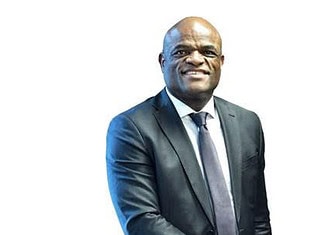
“We’re seeing movement across multiple fronts in CRE that bodes well for investor sentiment in South Africa,” says John Jack, CEO of Galetti Corporate Real Estate.
“On one hand, functional municipalities, such as those in the Western Cape, are reassessing how best to unlock value from city assets to benefit taxpayers. On the other, major global players are making long-term retail commitments in South Africa.
“These shifts come against the backdrop of five interest rate cuts by the South African Reserve Bank this year, creating a more supportive environment for growth by easing borrowing costs,” continues Jack. “This is a time for CRE stakeholders to remain both agile and forward-focused because major opportunities could arise.”
Cape Town Weighs the Future of the CTICC
The CTICC has long been one of Cape Town’s most successful assets. Jack notes that since it opened in 2003, it has generated nearly R67 billion for South Africa’s GDP, sustained more than 169 000 jobs, and helped cement Cape Town’s position as a global conferencing destination.
“In the past financial year alone, the centre hosted 368 events, attracted 311,000 visitors, and secured forward bookings worth an estimated R1.5 billion through 2030,” explains Jack. “This begs the question: Why is Cape Town Mayor Geordin Hill-Lewis considering selling the city’s 72.7% stake in this thriving centre?”
Primarily, notes Jack, this sale would free up between R800 and R900 million in capital for infrastructure and service delivery: “The city is taking a measured approach that considers how best to serve its constituents in the long-term. Private ownership could accelerate expansion plans at the CTICC while relieving the city of future funding obligations.”
He says that the city would also retain board representation, and the CTICC – which would remain operational as a conference centre – still sits on land belonging to the city.
“Local government is recognising that private capital can accelerate infrastructure development in ways that public budgets alone cannot. By partnering with private investors, assets like the CTICC can expand, modernise, and generate even greater economic impact, while the city focuses on service delivery and long-term fiscal stability.”
Walmart Enters the South African Market
Shifting to South Africa’s significant retail potential, Walmart, the world’s largest retailer, recently announced the launch of its first branded stores in the country before year-end.
“Walmart’s decision to expand under its own brand reflects a long-term bet on South Africa and underscores the confidence that global investors have in the country’s growth prospects,” says Jack.
“Large-scale retail operations like this require sophisticated real estate infrastructure, and their development benefits a wide range of property sectors, from warehouses and logistics nodes to mixed-use precincts and urban centres.”
Walmart already has a footprint in South Africa after the company’s 2011 buyout of a major stake in Massmart, bringing Game, Makro and Builder’s Warehouse under the Walmart banner. While the plan is not to replace Walmart’s existing South African brands, the retailer aims to provide South African consumers greater access to affordable, high-quality products, supported by the company’s signature ‘Every Day Low Price’ model.
The expansion follows Walmart’s first Growth Summit in April that featured suppliers from 12 African countries and led to the recruitment of new small- and medium-sized African suppliers.
“Walmart has committed to sourcing locally, which is good news for South African suppliers and SMEs, indicating further growth opportunities in the industrial and distribution property markets,” says Jack. “Government has backed the announcement, noting it signals confidence by foreign markets in the country’s economic trajectory.”
Opportunities in a Dynamic Landscape
As the CRE sector navigates these changes, Jack says opportunities are emerging across multiple fronts:
- Hospitality and conferencing: The CTICC’s potential sale, regardless of ownership, will bolster surrounding hotels, restaurants and mixed-use precincts.
- Retail and industrial: Walmart’s rollout will drive demand for both large-format retail and light industrial spaces while supporting supply chain infrastructure.
- Warehousing and logistics: Walmart’s scale requires reliable distribution networks. This accelerates the need for warehousing clusters along key transport corridors, as well as cross-docking facilities, and last-mile distribution hubs in peri-urban areas.
- Office repositioning: With investor sentiment improving, there is renewed appetite for repurposing underutilised office stock into modern, flexible spaces.
- Public-Private models: CRE players can position themselves as partners for the redevelopment of municipal-owned land and properties into revenue-generating spaces.
- Mixed-use developments: Integration of residential, retail and office space continues to dominate demand in urban centres.
Jack concludes that while the current market is dynamic, South Africa’s CRE sector has demonstrated its resilience over time: “These developments highlight that CRE is far from stagnant. Whether its global retailers entering the market, municipalities rethinking ownership models, or the positive effects of monetary policy, the sector is evolving. Investors and developers who remain proactive, diversify, and align with long-term demand trends are best positioned to benefit.”