









Cape Town overtakes London as sixth worst city for traffic congestion
Study shows commuters face increasing delays as rail and bus upgrades aim to reduce congestion
By Larry Claasen
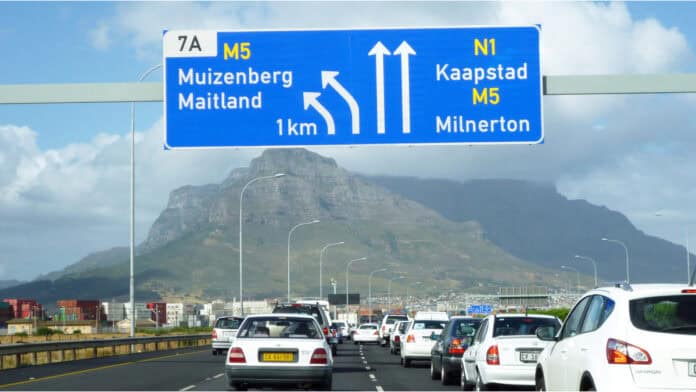
RESIDENTS who believe traffic congestion in Cape Town has worsened over the past two years have been proven right, according to a recent study.
The 2025 INRIX Global Traffic Scorecard shows that Cape Town rose from ninth to sixth worst among 942 urban areas analysed worldwide. INRIX measures congestion as the number of hours lost during peak commute periods compared with off-peak conditions, relative to a city’s population. In Cape Town, commuters now lose 96 hours annually, up from 94 hours in 2024.
That puts the Mother City ahead of London, which ranked seventh with 91 hours lost to congestion, and behind Philadelphia, which lost 101 hours.
Several factors — including rapid population growth and commuter train routes that were out of service for several years — have compounded the congestion problem.
Cape Town’s population grew from 3.74 million to 4.77 million between 2011 and 2022. By comparison, Johannesburg’s population increased from 4.43 million to 4.8 million over the same period, meaning Cape Town grew by 27.6% while Johannesburg grew by only 8.3%.
The central line rail corridor, which connects Khayelitsha — South Africa’s largest township — with the CBD, was out of service from November 2019 and only became fully operational again in March 2026. When operating at full capacity, this line accounted for 350,000 of Cape Town’s 685,900 daily passenger trips.
It is hoped that the revitalisation of commuter rail — which has seen the introduction of new trains and upgrades to signalling equipment — will encourage more people to take the train rather than travel by car.
“The numbers speak for themselves: nearly 700,000 daily passenger trips equate to a substantial number of cars taken off Cape Town’s road network. At capacity, each train transports about 2,400 passengers per trip, meaning it plays a vital role in the transport industry,” said Transport Minister Barbara Creecy during a site visit to the central line in 2025.
Rob Quintas, the City of Cape Town’s Mayoral Committee Member for Urban Mobility, agreed with Creecy that shifting to rail commutes is one of the best ways to reduce congestion.
“A fully functional and reliable passenger rail service will attract commuters, as it is the most cost-effective and efficient form of public transport and commuting anywhere in the world. Once passenger rail is restored and fully functional, it will naturally draw commuters away from road-based public transport and private vehicles,” Quintas said.
Aside from trains, the city also hopes that the expansion of its MyCiTi bus network will alleviate road congestion. Quintas said that if all goes as planned, the first routes on the MyCiTi Khayelitsha–Mitchells Plain expansion will become operational in late 2027.
Although the city has long viewed MyCiTi as a solution to congestion, bus shortages, vehicle breakdowns, and service unreliability on the N2 Express service saw it miss its passenger projection target of 9.95 million by about 10,000 for the second quarter of the 2025/2026 financial year.
Quintas also said there are no immediate plans to expand MyCiTi operations beyond the Mitchells Plain–Khayelitsha and Wynberg–Claremont expansions.
He added that the Urban Mobility Directorate has budgeted R294 million over the medium term — from 1 July 2025 to 30 June 2028 — for road projects aimed at relieving congestion.
Upgrades have already been made to Kommetjie Main Road, while Amandel Road and Saxdowns Road in Kuils River will be upgraded, and Belhar will see improvements to Erica Drive.
The city also plans to invest in Voortrekker Road in Salt River and to convert Berkley Road in Maitland into a double carriageway between the M5 and Ndabeni/Ryger Street. These projects are expected to commence in the latter part of the next financial year (2026/27).
One of the most effective ways to address congestion is through an integrated public transport system, Quintas says, which is the city’s long-term plan.
“The intention is to have one integrated public transport system where commuters can seamlessly transfer from one mode — train, bus, minibus-taxi — to another; where commuters can use one card for payment; and where time schedules are integrated to make transfers possible and convenient.”
While the goal is still some way off, Quintas said it remains an objective the city is committed to.
“This vision will take time to implement, but it remains our commitment for commuting in Cape Town.”