








Overberg Rail Corridor – Sir Lowry’s Pass gradient challenges freight revival
By Larry Claasen
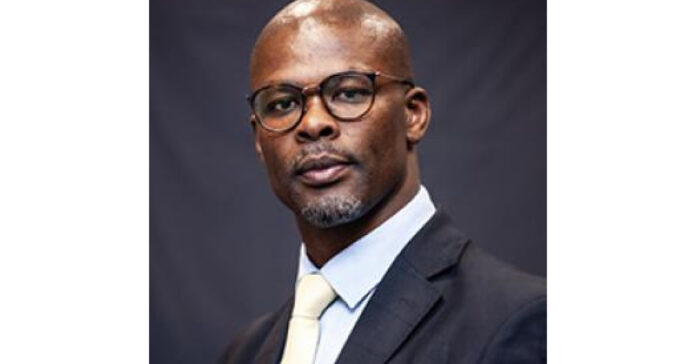
DEVELOPING the Overberg rail corridor into a busy freight route is still very much a work in progress, says Western Cape Mobility MEC Isaac Sileku.
A year ago, the province unveiled the Overberg Freight Rail Business Case and Implementation Plan as a pilot project in Bredasdorp. The ambition was plain: to breathe new life into freight rail along one of the Western Cape’s most important agricultural corridors.
Currently, the corridor shifts about 8,9 million tons of freight a year, but almost all of it goes by road. Trucks carry 99,8% of the load; rail accounts for just 0,2%.
The thinking behind the 211 km rail freight redevelopment corridor between Bellville and Bredasdorp is that, by reconnecting the Caledon agricultural region with the Belcon Inland Terminal and the Port of Cape Town, the province could triple the Western Cape’s export value by 2035. Belcon is a Transnet-owned inland logistics and cold-storage facility in Bellville with a dedicated 23 km rail line to the port. Link that to the Overberg corridor, and transport costs for farmers should fall, making it easier to get produce to export markets.
The pilot’s immediate goal was to lay the groundwork for private sector-led freight rail operations and to test ways of revitalising branch lines through private participation. The longer-term goals are lofty, but one physical obstacle stands squarely in the way.
The mountain that bites back
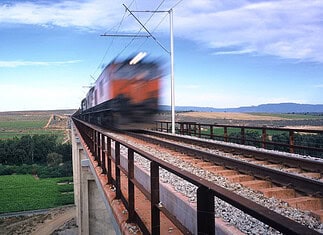
Speaking on the sidelines of the African Rail Conference in Johannesburg in July, Sileku pointed to the steep gradient over the Hottentots Holland Mountains as a serious challenge. The rail route climbs from Somerset West to the Elgin valley via Sir Lowry’s Pass on a gradient of 1-in-40. In simple terms, for every 40 metres the train travels forward, it gains a metre in height, a 2,5% slope. For a railway, that is a severe incline, and it dramatically limits what a locomotive can haul.
Progress so far, and the road ahead
Despite the gradient, the project is moving forward. In February 2026 the Western Cape released its first findings from the Overberg Rail Business Case. Phase 1 had been completed, establishing the demand, service design, and financial viability for the corridor.
Phase 2 is now under way. It covers infrastructure rehabilitation costing, refined estimates of road-maintenance savings, the inclusion of additional freight volumes, and the identification of viable funding and investment options.
Beyond the Overberg corridor, another project, the Prioritisation of Other Branch Lines, has been scoped. It will assess and rank additional Western Cape branch lines against set criteria, pinpoint investable opportunities, and build a pipeline of bankable projects.
How the private sector can get involved
The province sees several ways for private companies to take part in its regional rail plans. They can partner on branch-line revitalisation through concession models that support long-term operational sustainability. They can collaborate on feasibility studies, business cases and pilot projects that advance the shift of freight from road to rail. And they can co-fund infrastructure upgrades that unlock rail access, improve reliability, and offer competitive logistics services.
The money question
Exactly how much all of this will cost has yet to be determined. The province says capital investment will be needed to rehabilitate inactive or underperforming branch lines, upgrade sidings, improve signalling and security, and build an integrated terminal network that supports rail-friendly commodities.
Those needs, however, are still dependent on cost baselines that must be confirmed by the Transnet Rail Infrastructure Manager (TRIM) and on the final access regime for the B-network. Given Transnet’s constrained balance sheet and the national push for structural reform, the project is expected to lean on a mix of blended finance, provincial support, climate-aligned funding, and private capital. The likely models include concessions, service contracts, and asset-maintenance partnerships, the province said.