











Organic waste to energy driving Western Cape shift from landfill to sustainable waste solutions
By Adrian Ephraim
SOUTH Africa’’s looming landfill capacity crunch is driving new partnerships and investment in waste-to-energy solutions, as both regulators and businesses look to move away from traditional disposal methods.
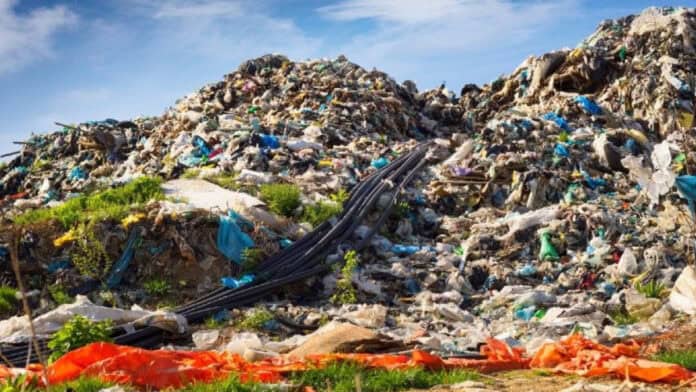
Major metros, including Cape Town and Johannesburg, are estimated to have less than five years of remaining landfill space, intensifying pressure on the country’s waste management system. At the same time, organic waste sent to landfill is costing the economy an estimated R8.7 billion annually, largely due to inefficiencies and environmental impact.
Organic waste to energy partnerships driving innovation in the Western Cape
Against this backdrop, Oricol Environmental Services and Cape Town Biogas have formed a partnership to divert organic waste from landfill and convert it into commercially viable resources.
The collaboration is built around a bio-digestion facility in Athlone, which forms part of a broader waste diversion network. The plant is currently the only facility in Africa capable of simultaneously splitting biogas into two high-value outputs.
In total, the process produces three usable commodities: biomethane for energy, beverage-grade carbon dioxide for the food and beverage sector, and nutrient-rich byproducts for agricultural use.
Cape Town mayor Geordin Hill-Lewis, speaking at the Coastal Park landfill, said, “We are just getting started with these win-win projects, which produce electricity, reduce emissions, and generate carbon credit revenue to pump back into infrastructure and waste management.”
The initiative reflects a broader shift in how waste is being valued, particularly as methane emissions from landfill sites come under increasing scrutiny. The waste sector accounts for more than 30% of South Africa’s methane emissions, largely driven by decomposing organic material.
At an operational level, the process begins with the treatment of expired or non-compliant goods at Oricol’s Cape Town facility. Products are securely depackaged to prevent re-entry into the market, with packaging materials sent for recycling and organic content redirected to the bio-digester under an offtake agreement.
The partnership processed around 8,000 tonnes of organic waste in 2025, with plans to scale volumes further in 2026 as demand for compliant waste solutions grows.
“At Coastal Park Landfill, the city’s waste-to-energy project will generate 1.3-million kilowatts a month,” said Urban Waste Management MMC Grant Twigg at the ribbon-cutting ceremony last year.
“Of this, 1.2-million kilowatts will be fed into the Cape Town grid. The remaining power will be used to run operations at the landfill facility, generating further savings and efficiency for ratepayers.”
Organic waste to energy regulations and future outlook
Policy changes are also accelerating the transition. The Draft National Waste Management Strategy 2026, published in late 2025, identifies organic waste as a priority stream for the first time, warning that the country’s current waste diversion rate of roughly 10% is unsustainable.
In the Western Cape, regulatory pressure is set to intensify further. A 100% ban on organic waste to landfill – embedded in provincial waste licences – is scheduled to take effect in 2027. Businesses that fail to establish alternative waste pathways risk falling foul of compliance requirements.
Industry players say the shift presents both a challenge and an opportunity. As landfill space dwindles and regulation tightens, waste is increasingly being repositioned as a resource — with energy generation, carbon capture and soil regeneration forming part of an emerging secondary economy.
For companies operating in the region, the message is clear: adapt to a circular model or face rising costs and regulatory risk.