











A pioneering solution has been developed to convert cellulose fibre-rich waste from pulp and paper mill operations into ethanol using a specialised fermentation process. Ethanol is a versatile starting material that finds diverse application in the production of industrial chemicals, bio-based plastics and sustainable aviation fuel.
The solution was announced on Wednesday (24 April) by the Paper Manufacturers Association of South Africa (PAMSA), in collaboration with Stellenbosch University (SU), Sappi Southern Africa and Mpact. A demonstration plant, co-funded by the Department of Science and Innovation (DSI) and PAMSA, was shown to government officials, media and industry partners at Sappi Tugela mill in Mandini, KwaZulu-Natal on 24 April 2024.
Paper sludge is a solid waste with a high moisture content. It comes from the production of paper using virgin wood fibre and/or recycled paper and collected from the paper mill wastewater treatment systems.
“This technology started as a research project and thesis by one of our Masters in Engineering students and today we have a South African first. Bioethanol comes with many environmental credentials and further contributes to the circularity of the pulp and paper sector,” explains Jane Molony, PAMSA executive director.
Fermentation process for sludge, food and textile waste
Driven by the vast potential of this feedstock, the research by SU has shown that paper sludge, as well as food and textile waste, does not require pre-treatment before hydrolysis-fermentation. This solution will help to reduce the amount of waste disposed to landfill and the associated greenhouse gas emissions and improve water reclamation for re-use, further contributing to the circular economic and industrial decarbonisation.
The solution holds substantial economic promise as waste-derived bioethanol commands premium prices in global markets, and furthermore the project has the potential to generate sustainable employment and upskilling opportunities and stimulate regional economic development.
The plant aims to demonstrate the commercial readiness of the fermentation technology under industrial conditions.
“This is a culmination of 10 years of research by our Bioresource Engineering group at the Department of Chemical Engineering where we have explored various beneficiation routes to create application for this by-product of pulp, paper making and recycling processes,” said Prof. Eugene van Rensburg, project lead at SU, adding that the same fermentation process can be used to address food waste and clothing/textile waste.
“It was important to validate this technology, which can only be achieved through technology demonstration under real industrial conditions,” notes Prof. Johann Görgens, also from the Chemical Engineering department at SU and the main driver behind this initiative.
Mobile, containerised demonstration plant
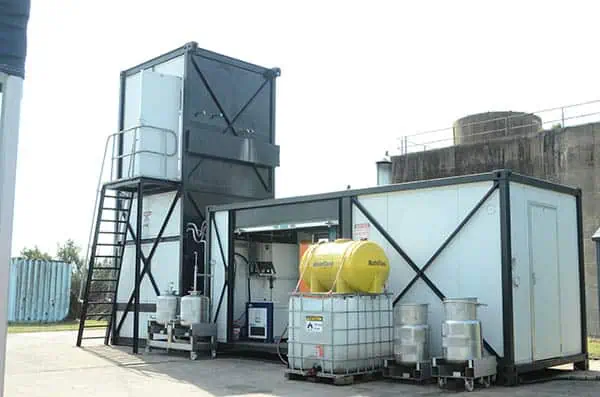
Given that the process had only been tested and proven under laboratory conditions, the Stellenbosch team designed and built a containerised demonstration plant housing a 1 000-litre bioreactor and key utilities with the specific aim of fermenting approximately 100kg paper sludge per day to ethanol.
The current demonstration plant has been deployed for a nine-month period at Sappi’s Tugela mill in northern KZN with a follow-up project planned at Mpact’s mill in Springs, Gauteng.
Waste into worth
Giovanni Sale, Sappi’s senior general manager for sustainability and the Sappi Technology Centre, says, “This initiative not only addresses the pressing issue of waste management but also reduces the associated environmental impacts and costs, while unlocking economic opportunities and promoting responsible consumption and production.”
“Turning waste into worth is key for our sector as it aligns with the principles of a circular economy,” says Neil Hunt, group risk and sustainability manager at Mpact, which recycles around 500 000 tonnes of recovered paper and plastic packaging.
“The project underscores South Africa’s commitment to innovation, sustainability, and collaboration,” says Dr Mmboneni Muofhe, Deputy Director-General for Socio-Economic Innovation Partnerships at the DSI. “Through continued partnerships and pioneering initiatives like this, we are confident in our ability to ensure a growing role for science technology and innovation in the reconstruction of our economy through circularisation and modernisation of manufacturing.”
There is global recognition in local and international markets for the environmental benefits of waste-derived bioethanol due to attractive greenhouse gas (GHG) reduction credits from the avoided emissions through diversion from landfilling, as well as the benefits from fossil-fuel replacement.