











The waste management strategy that could change how every business handles its rubbish
By Adrian Ephraim
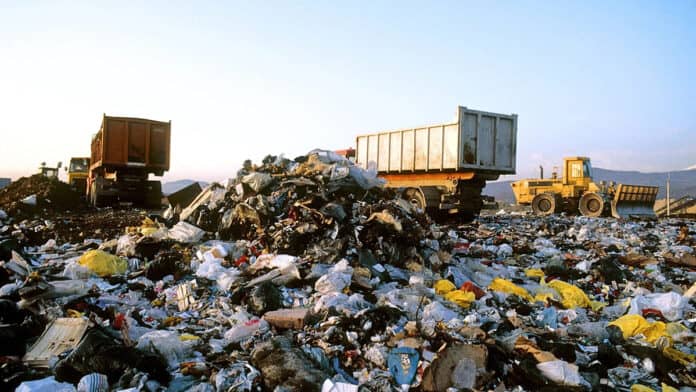
SOUTH Africa’s Department of Forestry, Fisheries and the Environment published the Draft National Waste Management Strategy 2026 for public comment in December 2025, and its headline ambition is stark: divert 40% of waste from landfill within five years.
Given that the country currently recycles or recovers only around 10% of its total waste stream, the gap between aspiration and reality is enormous.
Keith Anderson, CEO of the e-Waste Association of South Africa (eWASA) and newly elected chairman of the PRO Alliance South Africa (PASA), is blunt about what it will take. “Eleven to 40% in five years – anything is possible, but it requires certain things to get there.” Chief among them is municipalities stepping up. “You’d have to see an uptake in large-scale separation-at-source rollout by municipalities, because they are the key driver in terms of the collection point at volume across the country. They have the single biggest role to play, but they have to take ownership. It is theirs to take ownership of.”
Anderson also questions the baseline data underpinning the strategy. The current recycling figure stems from the Department’s 2018 State of Waste report. With five years of EPR reporting now available, he argues the government should update its numbers: “You’ve now got five years of fact-based data from the various PROs. Surely that data is very different to what you’ve been putting out. Tell us what it is, and we base our targets on that.”
The enforcement gap nobody’s talking about
Since EPR regulations came into effect in November 2021, not a single producer has been fined for non-compliance, despite a maximum penalty of R5 million. Anderson says the reason only emerged recently. “I was absolutely gobsmacked. A department official told us, ‘We’ve only just discovered that we are not in a position legally to issue a fine. We have to get a bill signed and passed through parliament first, and we’re working to get that done by the end of the year.’ Can you believe it?”
The enforcement vacuum has enabled what Anderson calls “free riders”, producers who have not registered with a Producer Responsibility Organisation (PRO). “There are free riders, and how many there are, I can’t tell you, but is it a lot?”
Construction waste and e-waste: the next frontiers
The draft strategy and associated EPR amendments target several new waste streams, including construction and demolition (C&D) waste and motor vehicles. Anderson says practical compliance for the construction sector will require mandatory site waste management plans, onsite material separation, dedicated C&D recycling facilities, and public procurement rules favouring recycled aggregates. “It’s amazing around the world what’s been done with C&D aggregate – roads, dams, the list is growing. But without demand for recycled construction materials, diversion rates will remain limited.”
C&D waste is what the industry calls a “negative fraction” – it holds no inherent commercial value, making EPR fee design critical. “The higher the level of contamination, the higher the fee becomes. It’s finding the sweet spot where there’s an incentive to do it properly without killing the business.”
On the e-waste side, Anderson flags lithium batteries as the most pressing concern, particularly end-of-life EV battery packs. He sees a significant opportunity in repurposing batteries that have degraded to 80% capacity – the manufacturer’s threshold – but still have another decade of life as secondary power for schools or housing. “If you want to truly be part of the circular economy, you have to buy in and mitigate those risks. If we can prove there’s an audit trail and the battery gets repurposed or recycled, then you should get credit for that.”
Consolidation is coming
South Africa has approximately 60 registered PROs – a fragmentation Anderson calls “madness.” His response is PASA, a cross-sector alliance already attracting PROs through shared project costs and economies of scale, with smaller PROs in merger talks with eWASA. For businesses still weighing their obligations, Anderson’s message is simple: “Watch the space. And let’s see.”