













The Bottom Line
Commercial EVs are set to boom as fleet operators drive adoption in South Africa
Public chargers are scarce, but savvy operators are sidestepping the problem by charging at their own depots.
By Larry Claasen
INFLECTION points usually go unnoticed.

For example, you probably can’t recall the period when you stopped paying with cash or the moment when all your entertainment went from broadcast to streaming services.
But now your wallet only contains cards, and you have not bought a CD or DVD in at least a decade. A new reality silently replaced a settled one without you noticing it.
When it comes to Electric Vehicle (EV) adoption in South Africa, another stealth shift is happening. The number of EVs on the roads is still relatively small, but this year might be the point where they go from a curiosity to a must-have in certain transport niches.
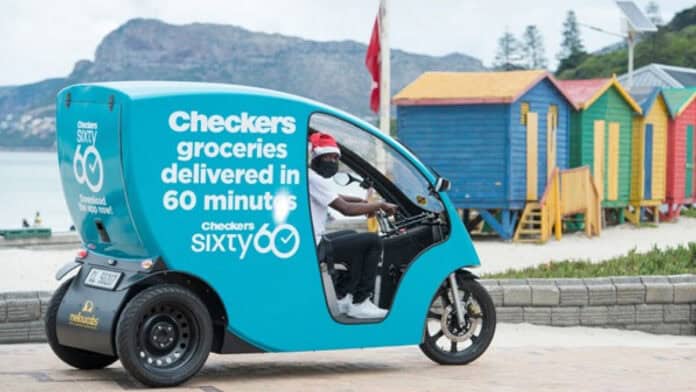
The niches are not the headline-grabbing fight between Elon Musk’s Tesla and China’s BYD, but rather in how commercial fleet operators can get more value out of their panel vans.
It is an easy calculation for these fleet operators. They have to find a way to save on fuel costs, keep their vehicles on the road for as long as possible, and also cut maintenance expenses.
When it comes to running costs, the difference between operating an Internal Combustion Engine (ICE) panel van and its EV counterpart is chalk and cheese.
According to GreenCape’s Electric-vehicles-as-a-service: A viable fleet transition model in South Africa report, operational cost works out to R2,53/km for the ICE van and R0,52/km for the EV van.
If the average mileage is 50,000 km a year, the fleet operating an ICE van would pay R126 500 to fill its tank annually. In comparison, the EV van would cost the operator R26 500 to keep charged for the year.
If there are 50 vehicles in their respective fleets, it will cost the ICE fleet operator R6,32 million to fuel up, against R1,32 million for the EV operator. For fleet operators, switching just to save millions of rands on fuel makes sound business sense.
But wait – there is more.
With fewer moving parts, EVs structurally require less maintenance than their ICE equivalents. Service and maintenance comes to about R111 000 for an EV compared to R206 000 for an ICE vehicle over the commercial life of the vehicle, according to Everlectric, an EV-as-a-Service (EVaaS) provider for commercial fleets.
While the sticker price and insurance are higher for EVs, their total cost of ownership works out to R860 000 compared to the ICE equivalent’s R1,26 million.
Though the network of public charging stations is still limited, companies like Stellenbosch-based EV charging company Zimi are partnering with logistics firms to set up dedicated charging infrastructure in their depots.
The sticker price for EVs is sure to come down, and the business case is already strong. But what could make it even stronger is if the financial services sector came up with funding and insurance products that actively support the transition.
Large fleet operators with robust balance sheets can afford to make the capital-intensive switch to EVs, but smaller operators need the financial sector to play ball and back them.
Local banks were quick to come up with funding plans for businesses and households that wanted to switch to solar generation during the electricity crisis. Here, then, is another opportunity for them to support a fledgling new sector.
The danger for them is this: if they don’t move now, they will look back in a few years’ time and wonder how they missed this inflection point – and how some upstart financial institutions and insurance companies came to dominate this lucrative niche.