







How to become a solar installer in South Africa
Solar installer has become a common profession in South Africa, and many installations are being done daily. But what does it take to be a solar installer? Who can install solar systems? GREEN Solar Academy has extensive industry experience, having trained and assessed over 10 000 solar installers across the continent, and we’ve come up with a checklist of what’s involved in becoming a qualified and recognised solar installer.
What is required?
While it might be a tempting route to take to just buy some solar panels and a bakkie, in the long run this setup will do more harm than good. Solar energy is not rocket science but (especially if you are starting with no background in renewable energy) it is dangerous to begin installing without any training or qualification.
Who can legally install solar?
South Africa does not yet have a dedicated “solar installer licence.” This means any suitably trained person can technically install solar components but only when working in partnership with a registered Installation Electrician (IE) or Master Installation Electrician (MIE).
This distinction is essential. Solar PV systems combine DC and AC. All AC work falls under the Electrical Installation Regulations. Only a DoEL-registered electrician may issue the Certificate of Compliance (CoC). The CoC covers the entire system, not just the AC side. This means the electrician must be fully satisfied with every part of the installation.

Get certified
SAPVIA is continuing to professionalise the industry through the PV GreenCard programme and the upcoming installer accreditation framework. Even though PV GreenCard is voluntary, it is increasingly recognised as a mark of quality.
Many banks, insurers and wholesalers now require:
- A PV GreenCard-assessed installer
- A DoEL-registered electrical contractor
- A valid, legally issued CoC
Solar installers who complete high-quality training (such as the SuperSolarSchool) and pass the PV GreenCard Assessment to gain a significant advantage: the ability to demonstrate competence and become part of a respected, searchable national installer network.

Prove your competence with an assessment
The PV GreenCard Assessment is an optional but valuable two-day practical and theoretical evaluation of your skills as a solar installer. Once passed, you can list your company in SAPVIA’s installer database so that clients can find you.
What the assessment proves:
- That you understand how to design, assemble, and commission a system
- That you can work hand-in-hand with a signing electrician
- That you follow national wiring code requirements
- That you deliver installations that meet industry best practice
The result: clients, wholesalers and financiers trust your work, and you stand out from the informal market.
Get plugged into a network
Getting the right training and qualification is not the only step to become a solar installer. Being plugged into a good network can help you identify learning opportunities, quality products and pitfalls to avoid. Your network should be one part wholesalers and one part fellow installers. This might sound daunting, but the solar industry is full of people who will be willing to assist you and, who knows, maybe you will find your first business partner there.
A good network doesn’t just help you with gear, it can also help you sharpen your sales and business skills. As clients become more ROI-driven, having access to tools, templates, and mentors who know how to build a financially sound solar offering is invaluable.
At GREEN we want to make it as easy as possible for participants in our courses to become part of our #GREENetwork and connect with colleagues and wholesalers across the industry. This is why we frequently hold alumni meetings both online and at our trainings, as well as run a networking Facebook group and WhatsApp groups. Click here to read more about the GREEN Alumni network.
Learn the product/s
Once you become accredited and qualify yourself, you will want to set out on your first installation, now you need to decide which products to choose. This can be a daunting task at the start as there are many brands of installation tools, modules, inverters, etc. Along with choosing a brand comes choosing a price strategy; it’s a difficult choice to make.
This choice should not be made solely with price in mind, as a cheap product usually means a bad one, although going for the top of the range is usually not an option when starting out.
Aftersales support and proven performance is key
We recommend that you find a product with a good warranty and a reliable manufacturer with good technical support. The best thing you can do for yourself, and the golden rule in the solar industry, is RTFM… Read the F******* Manual.
Your starting point should always be to read the manual, because most manufacturers will have spent a lot of time and money to create them. Treat these manuals as your first source of information and will save you a lot of time and wasted calls to technical support.

Get product training directly from the distributors
Lastly, if you have the time you can go for product-specific training, which is often offered free of charge by most distributors. These training sessions are a great way to grow in your knowledge as a solar installer, and also helpful if you want to focus on installing (that is, working) with a specific product. Build good relationships with wholesalers in the solar industry, because the more you grow as a solar installer in South Africa, the less time you want to spend shopping around.
Take a look at all the industry partners we work with and sign up to their newsletters to be alerted of upcoming product training sessions.
Get started and market yourself
When you start out as a solar installer in South Africa, the temptation is to market yourself as widely as possible, but this is a mistake. Doing this will put you in competition with every Tom, Dick and Harry in the market and pit you against more experienced installers.
The best decision you could make is to concentrate on a specific area and market yourself there. Make yourself and your business unique and you will be able to begin growing a successful enterprise. For example, maybe you specialise in off-grid installations, or your specific geographical location, or installations for small businesses. Focusing your target market will allow you to communicate to the customer clearly and attract a demographic of customers that might be overlooked in your area.
Just as importantly, learn to speak your customers’ language: for many, that means costs, savings, and investment returns. If you can explain how their solar system will reduce expenses and pay for itself, you’ll stand out in a crowded market.
Using this focused target market, you will be able to streamline your process. While you may have to suffer through some long and costly installations at the start of your career, it is always wise to know what you are good at and concentrate there. And who knows; as you grow in your target market, you will be able to branch out into more complex systems or new solar markets.

More than just installation skills
In the early days of South Africa’s solar boom, many clients were driven purely by the need to keep the lights on during loadshedding. But the solar market has matured. Today, clients are no longer buying systems based on urgency alone; they are making calculated investment decisions. This means that as an installer, your role is not just technical. To succeed, you also need to understand and communicate the financial value of solar.
Know your numbers: You don’t need to be an accountant, but understanding basic system costing, financial feasibility, and return calculations is essential.
Learn to sell: Whether you’re running your own business or working for someone else, being able to explain the value of a PV system in financial terms is a huge advantage. Knowing how to position a solution in line with a customer’s goals (cost savings vs independence vs long-term investment) will set you apart.
Understand the compliance landscape: With growing emphasis on safety, legal compliance, and municipal registration, financial viability is increasingly tied to whether a system is correctly installed, documented, and approved.
Solar installation is still hands-on, but in today’s market, successful installers are becoming solar advisors, offering clients both technical expertise and smart financial guidance.
Get in touch
Are you ready to take your first real step into the solar industry? Our team can help you choose the right training path for your background, goals, and budget. Get in touch with Tsakani on info@solar-training.org or +27 (0) 10 312 6724 or use our course guide to find your way into the industry.
GREEN Solar Academy has been training solar professionals in South Africa since 2012 and is the 2025 recipient of the SAPVIA Empowerment Through Skills Development Award.
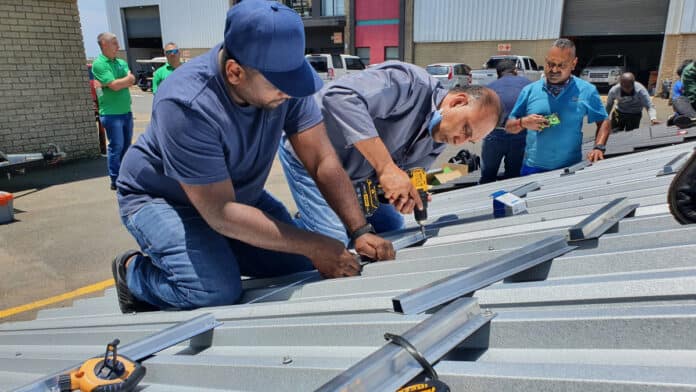
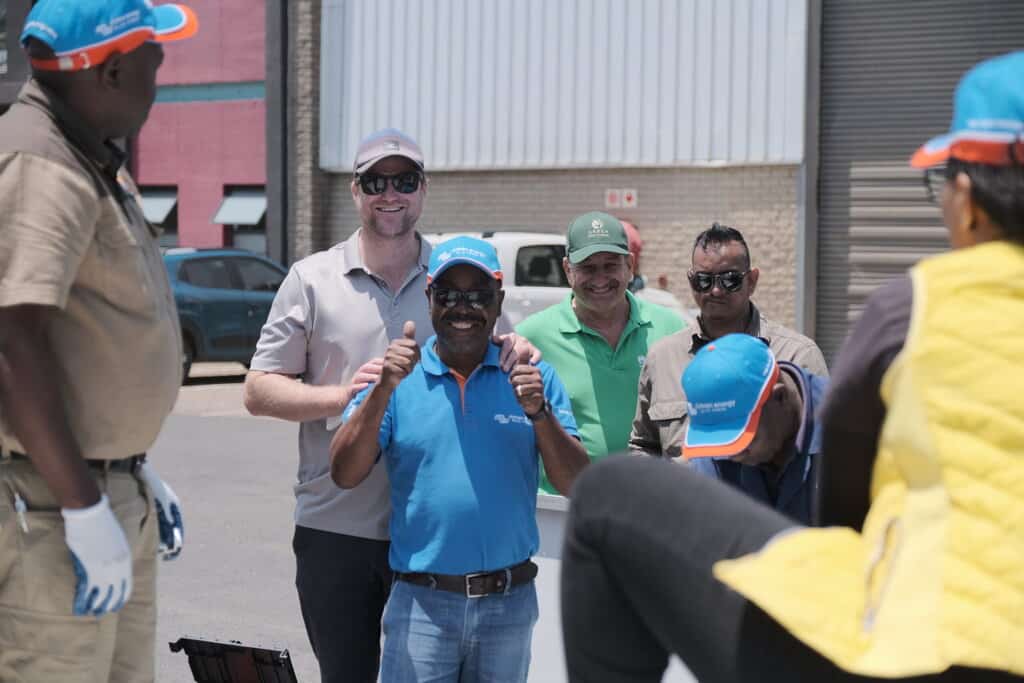
We have academies in Cape Town, Ballito, Johannesburg, Centurion and Port Elizabeth. All images in this article were captured during training sessions at our various academies.