









GUDGU goodness from the earth sugar-free drinks
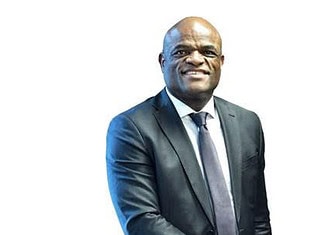
WHEN retrenchment struck, most people would take time to recover. For GUDGU co-founder Pieter du Plessis, it became the start of a reinvention story. “It wasn’t some grand plan,” they recall. “I just needed to do something, anything, to feel useful again. So, I started making cordials at home.”
That moment of quiet experimentation in a Pretoria apartment in 2014 marked the birth of GUDGU – a proudly South African, sugar-free beverage brand now stocked in over 800 stores nationwide. “The courage came from not wanting to just sit around and wait for things to happen,” Du Plessis adds. “I didn’t see that pause in my life as the end. I used it as a chance to flip the script – from ‘I lost something’ to ‘I’m making something new.’ That mindset made all the difference.”
The name GUDGU, short for Goedheid Uit Die Grond Uit – “Goodness from the Earth” – embodies that philosophy of resilience and renewal. “It’s not just a tagline for us,” he says. “It’s how we make choices, from picking ingredients to designing packaging. Our ISO 22000-certified lab and eco-friendly packaging aren’t just boxes to tick – they’re proof points of how we live that philosophy every day.”
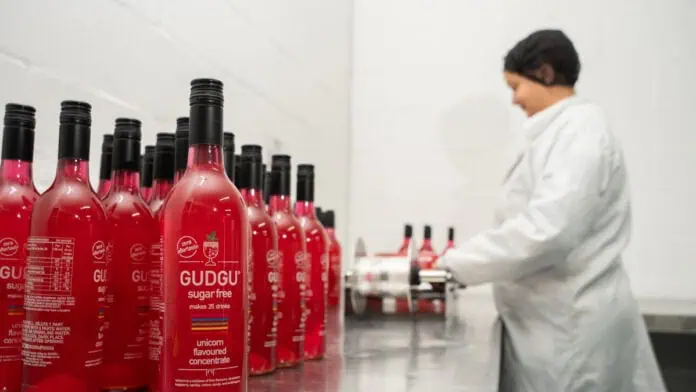
That commitment to quality and sustainability also guides GUDGU’s product innovation. One of its defining moments came when a diabetic customer reached out, asking for something sugar-free but still flavourful. “Creating something that’s both healthy and tasty is tough,” du Plessis admits. “Sugar isn’t just about sweetness – it affects texture and the whole experience. Most substitutes don’t taste right and have weird aftertastes. We spent ages reformulating until we found something that still tasted like GUDGU.”
The result was Sug0, a range of diabetic-, keto-, and banting-friendly cordials that didn’t compromise on taste – a rare feat in a market where “sugar-free” often means “flavour-free.”
The Big Leap: Partnering with Shoprite Holdings
GUDGU’s biggest turning point came in 2022, when the brand joined the Shoprite Group’s SMME programme and began stocking in Checkers stores nationwide. “Getting onto Checkers shelves changed everything,” says du Plessis. “Suddenly, we weren’t just a small local brand anymore – people saw us as real contenders. The trust factor shot up just from being there.”
The partnership didn’t just provide visibility; it forced the founders to professionalise rapidly. “The exposure and extra volume let us invest more in production and branding,” he explains. “But the leap exposed weak spots too – supply issues, cash flow headaches, system gaps. We had to sort those out quickly.”
Even so, they view those growing pains as necessary. “Compliance and certification were our biggest hurdles,” they say. “You can’t mess around with food safety, labelling, or reliability. My advice to small brands: get your production, packaging, and certifications locked down before you go after big listings. Retail-ready means more than a good product – it’s about systems, reliability, and acting like a pro.”
A Nationwide Footprint – and growing
From markets and small outlets, GUDGU has now expanded to over 100 Checkers stores and 700 additional retail points across South Africa. Expansion decisions are guided by data and dialogue. “We look at what people are asking for – social media feedback, online orders, distributor insights – and balance that with logistics and shelf space,” says du Plessis. “We’re especially focused on educating the market about health and wellness, not just selling products.”
Their facility, capable of producing 300,000 units a month, runs on zero-waste water purification and eco-friendly packaging. Sustainability, he insists, is no longer optional. “It’s a competitive requirement,” they say. “It reinforces quality, supports our brand story, and builds resilience. ‘Goodness from the Earth’ demands environmental responsibility.”
Building for the future
With production and retail systems in place, the next chapter is about scaling and global reach. “Scaling is both an opportunity and a risk,” says du Plessis. “We adopt a Steve Jobs philosophy – recruiting a team that believes in our ‘why’ before we worry about the ‘how’.”
Beyond South Africa, the team is eyeing export opportunities across Africa, the Middle East, and the U.S., where demand for sugar-free, eco-conscious products is booming. “Our focus on healthy, sugar-free drinks and sustainable packaging hits the right notes globally,” he says. “Across Africa, there’s a growing health-conscious middle class. In the Middle East, sugar-free demand is surging. And in Europe and the U.S., we see opportunities in premium lifestyle stores.”
Their expansion strategy is deliberate and measured. “We’re careful – only moving into markets where our logistics, regulations, and brand story fit,” they note.
Staying true to their roots
As for the next five years, du Plessis sees a brand both bigger and bolder, but still grounded in its founding philosophy. “We’ll have a wider range – concentrates, ready-to-drink products, maybe even functional drinks,” they say. “We’ll be everywhere in South Africa and active in key export markets. But no matter how big we get, we’ll keep that ‘Goodness from the Earth’ spirit – staying real, sustainable, and proudly South African.”
The journey from a Pretoria apartment to national shelves shows that sometimes, the best businesses don’t start with a business plan – they start with purpose. As du Plessis puts it: “We turned a moment of uncertainty into something that tastes like possibility.”§