








Deputy communications minister Pinky Kekana says that settling outstanding fees could save the cash-strapped public broadcaster, but the public remains largely unsympathetic.
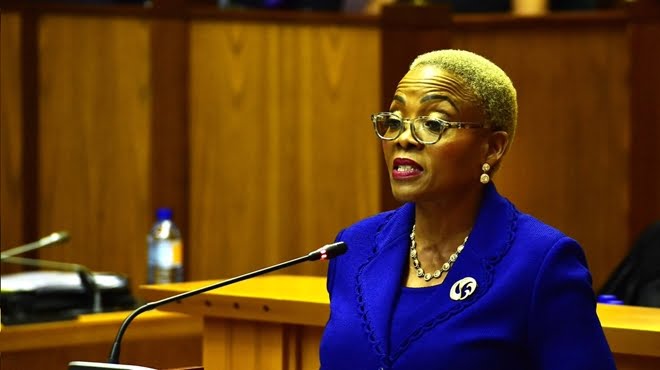
The portfolio committee on communication met in parliament on Tuesday to discuss plans to save the SABC, with deputy communications minister Pinky Kekana urging South Africans to pay their TV licenses.
Kekana said: “We know that the main revenue stream around the SABC has been [the] paying of TV licences. And that has not been happening for quite some time. Whatever movie or soapie you see, and all other activities, it means we must pay 76 cents a day as viewers and that has not been happening.”
But South Africans have taken to social media to voice their disapproval at calls for them to cough up.
Political and media consultant Makhosini Nkosi said the SABC should be “cash-flush” due to owning “big properties” including SABC1, Metro FM, 5FM and Ukhozi FM and shouldn’t need to “complain” about unpaid TV licenses.
Several users have suggested that, if you are a DStv subscriber, paying for your TV license on top of that is excessive, with some suggesting that the SABC get Multichoice to pay rather than individuals.
Dirk de Vos, who operates a corporate finance consultancy in Cape Town, says “a culture of non-payment has become entrenched” but added that it’s “not surprising considering what has happened at the SABC”.
Not everyone is against payment of TV licenses, with some calling it a “civic responsibility”.
The cash-strapped public broadcaster has become notorious in recent years for its inability to pay those that have produced content for its channels.
In August the SABC circulated a letter to service providers and producers on informing them that they would need to “defer” payments that were due at the end of July.
The broadcaster said it was “under pressure in the short to medium term in respect of cash flow due to the current liquidity challenge experienced”.
Members of the SABC board told parliament in August that they owe R694 million to creditors.
They broadcaster reportedly bled roughly R300 million during Hlaudi Motsoeneng’s reign.
The attitude of South Africans to paying their TV licenses is similar to the way those in Gauteng have, for the most part, refused to pay e-tolls since the adoption of the unpopular automatic electronic toll collection process in the province.
In June 2017, the department of transport revealed that only 30 % of invoices generated to motorists had been paid over the past two years.
In November of the same year, the then transport minister Dipuo Peters said the department needed to address “civil disobedience and allow law enforcement agencies to play their part” in response to the mass non-payment of e-tolls.
Despite SABC’s seemingly insurmountable problems, ANC MP Lerumo Kalaka told parliament on Tuesday that he believes the fortunes of SA’s struggling public broadcaster can be turned around.
“If the turnaround strategy is implemented, of course with our assistance, it really will turn things around at the SABC,” Kalaka said.
“As government, we can’t just be shouting at the SABC whereas we are not putting money towards what we see as a problem. It’s high-time that everybody in government becomes seized in trying to find money to fund.”
Executives and board members of the SABC told MPs on Tuesday they’re still engaging employees on possible retrenchments.
SABC chairperson Bongumusa Makhathini and his team were briefing parliament about their turnaround plan which would include a restructuring likely to lead to retrenchments.
“We have consulted with the shareholder representative (government), we have also engaged with unions and employees…,” he told MPs.
Makhathini said the compensation of employees was one of the biggest cost drivers at the SABC, totalling 43% of operating expenditure, with the total wage bill sitting at R2.6 billion for about 3,400 employees during 2017/18.
Source: