









ESG in business is an imperative driving savings and growth — RS South Africa
Distributor says sustainability drives cost savings, revenue growth and talent attraction
By Larry Claasen
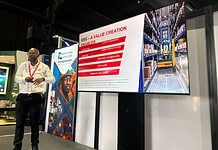
ENVIRONMENTAL, Social, and Governance (ESG) is a business imperative says RS South Africa Sales Director, Eric Wessels.
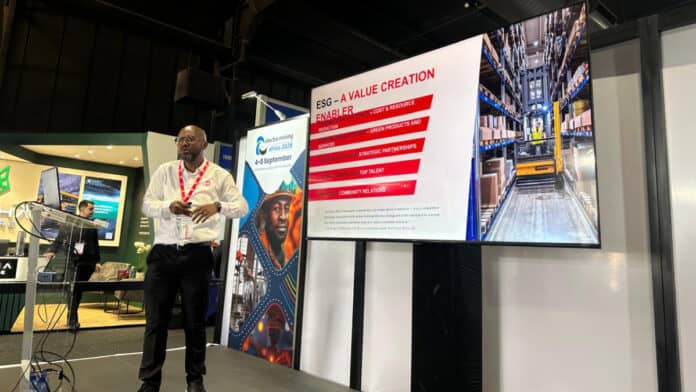
Wessels was speaking at the Electra Mining Africa 2026 Expo, where he gave a seminar on how ESG is increasingly influencing everything from investment decisions and operational efficiency to talent attraction and long-term growth.
He said RS — a distributor of electrical, electronic, mechanical, tools and industrial products that operates in 32 countries — has embedded ESG into the KPIs of every decision-making group, not just the boardroom.
Sustainability across the industrial lifecycle
Wessels argues that sustainability is relevant across the entire industrial lifecycle — R&D, procurement, operations, maintenance and end of life. It is a value creation enabler, not a cost centre, as it drives operational efficiency, resource reduction and innovation. It also creates new revenue streams through greener products and services.
He said the company’s six strategic pillars — customers, operational excellence, people, experience, solutions, and products and suppliers — are all enabled by ESG.
Ratings and recognition
This commitment has seen RS achieve EcoVadis Platinum status, placing it in the top 1% of more than 25,000 companies reviewed. It also holds a Carbon Disclosure Project (CDP) A-rating and a Climate Leadership Score in the top 1% for 2025.
Bottom-line benefits
But its ESG efforts have not just been good for the environment — they have also benefited the bottom line. Since its 2020 financial year, RS has recorded £69 million in ESG-related cost savings through logistics optimisation, energy and packaging reductions, and its transition to an electric vehicle fleet. A further £14 million in savings has come through its Better World programme.
The group now sources 92% of its electricity from renewables, has cut logistics emissions by 35%, and recycles 36% of its packaging.
Revenue growth linked to ESG
On the revenue side, ESG criteria now account for up to 25% of bids and tenders, driving £50 million in high-value customer revenue. A further £79 million in global customer revenue is linked to its CDP A-List status.
RS now has 33,000 “Better World” products across over 35 product families, and that portfolio has grown revenue by 66% since March 2024.
Supply chain impact
The impact of RS’s commitment to ESG, however, does not stop at its gates, as 58% of its suppliers, by spend, are rated by EcoVadis, and 41% have science-based carbon targets to reduce CO₂.
The group’s Scanstock vendor-managed inventory platform is eliminating product and logistics waste and delivering customer savings of more than £30,000 per year.
A disrupted supply chain
These global trends are reshaping industrial competitiveness. Supply chain disruptions – such as the closure of the Strait of Hormuz – exposed supposedly robust supply chains, said Wessels.
Cost pressures are forcing businesses to optimise. Sustainability compliance is now embedded in procurement policies and carbon footprints are under scrutiny, with companies rethinking transportation and logistics.
Talent and customer relationships
When it comes to attracting and retaining talent, a commitment to sustainability has also proven to be useful in that 68% of engineering and technology students say they will choose ESG as a career. “We see these sort of activist engineers coming through,” Wessels says
He also pointed out that the group’s commitment to ESG also solidifies its relationship with its customers, which often have their own sustainability requirements in place.
The Bottom line
Andrea Barrett, RS Group’s chief sustainability officer, puts it: “The future will be saved by those who can design solutions that are not only technically sound, but economically viable, socially responsible, and environmentally sound.”