








Corporate travel enters its strategic era
By Adrian Ephraim
After years of disruption, South African business travel isn’t just rebounding in 2026 — it’s being reimagined. Corporate travel budgets are rising, but this is not a return to pre-pandemic habits. Companies are travelling less often but more deliberately, focusing on trips that deliver measurable value, while employees exert greater influence over decisions around flexibility, wellbeing and work-life balance.
The numbers tell the story
Flight Centre Travel Group’s State of the Market survey shows that 46% of EMEA customers plan to increase travel spend this financial year, up from 39% last year. Yet the composition of that spending signals a clear shift. According to Mummy Mafojane, GM of FCM South Africa, conferences and events now account for 63% of business travel, followed by meetings at 53%.
“Companies are investing in culture, client relationships and talent retention,” Mafojane explains. “That means duty of care, wellness and real value now matter more than ever.”
Weekly short-haul flights are increasingly difficult to justify. Instead, corporates are embracing trip stacking – grouping meetings, piggybacking on events and clustering regional commitments – to reduce costs, emissions and traveller fatigue. The pandemic proved that remote meetings work, raising the bar for travel to justify its return on investment, conditions and impact on employee wellbeing.
Wellness moves to the centre
Traveller wellness has shifted from a perk to a business imperative. Research from the University of Pretoria identifies family responsibilities, logistics, health concerns and personal safety as major stressors for South African business travellers. Companies that address these through flexible policies and robust duty-of-care frameworks report higher engagement and productivity.
This is becoming unavoidable. Ipsos research shows that 71% of South Africans experience overwhelming stress levels. Progressive employers now design trips around wellbeing, prioritising reasonable flight times, quality accommodation and space for recovery — recognising that exhausted employees do not deliver value.
Bleisure becomes standard
The blending of business and leisure travel is no longer optional, particularly for younger professionals. Adding leisure time to work trips improves wellbeing, job satisfaction and overall ROI on travel spend.
Cape Town is well-positioned to benefit from this shift. Its appeal as a meetings and incentives destination, combined with improved air connectivity – including South African Airways’ plans to expand its fleet and establish Cape Town as a second hub – strengthens its attractiveness for extended stays.
Technology as an enabler
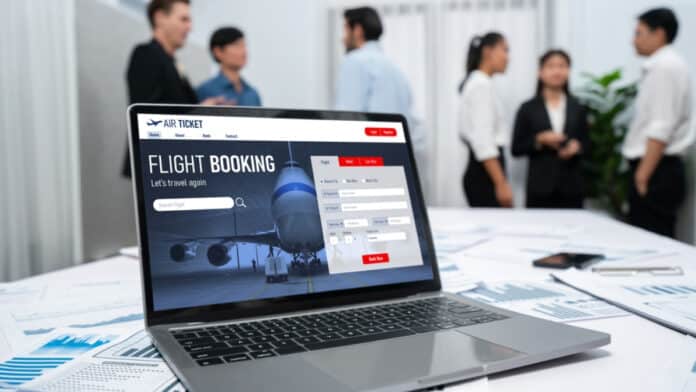
Technology is playing a critical role in enabling smarter travel. Predictive systems can rebook disrupted flights before cancellations are announced, while AI-powered tools like FCM’s 24/7 travel assistant provide real-time policy guidance and personalised support. For 2026, travel buyers are prioritising real-time itinerary management, automated expense tracking and predictive analytics.
Rethinking value beyond price
FCM’s white paper, Should Price Still Be Your Guide in 2026?, argues that success is no longer defined by cost alone. Instead, companies are measuring traveller experience, safety, wellness, sustainability and the strength of supplier partnerships.
This shift is reinforced by regulation. South Africa’s Climate Change Act 22 of 2024 introduces mandatory emissions measurement and carbon budgets, pushing companies to prioritise direct flights, green-certified hotels and ESG-aligned partners.
As business travel matures in 2026, success is defined less by cutting costs and more by optimising experiences. The most resilient programmes put people first, deliver tangible outcomes and align business goals with sustainability – proving that human-centred travel is now a strategic advantage, not a luxury.