







State-owned entities Transnet and the Development Bank of Southern Africa(DBSA) have agreed to create a new facility that will extend favourable financing to African and Middle Eastern buyers of TransnetEngineering’s (TE’s) rail rolling stock and portequipment.
The financing scheme will be branded under the Transnet Finance Company banner, but will be operated by the DBSA, backed by a consortium of commercial banks, along the lines of financing companies that operate under the branding of automotive companies.
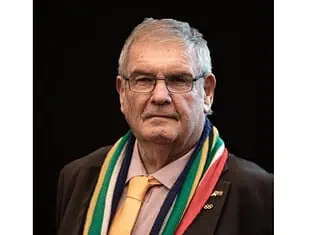
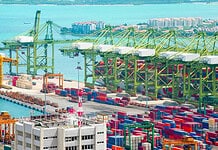
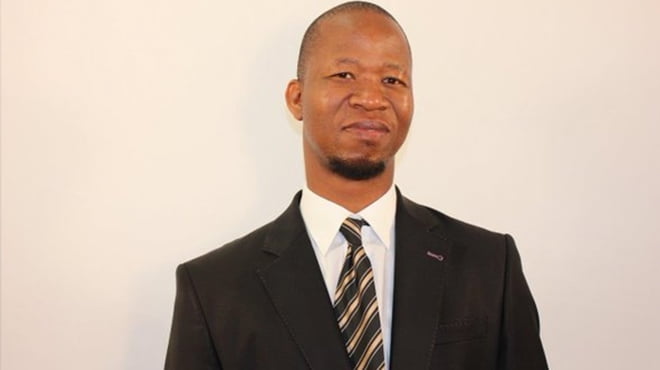
Transnet chief officer in advanced manufacturingThamsanqa Jiyane tells Engineering News Online that the venture is designed to improve TE’s competitiveness as an exporter of locomotives, passenger coaches, freightwagons, as well as port-handling equipment, such as rubber tyre gantry cranes.
He says TE has received enquiries worth more than R15-billion in recent months, but has struggled to compete with Chinese and North American supplies in particular, which are able to couple their offerings to preferential interest rates, or soft finance extended through the host country’s export-import bank.
The arrangement with DBSA is said to be in line with a government-endorsed strategy for TE to increase third-party sales as part of its mandate to become an African Original-Equipment Manufacturer (OEM).
The DBSA tells Engineering News Online that it does not disclose details about any client’s facilities. However, the development financier stresses that it supports ventures that focus on large-scale infrastructure investment in its selected sectors.
“It is through infrastructure investment that the DBSA seeks to advance its development impact, support economic growth and ultimately improve the quality of life of people.”
The Department of Public Enterprises tells EngineeringNews Online that the OEM mandate is also aligned with a resolution taken at the 2015 Heads of State and Government Summit of the African Union in Addis Ababa, earmarking South Africa as Africa’s “champion” in the manufacture and supply of rail stock.
“Cabinet directed Transnet to consider the markets… in light of rolling stock capability and skills that South Africa is not fully venturing,” the department said in a written response to questions.
The Department of Trade and Industry (DTI) is also supportive, stating that, in the African context, building and maintaining a globally competitive rail manufacturing and after-sales service and refurbishment capability in South Africa “is critical to the industrial effort”.
However, the DTI is also alive to criticism that developing TE into an OEM could crowd out the private sector. “The DTI recognises that this is a critical and debatable policy question for which there are no easy answers,” the department told Engineering News Online.
“The DTI perspective is that a robust railway supplier development programme and supply chain must be created and sustained over a long period of time and this can be achieved if companies with varying levels of capability and competency are supported, including with respect to support for clusters and production hubs.”
Jiyane stresses that Transnet’s engineering capabilities have been built over nearly a century of railway operations and that the OEM strategy is viewed as the logical next step for a business initially created to maintain freight and passenger rolling stock.
He says it currently has the capacity to design and build freight wagons and passenger coaches and recently unveiled the TransAfrica Locomotive, which has been specially designed to meet the needs of African shunting operations.
In addition, companies such as GE have already used its Koedoespoort facilities as an assembly hub not only to supply diesel locomotives to Transnet Freight Rail (TFR), but also to other African customers.
“I should also point out that many of the components used in these solutions are being sourced from private domestic firms.”
However, Jiyane says the OEM strategy will only really gain traction if it is wrapped within a financing package that is competitive with what is available to African and Middle Eastern clients from other OEMs.
TE’s current revenue is dominated by orders from TFR, with its facilities in Koedoespoort and Durban producing dieseland electric locomotives to fulfill the R50-billion-plus ‘10-64 contract’ for 599 electric and 465 diesel locomotives. In fact, third-party orders currently comprise only about 25% of the R10-billion revenue.
By 2021, however, TE is budgeting to increase its order book to over R21-billion and to raise third-party orders to 40%.
Jiyane expects the first Transnet Finance Companytransaction to be finalised during the group’s 2018 financialyear and does not discount its involvement in deals currently being negotiated in Nigeria and Zimbabwe.
Transnet forms part of a GE-led consortium that has been named as the preferred bidder for a $2-billion rail concession in Nigeria and is also involved in a $400-million venture to recapitalise the National Railways of Zimbabwe.
“We believe the deal we are doing with DBSA will provide us with a far more attractive offering as we seek to sell South African-made rolling stock to clients in the rest of Africa,” Jiyane concludes.