











South Africa’s Automotive Masterplan goals stall as production targets slip
By Larry Claasen
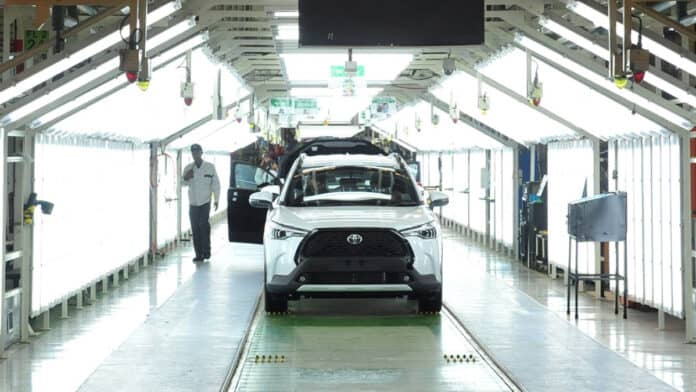
THE government admits its plan is to make the local vehicle manufacturing sector a player on the global stage and a major economic growth driver is falling short.
Released in 2016, South African Automotive Masterplan (SAAM 2035) set out to produce 1,3 million to 1,5 million vehicles a year, to increase employment to 224 000, and to push up local content in South African-assembled vehicles to up to 60% by 2035.
A decade after its release, the Department of Trade, Industry and Competition (dtic) admitted it was falling short. In its Industrial Development Strategy (IDS) 2026, which was released in June, the government said “progress towards the SAAM 2035 goals was stalling.” It said stagnant production volumes had led to a localisation rate of 39%, well below the 60% target.
Production and job figures paint a sobering picture
The government is also falling short on its other measures. It wanted to produce at least 1,3 million units by 2035, but according to Naamsa, only 616 466 units were produced in 2025.
There is a similar story with the employment target. Instead of being close to reaching its 224 000 target, the sector currently employs only about 115 000 people.
It also had the goal of accounting for 1% of global vehicle production, but according to Naamsa, it accounted for just 0,62% in 2025.
CKD strategy emerges as a stopgap to protect jobs
The dtic said the automotive industry remains an important part of the local economy, as it contributes roughly one-third of manufacturing value and supports significant employment and export activity, and it is looking at ways to support the sector.
It is, for example, looking at supporting completely knocked down (CKD) assemblies – a shipping strategy where a vehicle is exported as entirely unassembled parts and put together in the destination country.
It hopes that if vehicle manufacturers adopt this strategy, industry jobs could be protected and the sector could better navigate changing environmental legislation.
Several vehicle manufacturers have already embraced CKD. BAIC’s plant in the Eastern Cape is using it to assemble Foton bakkies, while Mahindra signed a memorandum of understanding (MoU) with the Industrial Development Corporation (IDC) to conduct an in-depth feasibility study on the potential establishment of a CKD vehicle assembly facility in the country.
NEV incentives seen as critical to safeguard European export markets
The dtic also said it is looking at scaling up its incentives for the manufacturing of new energy vehicles (NEVs) – commonly referred to as EVs – in South Africa. Such a move would also include support for component manufacturers.
“These measures will assist the industry to remain globally competitive and attract new investors into the country.”
Support for NEVs is something vehicle manufacturers have been calling for some time. Without it, they would struggle to hold onto their export markets in Europe, which plans to ban the importing of Internal Combustion Engine (ICE) vehicles in 2035.
Having incentives for NEV production is essential for the sector, as it accounted for 75,7% of total vehicle exports in 2025.
Mineral wealth offers a dual opportunity for decarbonisation
In the IDS, the government also noted that the country has the potential to be a big player in the global NEV and renewable energy storage sectors, given the richness of lithium, copper, cobalt, and manganese deposits in Africa.
“The beneficiation of minerals and addressing hard-to-abate sectors are two closely linked priorities in the IDS. Done right, mineral beneficiation can directly support the decarbonisation of hard-to-abate sectors.”