








Western Cape launches Mobility Month with a focus on congestion
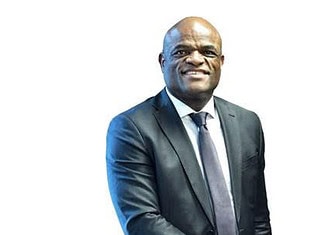
On Wednesday, 1 October 2025, Provincial Minister of Mobility Isaac Sileku launched Mobility Month with a panel discussion, addressing one of the province’s most pressing challenges, traffic congestion.
Cape Town is ranked the 9th most congested city in the world, according to the 2024 INRIX Global Traffic Scorecard. And, this impacts our economy and jobs.
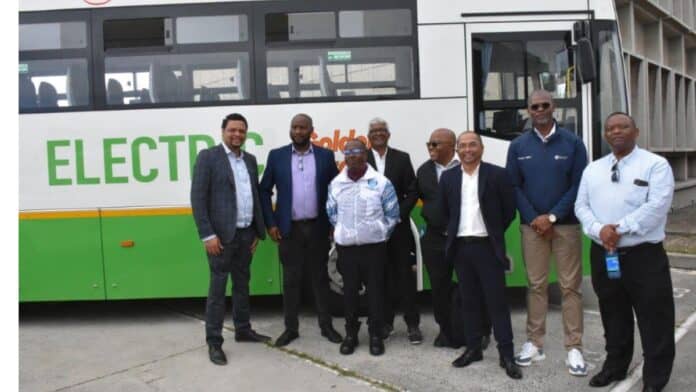
The Western Cape Mobility Department invited industry partners to take part in the panel discussion on finding and implementing solutions to easing congestion.
Speaking at the launch event, which brought together key transport stakeholders, including the Passenger Rail Agency of South Africa (PRASA), Golden Arrow Bus Services (GABS), SANTACO and academics, panelists emphasised that while congestion cannot be completely eliminated, it can be better managed through collective action. The panel raised concerns over the fact that 60% of passenger vehicles traveling during peak hours are single occupancy vehicles, adding to the Mother City’s congestion woes.
Mr Raymond Maseko, Regional Manager of PRASA said “We aim to move 1 million passengers a day, as passenger rail needs to be the backbone of public transport while been supported and complemented by the other modes.
UCT Professor Lester Davids, in his inputs said, “From an eco-systematic approach, it will be much more effective once we work as a collective in solving problems. In that way, we don’t just see the problem and solve it and then move on to identifying and fixing other problems. When you look at the aspect of health and wellness benefits that come with non-motorised solutions, there’s an opportunity to open a new eco-system, which allows for commercial trade-offs, such as discounts on aspects and items to improve your health.”
Mr Mandla Hermanus, SANTACO Provincial Chairperson, said, “We are encouraging our members to start looking at acquiring higher occupancy vehicles, 23 or 25 seaters, and there is gradual uptake where some associations have started with the acquisition of these types of vehicles. This method allows for more profitability for fleet owners, as even with less vehicles you are carrying more passengers. This also lessens operational costs for their business.”
In his keynote address, Minister Sileku said, “Congestion is not only an inconvenience, it has a very real impact on livelihoods, businesses, and the environment. Our focus must be to expanding and improving public transport, so that it becomes the preferred choice for commuting. We will work harder to further enable non-motorised transport. We must also manage travel demand by embracing carpooling, flexible working arrangements, and smarter use of technology. Additionally, the co-existence of the different modes of public transport including rail, busses, mini-bus taxis and e-hailing is possible, and is the only way to manage and lessen traffic congestion”.
The causes of congestion include:
- Rising private car use, with car ownership nearly doubling since 2003;
- Weak and unreliable public transport, which has driven many residents to use private cars;
- Concentration of jobs in a few central areas; and
- Historic spatial planning, which left many communities far from economic opportunities.
The solutions in progress:
Government and partners are already implementing a range of interventions to ease congestion, including:
- Rail recovery: roll out of new trains, restoring services on the Central Line, deploying Rail Enforcement Unit, and expanded park-and-ride facilities.
- Bus services: Golden Arrow carries over 230,000 passengers daily; expansion of MyCiTi services and the N2 bus lane.
- Minibus taxis: transporting 75% of commuters, with various initiatives to improve safety and efficiency.
- Non-motorised transport: safe walking and cycling projects and the distribution of over 400 bicycles per year.
Mobility Month 2025
While congestion was the focus of the launch event, it also marked the start of the Department’s Mobility Month programme, which will run throughout October. The campaign will highlight different aspects of mobility across the province, from public transport and freight logistics to road safety and non-motorised transport.
“At the heart of Mobility Month is one simple goal: to keep goods and people moving safely and efficiently across the Western Cape. We want to reclaim lost hours, unlock economic growth, and restore dignity in how people move. We cannot build around congestion; we need to manage it with innovative and practical solutions,” added Minister Sileku.
The department urges residents, businesses, and schools to play their part by choosing sustainable travel options, supporting safe public transport, and adopting flexible or shared travel practices.