







Western Cape water security: How Cape Town is building long-term supply resilience
By Adrian Ephraim
South Africa’s water crisis is well documented: a projected 17% supply deficit by 2030, R28 billion owed to water boards, and nearly half of treated water lost before reaching users. In the Western Cape, the challenge is more acute — shaped by climate change, geography, and a population that has doubled in a generation.
“The Western Cape has always been water-scarce,” says Benoit LeRoy, CEO of the SA Water Chamber. Declining cold front intensity means less rainfall reaches catchment areas, limiting dam capacity. “We can’t even fill the ones we have.”
A system under strain
Cape Town’s population has grown from 2.5 million to five million and could reach seven million by 2050. The system was never designed for this scale. Unlike global norms where agriculture dominates water use, roughly 70% of supply in the Western Cape now goes to urban demand. Meanwhile, the region’s dams hold only about one year of supply — far less than the two-year buffer of the Vaal River system. “The population explosion has put stress on the system,” LeRoy says. “Things are not normal.”
Business risk, not just supply
Industry may not be the biggest water user, but it is highly exposed. Food and beverage producers, particularly poultry processors, face severe disruption if supply fails. Production cannot simply pause — losses compound quickly through contamination and spoiled stock. Businesses have improved efficiency, reusing water for non-critical processes and reducing waste. But the mindset has shifted. “It’s not a cost issue anymore,” LeRoy says. “It’s a systemic risk.”
A diversified response
Cape Town is responding with one of the continent’s most advanced water strategies. The city has accelerated pipe replacement, cutting water losses to around 24%. A large-scale smart metering rollout will soon enable real-time system monitoring.
On supply, the city aims to add 300 megalitres per day from alternative sources by 2030, split between desalination, groundwater, and direct potable reuse.
Desalination at the core
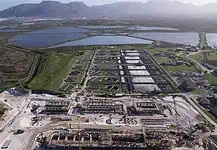
A planned R5-billion desalination plant at Paarden Eiland will anchor this effort, delivering up to 70 megalitres per day by 2030/31. The project is expected to raise tariffs by 6–7% but significantly improve reliability. “Cape Town is on a mission to reach 99% water security by 2040,” says LeRoy.
The lesson from the 2018 “Day Zero” crisis is clear: water resilience is no longer optional — it is foundational to the region’s future.