







An intense focus on climate change and stricter emission policies are changing the way motor vehicles will be produced in future. Manufacturers are downsizing engine size, but increasing engine output by adding turbochargers – placing huge emphasis on the quality and surface finish requirements of engine components. The reduction in weight of alloys and material chosen poses a great challenge in the machining of these components.
Grinding Techniques – a Tyrolit company, has the experience and expertise locally in providing cost effective grinding solutions to cater for the OEM automotive component and automotive reconditioning market, especially the grinding of crankshafts. Its local R & D facility provides the best possible product specification whilst obtaining low machining costs per unit.
When considering the overall grinding process, its Business Development specialists are able to offer support on all technical issues taking into account the preferred grinding solution, machine, grinding wheel and dressing tool. One of the major challenges experienced in crankshaft grinding is wheels being “out of balance” and this is particularly due to lack of training on the correct safety checks, mounting and balancing procedures, as well as crankshaft wheels having bigger outside diameters and smaller widths, which accentuates any “out of balance” conditions. Grinding Techniques is able to provide the necessary training.
With the local range of ANDOR grinding wheels, production of wheels of up to 1015mm in diameter is possible.
The change to lightweight alloys and higher surface finish requirements on engine components has established a dynamic shift on the production of grinding wheels in both conventional and super abrasives. By using the latest technology in high quality aluminium oxide, CBN grain and bonding systems, challenges experienced with issues relating to parts being ground out of round, and out of tolerance, are minimised with advantages to the automotive reconditioning market, earthmoving equipment and armour-plated vehicle construction.
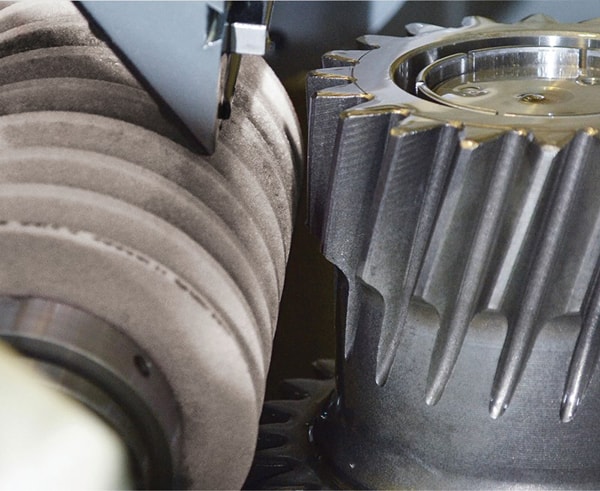
Specific to the automotive reconditioning market, are products available to suit crank and-camshaft grinding, polishing, valve seat and stem end grinding as well as applications in the brake and clutch industry amongst others. The latest CNC machining enables the production of wheels for the gear industry with a range of modules, pressure angles and starts required for continuous generating and profile gear grinding. The addition of sintered aluminium oxide in various products results in production cost per unit reduction, whilst still attaining a cool cut and good form holding on the grinding wheel.
For more information Tel: +27 11 271 6400 | info@grindtech.com | www.grindtech.com