








Driverless cars, 3D printers and smart homes have arrived, and nobody is surprised any longer about pronouncements that artificial intelligence has come close to matching human capabilities, even surpassing it in some ways. Still, there are certain areas of life and business where the human touch will arguably always have a place over robotics – “bots” for short.
Customer service – or at least components of it – is one of them.
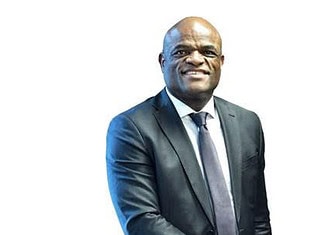
While bots are hard at work behind the scenes, and becoming more visible in some parts of the front-office too, they’re unlikely to oust human beings, says Jan Moganwa, Chief Executive: Customer Solutions at Absa Retail and Business Banking.
“We don’t see robots taking over; we’re envisaging a combination of the two – people and machines,” Moganwa says. “Machines are very good at certain tasks, such as processing big data and turning it into customer insights, but they’re terrible at understanding jokes and cultural nuances, and displaying empathy. In situations where you’re feeling vulnerable, like when your credit card has been stolen, you want to interact with someone who can share your pain. Machines aren’t very good at that.”
Sharing the pain
Nor does it seem likely that bots will, in the foreseeable future, evolve to the point where they can convincingly share a customer’s pain. In a study by Oxford University researchers on the future of employment[1], the authors say it is especially tricky for computers to emulate skills such as negotiation, persuasion and care.
“… the real-time recognition of natural human emotion remains a challenging problem, and the ability to respond intelligently to such inputs is even more difficult,” the authors say.
They refer to the international Loebner Prize for artificial intelligence, which includes a “Turing Test” competition (named after World War II code-breaker Alan Turing) where prizes are awarded for the most human-like chatbox programs.
“Sophisticated algorithms have so far failed to convince judges about their human resemblance,” say the authors of the 2013 study. “This is largely because there is so much ‘common sense’ information possessed by humans, which is difficult to articulate, that would need to be provided to algorithms if they are to function in human social settings.”
The best of both worlds
It makes sense to blend the best customer service attributes of people and machines, says Moganwa. “Robots function best in routine, non-empathy scenarios. For example, a customer might start an artificial intelligence conversation with a robot and, if the circumstances call for it, switch over to engaging with another human.”
Marius de la Rey, Chief Executive of Customer Channels, Distribution and Coverage at Absa, agrees that some components of customer service lend themselves to digitisation, while others do not. “Sometimes, it’s the vibe of humans that appeals to humans,” he says, referring to an experiment in the hospitality industry, where coffee shop patrons taking part in a blind tasting consistently preferred the quality of coffee served by humans to that dispensed by vending machines. “It’s the psychological gap.”
Absa’s strategy of bridging the gap finding the “sweet spot” where technology meets humanity is embodied by the one of the bank’s latest advertising campaigns featuring Bongz and Bot.
Technology meets humanity
“While Bongz represents all of us, the ‘every man’ and our need for personalised banking services that work around our lives, Bot is all about technology and innovation,” says De la Rey. “The interaction between the two and what they teach each other is really what we are after. Key here is that our digital platforms are easy to use.”
Absa’s ChatBanking service, for example, is offered on Facebook Messenger (a world first) and Twitter, allowing customers to check their balances, make payments or buy airtime and data without leaving their preferred social media channel.
Other easy-to-use bot-type solutions are the Absa mobile phone App and the bank’s Siri software, which uses natural language processing to engage with customers, helping them perform simple tasks such as checking their balance.
“Our focus is on designing products and solutions with the customer in mind,” says Moganwa. “These are customer tasks that can frustrate customers, such as standing in long queues, filling in the same documents more than once, and being passed from pillar to post on the phone.”
Meanwhile, the bank is keeping its finger on the pulse of the latest bot developments and changing customer preferences. It actively monitors trends among banks across the globe, conducts market research among customers and uses data analytics to glean customer insights from the vast volumes of data gathered on customers’ use of its branches, ATMs, call centres, Apps, online banking and digital services like ChatBanking.
“Driverless cars might be here, but when it comes to bots in banking, there’s still a person in the driver’s seat – and that’s the customer,” says de la Rey.