










BRUNEL University London is the first UK university to start researching car engines of the future using new single cylinder intelligent valve technology.
The electronically controlled system will supercharge engine development, helping car companies meet new emissions regulations and cut costs.
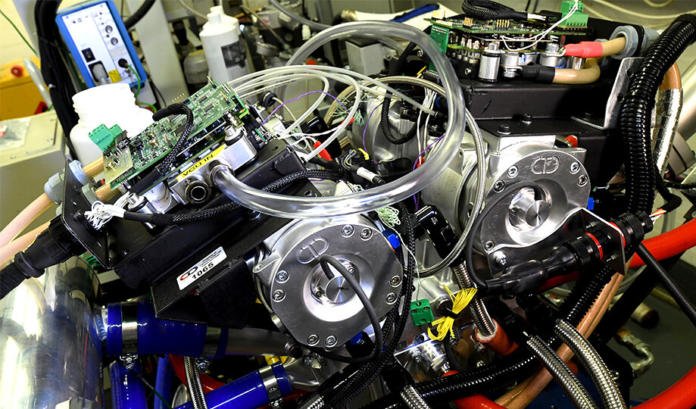
Brunel’s Centre for Advanced Powertrain and Fuels (CAPF) is testing Camcon Auto’s digital valves for their vast potential and precision control.
“We are very excited to collaborate with Camcon Auto in exploring and demonstrating the great potential of Intelligent Valve Technology,” said CAPF director, Professor Hua Zhao.
“The technology’s flexibility and superior controllability will enable the development of the next-generation powertrain with very high efficiency, low carbon and zero environmental impact emissions.”
The Single Cylinder Intelligent Valve Technology replaces the traditional camshaft on a petrol engine with digitally controlled electric valve mechanisms. This both cuts emissions dramatically and upgrades
Driveability, bringing real-time digital control and flexibility to the gas exchange process.
Compatible with most single cylinder combustion development engines, the technology works on both inlet and exhaust valves. This means researchers can focus on reducing emissions and improving fuel consumption.
“Intelligent valve technology completely eliminates the conventional camshaft and for researchers, significantly reduces time needed to do a series of experiments – and improves the consistency of the results,” explained Mark Gostick, commercial director for Camcon Auto.
“Any valve event profile can be achieved, and valve position can be monitored throughout the event using a bespoke sensor. It can mimic any valvetrain, enable on-the-fly cam changes and innovative combustion strategies. We will continue working closely with Professor Zhao and the CAPF team, eagerly anticipating the results of their research projects.”
The system features an intelligent actuator or ‘mover’ for each valve. Each is under full-time, fast-feedback control, allowing any valve timing, period or lift at the touch of a button, explained Gostick.
“It represents a huge step change for research and development departments, rapidly speeding up combustion development and slashing costs.”