







“Further fragmentation of the deep-sea trawling industry will come at the expense of beneficiation and jobs” – Augustyn.
This is the view of Johann Augustyn, Secretary, South African Deep-Sea Trawling Industry Association (SADSTIA) in a press statement issued ahead of the review of the allocation of rights to the inshore trawl fishery for hake and sole.
Although scheduled to begin in the Cape High Court on 6 February, the hearing was postponed until April.
“The Department of Agriculture, Forestry and Fisheries (DAFF) will allocate long-term rights to the deep-sea trawling industry in 2020. If further fragmentation is forced on the industry by the Department introducing a large number of small right-holders, the number of jobs created by the new entrants starting from scratch will in no way compensate for those that will be lost on the vessels and in the factories of the established fishing industry,” says Augustyn.
“Smaller quotas will result in less profitable factories, less beneficiation and therefore a reduction in the amount of South African hake that is sold to international retailers. It is the international market that makes this industry profitable.”
SADSTIA represents the interests of 46 trawling companies with investments of R5.9bn.
The allocation of rights to the inshore trawl fishery – which catches hake and sole on shallow grounds off Mossel Bay and accounts for about 10% of annual hake landings – is considered to have signalled the degree of restructuring the government intends to apply when long-term rights are allocated to the much larger deep-sea trawl fishery in 2020.
However, the rights allocation was successfully interdicted by Viking Inshore Fishing on 3 January 2017, resulting in a temporary suspension of fishing in the R700m per year inshore trawl fishery.
Viking Inshore Fishing is a medium-sized, diversified fishing company that lost 60% of its inshore hake quota in the allocation. Its quota, and those of other established right-holders, was cut to make room in the fishery for 12 new entrants.
Augustyn emphasised that over the past 25 years the deep-sea trawling industry has restructured its ownership to the point where 46 small, medium and large companies hold a stake in the fishery that prior to 1990 was completely dominated by five large companies.
A recent study by the independent research and empowerment ratings agency, Empowerdex, pegged the industry’s black ownership at 62.36%.
“This industry has transformed and we believe there is no further need for social engineering. The market and usual laws of economics should be allowed to play their roles to achieve the maximum benefit for all stakeholders, including employees in the industry and employees in supporting industries.”
SADSTIA states that the deep-sea trawling industry sustains 7,050 good jobs with employee benefits and opportunity for career progression. The jobs are all in coastal areas (Cape Town, Saldanha, Gansbaai, Mossel Bay and Port Elizabeth) where job opportunities are generally scarce.
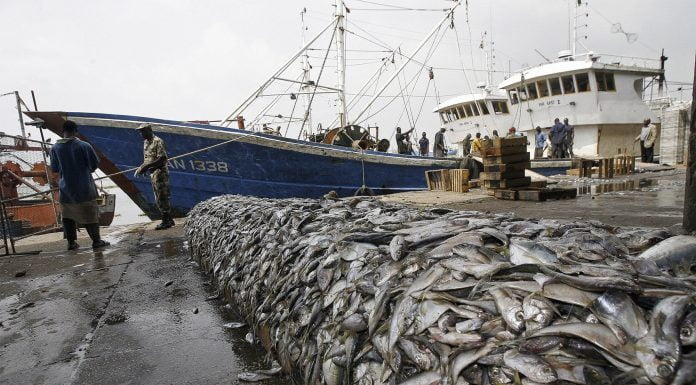
“Our fishery lands about 140,000 tonnes of fish every year and generates sales of approximately R5bn and so the stakes are extremely high,” concludes Augustyn.