











SA agriculture rebounds with strong growth prospects
By Adrian Ephraim
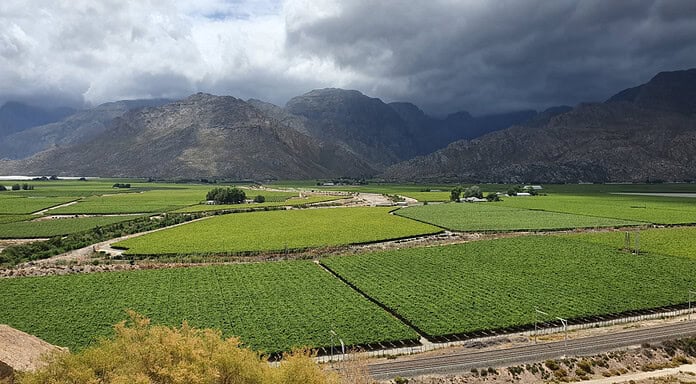
SOUTH Africa’s agricultural sector is telling a story of remarkable resilience in 2025, transforming from the devastating drought conditions of last year into what one expert describes as “an excellent year” for farming across the country.
“We are coming from a very difficult season if you are thinking about 2024,” explains agricultural economist Wandile Sihlobo, Chief Economist of the Agricultural Business Chamber of South Africa (Agbiz).
The El Niño weather phenomenon brought below-normal rainfall, culminating in February drought conditions that crippled crop production across the region. “Our maize production last year was down 21%, but across Southern Africa, that was the reality. Zimbabwe lost 60% of its crops, Zambia lost half of its crop.”
From drought to recovery
The turnaround has been dramatic. South Africa has shifted from El Niño to La Niña weather patterns, bringing above-normal rainfall and setting the stage for agricultural recovery. “We started with a very strong Q1,” Sihlobo notes, though he acknowledges the sector’s inherent volatility due to its dependence on natural conditions.
The recovery story, however, came with its own complications. “The season is late by a month and a half,” Sihlobo explains, describing how extended rainfall patterns disrupted traditional harvesting schedules. “Normally you would want rain to stop in February, in March, so that the crops dry up and then from May onwards you can harvest. But now we received rain until the end of April.”
This timing shift meant crops that would typically be delivered in the second quarter appeared later, contributing to more modest growth figures despite the underlying strength of the harvest.
Battling disease challenges
While weather conditions improved, the livestock sector faced different hurdles. Animal diseases, particularly foot-and-mouth disease and avian influenza, have created ongoing challenges. “Generally, the animal diseases, as you know, are not unique to South Africa,” Sihlobo observes, pointing to similar struggles in the EU, Brazil, and the United States.
“We do have weaknesses in our biosecurity controls, but we have the right people working on it, so it’s not a concern,” he explains, emphasising the need for improved surveillance systems and faster registration of new vaccines. The frequency of these diseases has increased notably, with Sihlobo noting that “before 2014, the animal diseases were not occurring at the speed that they are occurring now.”
Export success story
Despite global trade tensions and tariff concerns, South Africa’s agricultural exports have shown surprising strength. “If you look at South Africa’s agricultural exports in the second quarter to the United States, they were up by 26%,” Sihlobo reports, crediting strategic front-loading during policy uncertainty periods.
More significantly, improved port efficiencies have transformed the export landscape. “We are much more encouraged by the performance of the ports and the efficiencies in South Africa,” he says, noting collaborative efforts between Transnet and private sector partners. The result has been tangible: agricultural exports reached impressive levels, with citrus growers and others no longer complaining about port delays.
Sihlobo challenges common perceptions about South Africa’s market development efforts. “I typically hear people saying South Africa is not doing anything to open markets,” he says, before providing context that tells a different story. The country’s agricultural exports have grown from around $2 billion in 2000 to nearly $14 billion in 2024.
However, he acknowledges that momentum slowed after 2012. “We need to regain the energy of the early 2000s of opening as many export markets as we can,” Sihlobo argues, identifying key targets including China, India, and Saudi Arabia, which “spend over $26 billion buying food from the world. We want to be part of that”.
Looking forward with optimism
Despite the challenges, Sihlobo maintains an optimistic outlook. “I remain very optimistic for this year, but also for the next decade,” he states, citing the sector’s potential for substantial growth and job creation.
The path forward requires addressing key structural issues: releasing government land with title deeds, improving rural infrastructure, tackling stock theft (“100 cattle are stolen in South Africa every day”), and expanding vaccine manufacturing capabilities.
“We are struggling with three problems in South Africa – unemployment, low growth, and poverty,” Sihlobo concludes. “Anything we do must resolve that.” For South Africa’s agricultural sector, the combination of favourable weather, improved logistics, and strategic market development means the foundations are being laid for sustained growth in the years ahead.