










By CBN Staff reporter: Mzwandile Mamaila
THE agricultural sector presents vast entrepreneurial and employment opportunities with South African agro-processing contributing approximately R124 billion to the GDP, according to the Department of Trade and Industry. Local and foreign entrepreneurs are being encouraged to invest in agricultural businesses, via SOE’s such as the Agribusiness Development Agency, where emerging commercial farmers and agribusiness entrepreneurs are promoted and exposed to foreign investors.
The demand for agro-processing and food security in South Africa continues to increase as the population expands. The establishment of Industrial Development Zones (IDZ’s) and Special Economic Zones (SEZ’s) are designed to attract foreign direct investment that can assist amongst other sectors, agricultural entrepreneurship.
Foreign conglomerates such as Nestle, Coca-Cola, and Unilever are heavily invested in the South African agriculture food chain through their downstream agri-processing and production facilities which create demand for grains and raw produce supplied by local farmers.
Foreign investment in South African agricultural production and food manufacture creates opportunities and innovation for both the farmers and the food manufacturers with the conglomerates in certain cases providing direct cash injections to farmers who can then procure the latest agricultural equipment, such as drone technology, to maximise yield and quality of the raw materials while enabling more environmentally friendly practices to minimise global warming.
“To demonstrate our commitments, in 2019, we invested over R1,4-billion towards the B-BBEE procurement spend by empowering black suppliers and in turn, creating jobs through various enterprise development initiatives. This figure included investments of R52 million to support emerging black farmers through our dairy projects in the Eastern Cape and Western Cape as well as incremental spend of R100 million on black rural development projects across the country,” stated Managing Director of Nestle East and Southern Africa Region Bruno Olierhoek in a recent press release.
Nestle has also invested in initiatives that will assist farmers in growing sustainable foods while reducing their emissions. Nestle advocates for regenerative agricultural practices and ensures South African farmers are up to date with the necessary materials that will regeneratively create sustainability, with the aims of reaching NET ZERO by 2050.
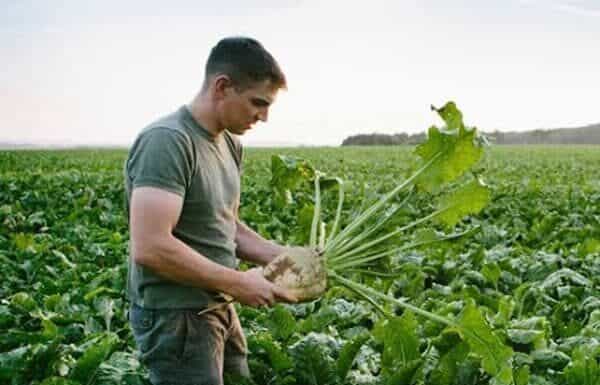
Nestle’s regenerative farms which contribute to South Africa’s agricultural sector. Source: Nestle Facebook page
The provision of modern tools from Nestle, such as supply chain mapping, certification, and satellite monitoring, further prevents deforestation with the aim of deforestation-free supply chains for palm oil, pulp and paper, meat, soy, sugar, cocoa, and coffee.
As South African agro-processing is a multi-step process that requires various entities, foreign investment is a dire need. To prolong the success of the South African agricultural sector and maintain food security, foreign investment will remain a necessity that the South African government will continuously prioritize. Therefore, ensuring South African agro-processing and food security are successful.
Source: Bruno Olierhoek