










Fewer Transmitter Types, Simpler Plants:
INSTROTECH’S UNIVERSAL CALOG 9000/9240 MAKES THE CASE FOR STANDARDISATION
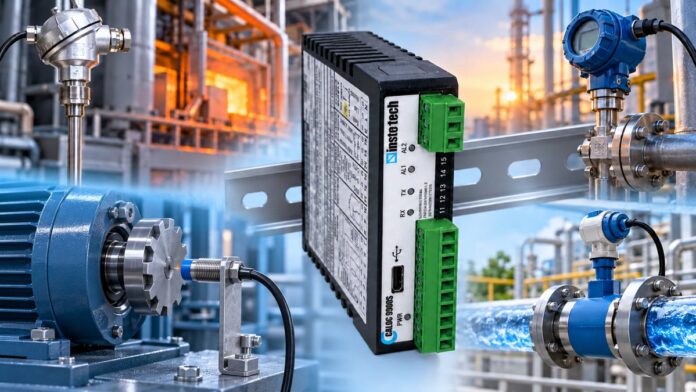
One programmable platform covers thermocouple, RTD and process signal inputs, configured with license-free SmartView software
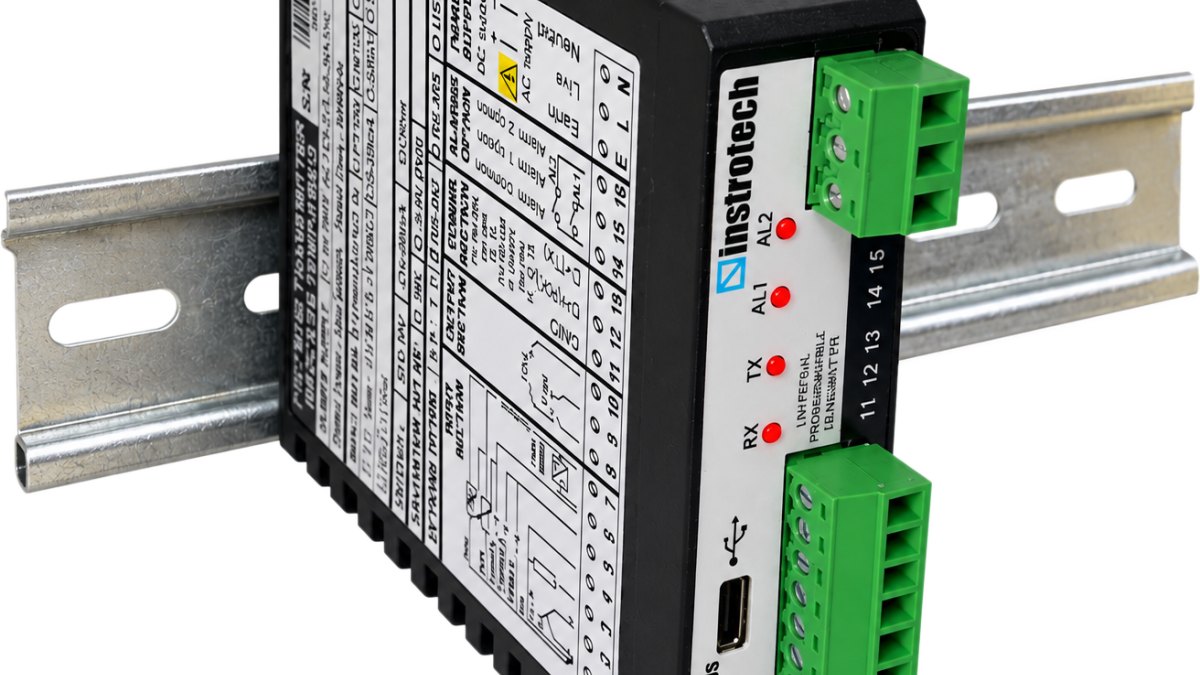
Industrial plants rarely use one temperature sensor type everywhere. Furnaces, ovens, process vessels, production equipment and general plant monitoring can require different ranges and sensor technologies, and over time this creates a large installed base of transmitters, each selected for a particular input, range or output. Instrotech’s CALOG 9000/9240 universal programmable transmitter tackles this complexity by enabling a single hardware platform to be configured for multiple supported applications.
“For plants looking to reduce unnecessary instrumentation complexity, the right question is not simply how many transmitters are installed,” says Pieter Deysel, Managing Director of Instrotech. “It’s how many different transmitter types are genuinely necessary to support the applications in the plant.”
Beyond temperature
The CALOG 9000/9240 supports J, K, N, R, S, T and W5(C) thermocouples and Pt100 and Ni100 RTDs, with Pt500 and Pt1000 optional. It also extends beyond temperature to mV, current, voltage, potentiometer and frequency measurements. A spare or standardised platform can therefore serve both temperature and process signal-conditioning requirements.
Five benefits of a universal platform
- Fewer variants to understand and support. With one platform supporting multiple thermocouple and RTD types, engineering and maintenance teams can become familiar with a single configuration environment instead of learning a different device for each sensor family.
- More flexible spares and backup. A spare that can be reconfigured for different supported inputs may cover multiple maintenance scenarios. This does not eliminate the need for proper spares planning, but it can reduce the number of unique signal-conditioning devices to consider.
- Easier project standardisation. OEMs, panel builders and system integrators often build variations of a common design. The same core hardware can be used, while the input type, range, and output configuration are changed to suit the specific machine or process.
- Simpler scaling and integration. The field sensor may operate across one range while the PLC or display expects another. Programmable zero and span map the measurement to the required output range, and the CALOG 9000/9240 provides programmable 0–20 mA, 4–20 mA or 0–10 V analogue output.
- Adaptability as applications change. Plants are modified, sensors are replaced, and control systems are upgraded. A programmable platform can sometimes be reconfigured for a new measurement requirement rather than replaced, provided the new application remains within the device’s supported specifications.
Universal, but still engineered correctly
Universal does not mean “use one setting for everything”. Each application still requires proper engineering: the sensor type, measurement range, output range, isolation requirements, supply voltage, and environmental conditions must all be confirmed. The benefit is that the hardware platform can then be configured around those requirements using the license-free SmartView Windows software.