












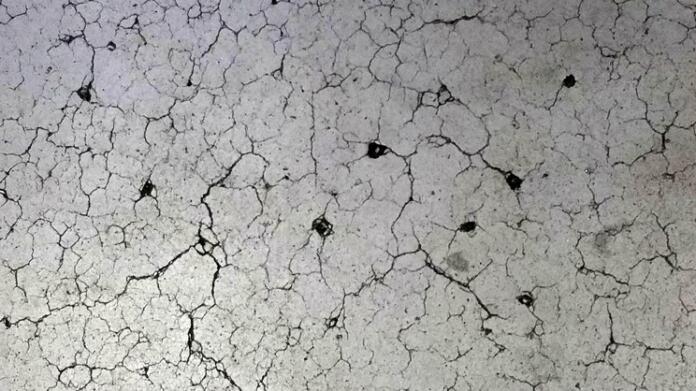
UNSIGHTLY craze cracking of concrete floors – caused by the shrinkage of the cement paste on the surface – can generally be prevented by correct placement, curing and finishing, says Bryan Perrie, CEO of Cement & Concrete SA (CCSA).
Crazing, which appears as closely spaced surface hair cracks in both plastic as well as hardened concrete, is caused by shrinkage of the surface layer of cement. The cracks are usually no more than 3mm deep and visible as the floor surface starts drying the day after placement or by the end of the first week.
Perrie says some of the factors affecting the crazing of concrete floors include:
- Correct protection of the concrete in the plastic state and timeous curing are essential because when the evaporation rate from the concrete surface is higher than the moisture gain from curing, crazing cracks will appear because of low humidity, drying winds, or exposure to sunlight. Delayed curing will cause rapid drying of the surface and crazing. Curing with water much colder than the concrete will cause thermal shock and also lead to crazing.
- Alternating wetting and drying at early stages should be avoided. Continuous water sprinkling is an ideal method of curing to prevent the concrete from drying between applications of water.
- Over-using vibrating screeds and bull floats leads to the coarse aggregates settling at the bottom and drives the cement paste to the surface which is the main cause of crazing;
- Overworking and over-trowelling, especially when the surface is wet, is another negative factor. “Too wet a mix, excessive floating, the use of a tamper or other procedures which depress the coarse aggregate and produce high concentrations of cement paste and fines at the surface, will result in crazing and cracking.”
- Crazing can also be caused by dusting dry cement onto the surface before trowelling. The cement will dry up bleed water and concentrate fines on the surface.
- Applying water to the surface during finishing operations is another contributory factor. Performing finishing operations with bleed water still on the surface, or using a steel trowel in a way that water and cement fines are brought to the surface, will end up in crazing.
Perrie says although crazed floors are unsightly and may collect dirt, they do not have serious consequences and repairs are seldom necessary unless accompanied by delamination of the surface. “Grinding the surfaces may be considered when the crazing is shallow and the quality of the concrete allows for grinding,” he adds.
- For more information visit www.cemcon-sa.org.za